

What Is Dubai Chocolate? The Complete History, Origin & Story
What Is Dubai Chocolate? The Complete History, Origin & Story
How one small Dubai dessert shop's pistachio-and-kunafa chocolate bar became the most talked-about confection on the planet — and why nearly everything called "Dubai chocolate" today traces back to a single kitchen.
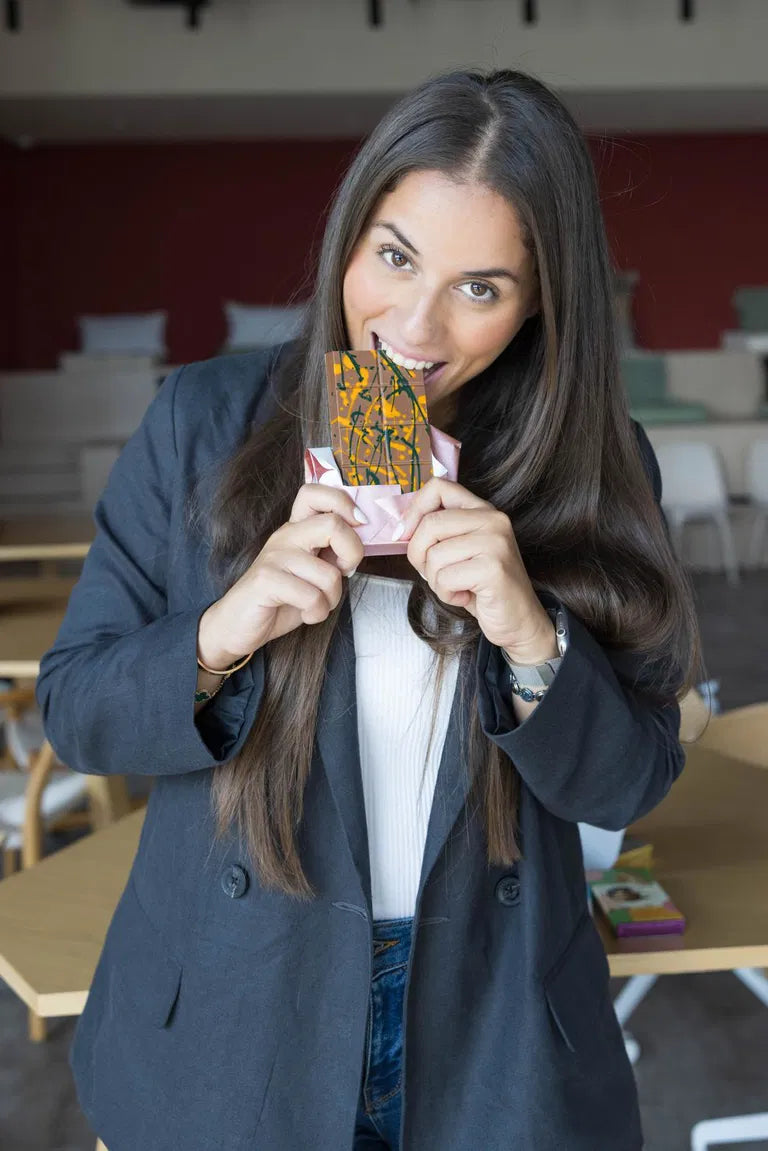
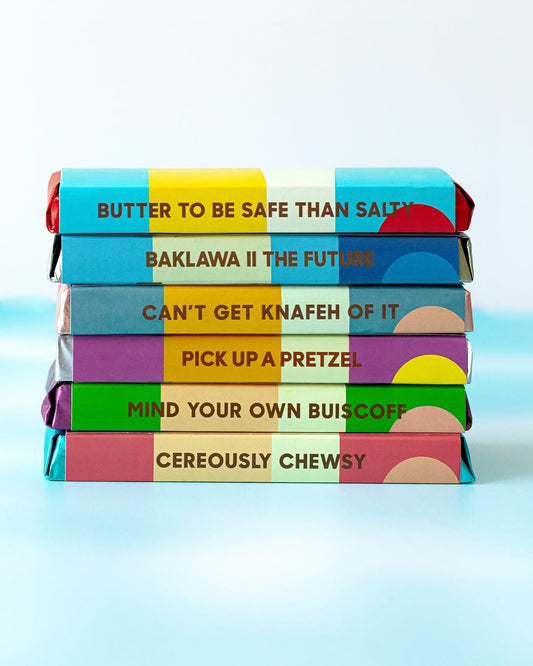
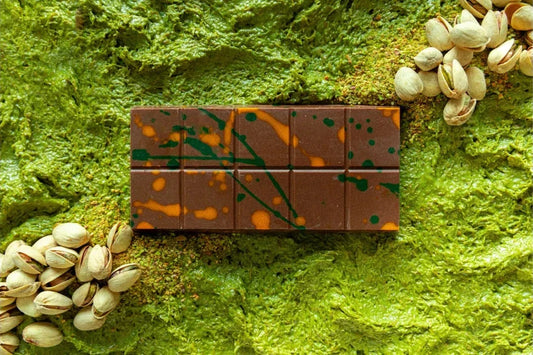
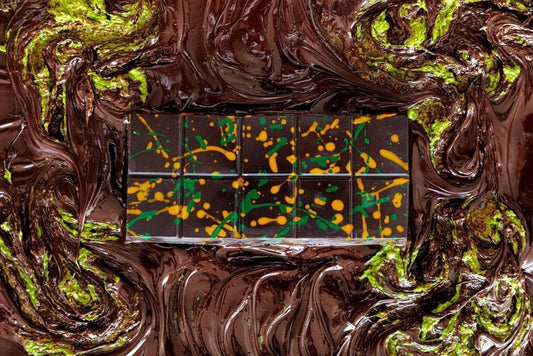
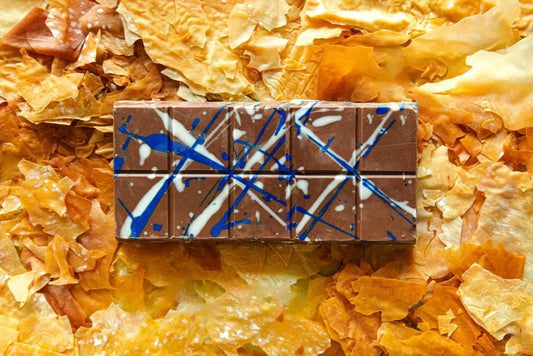
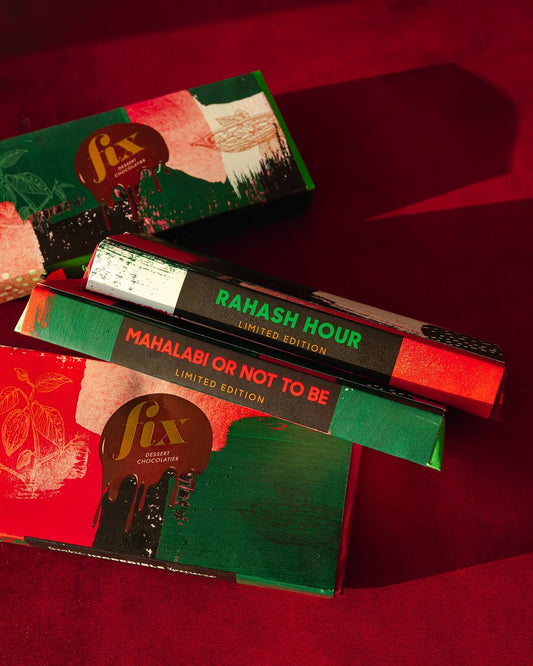
Dubai chocolate is a milk chocolate bar filled with a pistachio cream and crispy, toasted kadayif (shredded filo pastry), often blended with a touch of tahini. It was created in Dubai in 2021 and first sold in 2022 by FIX Dessert Chocolatier under the name "Can't Get Knafeh of It."
The bar went viral worldwide in 2023–2024 after a TikTok video of someone eating it spread across the internet, and by 2025 the trend had grown from a single Dubai chocolate shop into a global category — copied by hundreds of brands and eventually stocked by major retailers like Trader Joe's, Costco, and IHOP.
If you've spent any time on TikTok or Instagram over the last two years, you've almost certainly seen it: a thick, glossy chocolate bar cracked open in slow motion, revealing a bright green pistachio filling laced with crunchy golden threads of pastry. The sound of that first crack has become one of the most recognizable pieces of food content on the internet. That bar is Dubai chocolate — and its story is a lot more specific than most people realize.
Dubai chocolate isn't a category that emerged from a big confectionery company's product lab, and it isn't a generic term for "chocolate made in Dubai." It's the direct descendant of one bar, made by one small dessert business, that happened to catch the internet's attention at exactly the right moment. Understanding where it actually came from is the difference between buying the original and buying one of the thousands of copies that now use the name.
This guide walks through the full story: who invented Dubai chocolate, how it got its name, what's actually inside the bar, how a niche Dubai dessert shop's product became a worldwide phenomenon, and why the difference between "Dubai chocolate" as a concept and Dubai chocolate as it was originally made still matters if you want to taste the real thing.
Where Dubai Chocolate Actually Came From
The bar that started it all was developed in Dubai in 2021. According to the most widely reported account of its creation, the recipe was first suggested by chef Nouel Catis Omamalin, who proposed building a chocolate bar around the flavors of knafeh — one of the most beloved desserts across the Middle East — because of its nostalgic appeal and the textural contrast a crunchy pastry filling could bring to a chocolate bar.
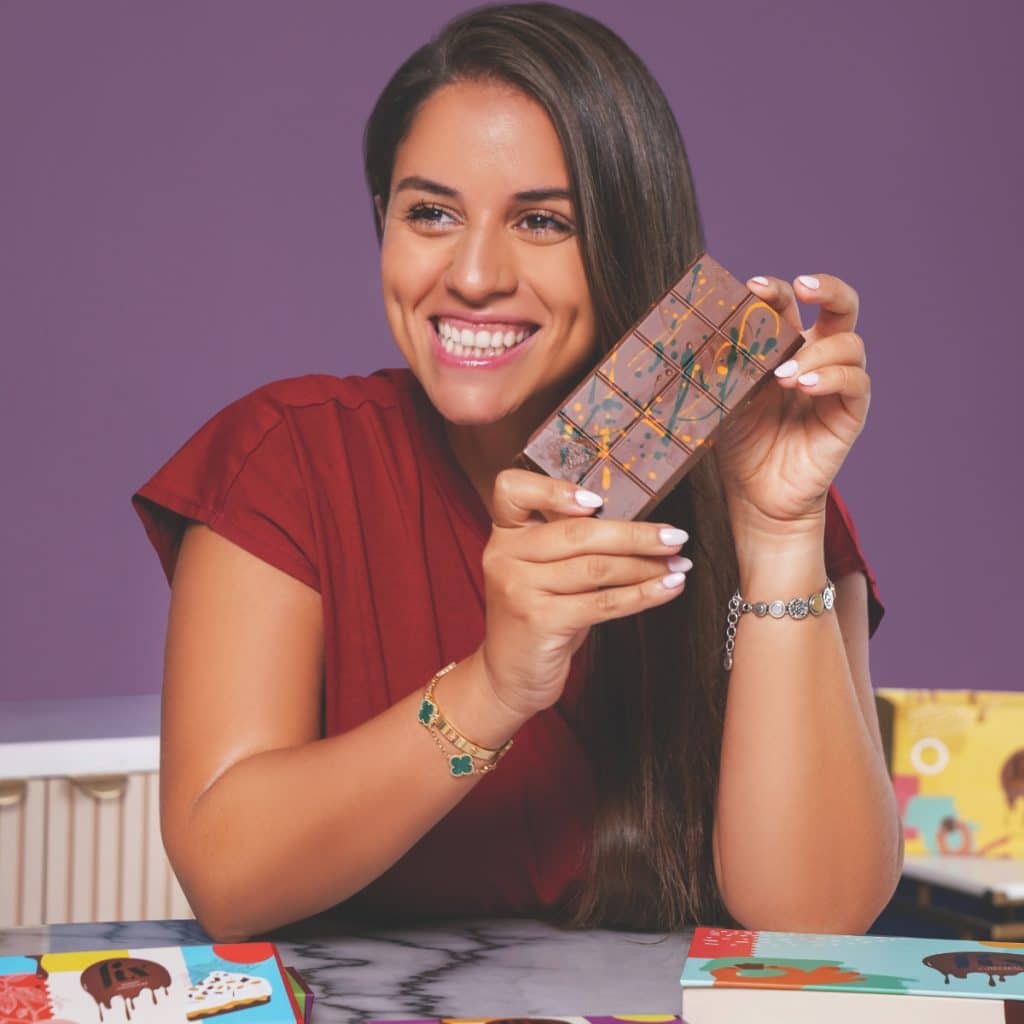
That idea became a partnership. Sarah Hamouda, a British-Egyptian engineer living in Dubai, and her husband Yezen Alani took the concept and built a business around it: FIX Dessert Chocolatier. Omamalin left the partnership before the bar was formally released, but the recipe he helped shape became the foundation of the entire category that followed.
The bar itself launched in 2022 under a name that would become iconic in its own right: "Can't Get Knafeh of It." It combined a milk chocolate shell with a filling of pistachio cream, tahini, and toasted kadayif — chopped filo pastry fried until golden and shatteringly crisp. It was sold, at first, almost entirely to a local Dubai audience through direct online ordering.
The Recipe Is Developed
The concept for a knafeh-inspired chocolate bar takes shape in Dubai, combining Middle Eastern pastry tradition with a Belgian-style chocolate shell.
FIX Dessert Chocolatier Launches "Can't Get Knafeh of It"
The bar is released to the Dubai market under FIX Dessert Chocolatier, founded by Sarah Hamouda and Yezen Alani. Demand starts locally, largely through word of mouth.
The First Wave of Attention
Food content creators in the UAE begin featuring the bar, and clips highlighting its pistachio-kadayif crunch start circulating beyond Dubai's local food scene.
The Viral Explosion
A widely shared TikTok video of someone eating the bar turns it into a global talking point almost overnight. Searches for "Dubai chocolate" begin climbing sharply outside the UAE for the first time.
Mainstream Retail Arrives
Search interest peaks in early 2025 and stays elevated. Copycat versions flood the market, a global pistachio shortage is reported, and major retailers begin stocking Dubai chocolate–inspired products.
A Permanent Category
What started as a single bar from one Dubai chocolatier is now a recognized dessert category worldwide, with FIX still shipping the original recipe to more than 100 countries.
What's Actually Inside a Dubai Chocolate Bar
Part of what makes Dubai chocolate so distinct — and so hard to copy well — is that it isn't one ingredient doing the work. It's four very different textures and flavors layered into a single bite. Here's what you're actually tasting.
The Chocolate Shell
A thick outer layer of milk, dark, or white chocolate — traditionally Belgian-style couverture chocolate — that has to be sturdy enough to hold a loose, textured filling without cracking apart in your hand.
Pistachio Cream
A rich, nutty paste made from ground pistachios, sometimes blended with pistachio butter. This is the base flavor and the reason the filling has its signature bright green color.
Tahini
Sesame seed paste, used in small amounts to round out the pistachio cream with a slightly savory, toasted depth — a very traditional Middle Eastern pairing that keeps the filling from tasting purely sweet.
Toasted Kadayif
Shredded phyllo dough pastry, pan-toasted until deeply golden and crisp. This is the ingredient responsible for the audible "crack" and crunch that made the bar famous on video.
The combination is deliberately built around knafeh, one of the most iconic desserts in Middle Eastern cuisine — traditionally a warm, cheese-filled pastry made with the same kind of shredded dough, soaked in sugar syrup. Turning that dessert into something you eat cold, in bar form, out of a chocolate shell, is the actual innovation. It's not a new flavor invented out of nowhere; it's a centuries-old dessert tradition reformatted into something completely new.
A Quick Note on Spelling: Kadayif, Kataifi, Knafeh & Kunafa
If you've noticed the terminology looks slightly different from one article to the next, that's normal — these are transliterations of Arabic and Turkish words, and English spelling was never standardized for them. You'll see all of the following used interchangeably across packaging, menus, and articles:
- Kadayif / Kataifi / Katifi — the shredded phyllo pastry itself, before it's toasted or used in a dish.
- Knafeh / Kanafeh / Kunafa / Künefe — the finished traditional dessert made with that pastry, cheese, and syrup. Spelling shifts depending on whether the source is Levantine Arabic, Egyptian Arabic, or Turkish.
- "Dubai chocolate" — the informal, internet-coined name for the chocolate-bar version of the above, regardless of which spelling a given brand uses on its packaging.
None of these spellings is more "correct" than another — they're regional variations of the same word family. What matters more, when you're actually shopping, is whether a brand is using real toasted pastry and real pistachio cream, or a cheaper substitute dressed up with the right keywords.
Dubai chocolate isn't really a new flavor. It's an old, beloved Middle Eastern dessert, reformatted into something the rest of the world had never tried before.
Why the bar resonated far beyond DubaiWhy It's Called "Dubai Chocolate" — Not the Brand Name
One detail trips up a lot of people: the bar wasn't originally called "Dubai chocolate" at all. FIX's product was named Can't Get Knafeh of It. "Dubai chocolate" is the nickname the internet gave the category once the bar went viral and nobody outside the UAE knew the actual product name — they just knew it was a chocolate bar from Dubai.
That's an important distinction, because it's also the reason the category became so easy to copy. Once "Dubai chocolate" became the searchable, shareable name for the concept rather than a specific product, any chocolatier anywhere in the world could make a pistachio-kadayif bar and call it "Dubai chocolate," regardless of whether it had anything to do with Dubai, FIX, or the original recipe at all.
That's exactly what happened next.
How to Store and Serve It So the Crunch Actually Survives
Because so much of Dubai chocolate's appeal is textural, storage matters more than it would for a standard chocolate bar. Kadayif is fried until crisp, but it's still a pastry — exposed to enough moisture or heat, it softens, and softened kadayif is one of the most common complaints about lower-quality copies.
- Keep it cool and dry. A cool pantry or cupboard works better than a warm kitchen counter, especially in humid climates.
- Refrigeration is optional, not required. Chilling can firm up the chocolate shell for a cleaner snap, but bars don't need to be refrigerated to stay food-safe within their shelf life.
- Let it come to room temperature before eating. Straight-from-the-fridge bars mute the pistachio flavor and can make the chocolate shell taste chalky; a few minutes at room temperature brings both back.
- Eat it within the stated shelf life. Most handcrafted bars are best within four to six months of production — well before the kadayif has a chance to lose its crunch.
None of this is complicated, but it's worth knowing before you order a bar expecting the same crunch you saw in a video, only to find it's gone soft because it sat somewhere warm for a few weeks.
The People Behind the Original Bar
It's easy to talk about Dubai chocolate as if it appeared out of nowhere on TikTok, but it started as a very small, very ordinary business decision: a chocolatier in Dubai deciding to try selling a dessert built around a flavor she already knew people loved.
Sarah Hamouda, a British-Egyptian engineer living in Dubai, co-founded FIX Dessert Chocolatier with her husband Yezen Alani. Before the bar went viral, FIX operated the way most small, independent dessert businesses do — building a local following one order at a time, refining recipes based on direct customer feedback, and producing everything in relatively small batches by hand rather than on an industrial production line.
That hands-on approach didn't change once the bar became a global phenomenon — it's part of why demand outpaced supply so quickly in 2023 and 2024, and why counterfeit and copycat versions were able to fill the gap in international markets before the original brand had scaled its own shipping infrastructure to match. FIX has since built out worldwide shipping, but the production itself is still described as handcrafted in Dubai rather than mass-manufactured, which is a meaningfully different process than most of the retail copies that followed.
It's a useful reminder that most viral food moments trace back to a specific person's decision, not an abstract trend — in this case, a small team in Dubai who took a nostalgic dessert flavor seriously enough to turn it into a chocolate bar.
How a Dubai Dessert Shop Broke the Internet
Viral food trends usually fade within a news cycle. Dubai chocolate didn't. Google Trends data shows global search interest for "Dubai chocolate" climbing sharply at the start of 2025, peaking in March, and then — unusually for a viral food trend — staying elevated rather than collapsing back down. That's a very different pattern from most one-video food fads, and it's a big part of why the category has had staying power instead of disappearing after a few months.
A few things happened at once that turned a niche Dubai product into a global obsession:
- The visual and audio appeal was made for short-form video. The slow-motion crack, the bright green filling, and the satisfying crunch translated perfectly to TikTok and Instagram Reels — a format built around exactly that kind of sensory payoff.
- It was genuinely hard to get. Early on, the bar was made in relatively small batches in Dubai and wasn't widely available outside the UAE, which turned it into a "have you tried it" status item rather than just another snack.
- It crossed into other dessert trends. Once people understood the flavor combination, it spread into other formats — Dubai chocolate croissants, milkshakes, gelato, and even drinks — multiplying the number of ways the trend could show up in someone's feed.
- Scarcity fueled demand. As the original became harder to find relative to how many people wanted it, resale markups and copycat products appeared almost immediately, which kept the story going even when supply couldn't.
From Viral Video to Global Supply Chain Story
By 2025, Dubai chocolate had stopped being just a food trend and started being an actual economic story. Demand for pistachios climbed so quickly that Iranian pistachio producers publicly reported a shortage, attributing much of the surge directly to the "Dubai chocolate" trend combined with existing supply constraints. That's a rare thing for a dessert trend to do — most viral foods don't move raw commodity markets.
At the same time, the category jumped from social media into mainstream retail. Grocery chains and restaurant brands — including Trader Joe's, Costco, and IHOP — began offering their own Dubai chocolate–inspired products, which is usually the clearest sign a food trend has moved from "internet moment" to "permanent menu category." Specialty retailers followed the same pattern: businesses like The Nuts Factory, a US nut and candy chain with roughly 150 stores, expanded into carrying a dozen different Dubai chocolate variations, from bars to chocolate-covered dates to a gold-leaf-dusted premium version.
That kind of retail expansion is exactly what created the current landscape: hundreds of "Dubai chocolate" products on the market, most of them with no actual connection to the bar that started the trend.
Beyond the Bar: Everything the Trend Turned Into
Once the pistachio-kadayif flavor combination proved it could travel, it stopped being limited to chocolate bars at all. That expansion is a big part of why the trend has lasted as long as it has — instead of one product slowly losing novelty, the flavor kept showing up in new formats, giving it fresh reasons to circulate online again and again.
- Dubai chocolate croissants — bakeries worldwide began filling laminated pastry with pistachio cream and kadayif, essentially rebuilding the bar's filling inside a completely different base.
- Dubai chocolate lattes and milkshakes — cafes adapted the flavor profile into drinks, usually built around pistachio syrup with a crumbled kadayif or chocolate garnish on top.
- Dubai chocolate cheesecakes, domes, and traybakes — dessert shops began layering the same pistachio-kadayif combination into entirely different dessert formats built for dine-in and bakery-case sales.
- Dubai chocolate–covered fruit and nuts — chocolate-covered strawberries, dates, and mixed nuts coated in the same flavor profile became popular gifting items, particularly around holidays.
What's notable is that almost none of these later products trace back to Dubai at all — they're built by bakeries and cafes reacting to a trend they saw online, using the flavor combination as a template. It's a good illustration of how far a single product idea can travel once it's disconnected from its original source, and why "Dubai chocolate" today functions much more like a flavor category — closer to "salted caramel" or "matcha" — than a specific, protected product.
🍫 A Note on Copycats
Because "Dubai chocolate" became a category name rather than a protected product name, most bars sold under that label today are not made in Dubai and have no connection to the original recipe. Some are made in Morocco or Europe using dark chocolate around 55% cacao instead of the original milk chocolate shell. We wrote a full breakdown of how to tell the difference — read Real vs. Fake Dubai Chocolate: How to Spot Counterfeits and Copycats →
What Does Dubai Chocolate Actually Taste Like?
If you haven't tried it yet, it's worth setting expectations correctly, because it doesn't taste like a typical filled chocolate bar. The first thing most people notice is the crunch — it's audible, and it's the dominant sensation for the first second or two of the bite, before the pistachio cream takes over.
The pistachio filling itself is rich and slightly savory rather than purely sweet, largely because of the tahini blended into it. That's a deliberate choice: pure pistachio paste on its own can taste flat or one-note in large quantities, while the sesame depth of tahini gives it more complexity and keeps it from feeling cloying, even in a large bar. The chocolate shell is there to hold everything together and add sweetness and richness, but it's intentionally not the star of the bar — which is unusual for a chocolate product, where the chocolate itself is normally the whole point.
Texturally, it's closer to eating a well-made pastry than a standard candy bar. That's the whole idea: it's knafeh, translated into a format you can ship, store, and eat cold.
The Dessert Tradition Behind It: What Is Knafeh?
To really understand Dubai chocolate, it helps to understand what it's actually referencing. Knafeh (also spelled kanafeh or künefe depending on the region) is one of the most recognized desserts across the Levant, Egypt, Turkey, and the wider Middle East — traditionally a warm dish made from shredded phyllo dough (kadayif) layered over a soft, mild cheese, soaked in sugar syrup, and often topped with crushed pistachios.
It's a dessert with real cultural weight, closely associated with cities like Nablus in Palestine, and served everywhere from street vendors to formal celebrations. The name "Can't Get Knafeh of It" wasn't just wordplay — it was a direct signal to anyone from the region that this chocolate bar was meant to evoke a very specific, very familiar dessert experience, just delivered in an entirely new format.
That's a big part of why the bar resonated so strongly within the Middle East before it ever went viral globally — it wasn't an invented flavor combination chasing a trend, it was a genuinely nostalgic one, reformatted for people who'd never had a reason to think of knafeh as something that could exist in bar form.
Why the Origin Still Matters
At this point, "Dubai chocolate" is a global category, not a single product — and that's not necessarily a bad thing. It means more people have gotten to try a version of a dessert that deserves the attention. But it also means the market is now flooded with bars that borrow the name without the recipe, the ingredients, or the craftsmanship that made the original worth talking about in the first place.
FIX Dessert Chocolatier is the business that developed the recipe, launched the first bar in 2022, and built the flavor combinations that most of the category is now imitating. Every bar is still handcrafted in Dubai using halal-certified ingredients and premium Belgian chocolate, and shipped fresh to more than 100 countries — the same process, and largely the same team, that made the very first "Can't Get Knafeh of It" bar back in 2022.
If the story is what drew you in — a small Dubai chocolatier that reinvented a centuries-old Middle Eastern dessert and accidentally started a global food movement — it's worth knowing that story is still ongoing, not something that only happened in the past. You can still order from the shop where it started.
How Dubai Chocolate Spread, Region by Region
The trend didn't hit every part of the world at the same time or in the same way. Tracking how it moved gives a clearer picture of why it still feels relatively new in some countries and thoroughly mainstream in others.
- The Gulf region: Where it started, and where knafeh already had deep cultural roots. The bar was a novelty format for a familiar flavor, not an unfamiliar one, which is part of why it caught on so quickly there before spreading further.
- Europe: Early adoption came through food tourism and social media, with independent chocolatiers in the UK, Germany, and beyond releasing their own versions well before most large retailers stocked anything similar.
- The United States: Adoption lagged behind Europe and the Gulf by roughly a year, driven initially by imported and specialty-store versions before mainstream grocery and restaurant chains began carrying their own takes in 2025.
- Asia-Pacific: Markets like Singapore, Malaysia, and Australia saw rapid uptake through specialty dessert cafes, often blending the Dubai chocolate flavor profile into already-popular local dessert formats rather than selling it as a standalone bar.
What ties all of these together is the same underlying pattern: local businesses, not the original creator, drove most of the on-the-ground expansion. FIX built the recipe and the initial demand; independent chocolatiers, cafes, and eventually large retailers built the global footprint.
From Local Dessert Shop to International Headline
By 2025, Dubai chocolate had moved well beyond food and lifestyle coverage into business and market reporting — a sign of how far the story had traveled from its origins as a single dessert shop's product. Wire services and business publications began covering it not as a recipe trend but as a genuine supply chain and retail story, tracking its effect on pistachio prices, its adoption by major grocery chains, and its staying power compared to typical viral food fads.
That shift in coverage — from food blogs and TikTok explainer videos to business journalism — is part of what distinguishes Dubai chocolate from most viral desserts. Trends that fade after a few months rarely get covered as market-moving stories in their own right. The fact that this one did says a lot about how large the category has actually become, and how far it has moved from being "one bar in Dubai" to being a fixture across supermarkets, cafes, and specialty retailers worldwide.
Common Myths About Dubai Chocolate
With any trend that spreads this fast, misinformation spreads right along with it. Here are a few of the most common misconceptions worth clearing up.
Myth: "Dubai chocolate" is a brand name.
Fact: It's a descriptive nickname for a flavor category. The original branded product is FIX's "Can't Get Knafeh of It." Anyone can legally sell a bar labeled "Dubai chocolate" regardless of where it's made.
Myth: All Dubai chocolate is made in Dubai.
Fact: Most bars sold under the name today are made elsewhere, including in Europe and North Africa, by brands with no connection to the UAE.
Myth: It's a completely new, invented flavor.
Fact: It's built on knafeh, a Middle Eastern dessert with centuries of history. The innovation is the format, not the underlying flavor concept.
Myth: Every "Dubai chocolate" bar uses the same recipe.
Fact: Recipes vary widely between brands — some skip the tahini, some use dark chocolate instead of milk, and some substitute cheaper nut pastes for real pistachio.
What to Look for When Buying Dubai Chocolate
If you want the experience the trend was actually built on — rather than a rushed imitation — a few details are worth checking before you order:
- Ingredient list: Real pistachio cream and tahini should be listed, not just "pistachio flavoring" or artificial green coloring.
- Where it's made: Brands that are proud of making the product in Dubai will say so clearly, with specifics — not just use the words "Dubai chocolate" in the title.
- Chocolate quality: The original uses Belgian-style couverture chocolate. Cheaper versions often use compound chocolate, which has a waxier texture and doesn't melt the same way.
- Freshness and shipping: Kadayif loses its crunch over time. A brand that discloses shelf life and ships fresh, rather than from a warehouse that's been sitting for months, is a good sign.
- Certifications: If halal certification, allergen transparency, or sourcing details matter to you, look for brands that publish that information rather than burying it.
Common Questions About Dubai Chocolate
Who invented Dubai chocolate?
The recipe was developed in Dubai in 2021, with the initial concept credited to chef Nouel Catis Omamalin. It was brought to market in 2022 by FIX Dessert Chocolatier, founded by Sarah Hamouda and Yezen Alani, under the product name "Can't Get Knafeh of It."
Is "Dubai chocolate" a brand name or a type of chocolate?
It's a type of chocolate — a nickname the internet gave to the pistachio-kadayif chocolate bar category after the original went viral. The actual originating brand is FIX Dessert Chocolatier, and the original bar's real name is "Can't Get Knafeh of It."
What's the difference between Dubai chocolate and regular chocolate?
Regular chocolate bars are typically solid or filled with a single smooth ganache or caramel. Dubai chocolate is built around a pistachio-tahini cream mixed with crunchy toasted kadayif pastry, which gives it a textured, crackly bite that standard chocolate bars don't have.
Why did Dubai chocolate go viral?
A TikTok video showing the bar being cracked open and eaten spread rapidly in 2023–2024. The audible crunch, bright green filling, and initial scarcity outside Dubai made it ideal short-form video content, and search interest for "Dubai chocolate" spiked globally in early 2025 and has stayed elevated since.
Is all "Dubai chocolate" actually made in Dubai?
No. Because the name became a category rather than a protected product, many bars sold as "Dubai chocolate" today are made in other countries, including Morocco and various parts of Europe, and often use a different chocolate base than the original milk chocolate shell.
What flavor is Dubai chocolate supposed to be?
The original flavor is built around pistachio cream and tahini, combined with toasted kadayif (shredded phyllo pastry) for crunch, encased in a milk chocolate shell — a chocolate-bar reinterpretation of the traditional Middle Eastern dessert knafeh.
Did Dubai chocolate cause a pistachio shortage?
Pistachio producers, including major Iranian suppliers, have publicly reported that surging global demand tied to the Dubai chocolate trend contributed to a shortage in 2025, compounding existing supply constraints in the pistachio market.
Where can I buy the original Dubai chocolate bar?
The original bar is made by FIX Dessert Chocolatier and ships worldwide directly from Dubai. It's sold under its original flavor name, "Can't Get Knafeh of It," alongside newer flavors built on the same recipe foundation.
Is Dubai chocolate the same thing as knafeh?
Not exactly. Knafeh is the traditional Middle Eastern dessert — usually warm, cheese-based, and syrup-soaked — that Dubai chocolate is inspired by. Dubai chocolate takes the pistachio and kadayif elements of knafeh and reformats them into a cold, shelf-stable chocolate bar. It's a tribute to knafeh, not the same dish.
Why is Dubai chocolate so expensive compared to regular chocolate bars?
Real pistachio cream, tahini, and hand-toasted kadayif are all significantly more expensive inputs than the sugar, cocoa, and stabilizers used in most mass-market chocolate bars — and pistachio prices in particular rose sharply during the 2025 shortage. Bars that are handcrafted in small batches, rather than mass-produced, also carry higher production costs.
Is Dubai chocolate halal?
It depends entirely on the brand and how it's made. The original FIX bars are halal-certified and alcohol-free, but this isn't guaranteed across every brand selling a "Dubai chocolate" product, so it's worth checking a specific product's certification if that matters to you.
How long has Dubai chocolate actually existed, versus how long it's been famous?
The bar itself has existed since 2022, when FIX first released it in Dubai. It didn't become globally famous until 2024, roughly two years later, once a viral video pushed it beyond its original local audience — so the "overnight sensation" most people encountered was actually a couple of years in the making.
Can I make Dubai chocolate at home?
Yes — pistachio cream, tahini, kadayif, and melted chocolate are all available to home cooks, and countless homemade versions exist online. The consistency is harder to nail than it looks, particularly getting the kadayif toasted evenly without burning it, which is one reason many people prefer buying a handcrafted version instead.
What's the best way to store Dubai chocolate so it stays crunchy?
Store it somewhere cool and dry, away from direct sunlight and humidity, and eat it within its stated shelf life — typically four to six months. Refrigeration isn't required, but letting a chilled bar sit at room temperature for a few minutes before eating brings back both the flavor and the snap.
So, What Is Dubai Chocolate — Really?
Strip away the TikTok virality, the retail expansion, and the flood of copycats, and Dubai chocolate comes down to something fairly simple: a Dubai-based chocolatier took a beloved, centuries-old Middle Eastern dessert and figured out how to put it in a shelf-stable chocolate bar without losing what made the original special. That's the whole idea. Everything else — the pistachio shortage, the grocery store shelf space, the thousands of imitators — is downstream of that one decision.
It's a rare case where the "viral food trend" label undersells what actually happened. Most viral foods are gimmicks that fade once the novelty wears off. Dubai chocolate has stuck around because the underlying flavor combination was already proven — knafeh has been loved across the Middle East for generations — it just needed the right format, and the right moment, to introduce it to everyone else.
Whether you first heard about it through a TikTok video, a Trader Joe's shelf, or a friend who wouldn't stop talking about it, the bar behind the trend still exists, is still handmade in the city where it started, and is still shipping out today.
Taste the Bar That Started It All
Every FIX bar is still handcrafted in Dubai, using the same recipe foundation that launched the entire Dubai chocolate category in 2022 — premium Belgian chocolate, real pistachio cream, and hand-toasted kadayif.