

Real vs. Fake Dubai Chocolate: How to Spot Counterfeits and Copycats
Real vs. Fake Dubai Chocolate: How to Spot Counterfeits and Copycats
"Dubai chocolate" turned into one of the most imitated dessert names on the internet almost overnight. Here's exactly how to tell an authentic bar from a knockoff — before you order, not after it arrives.
You can usually tell real Dubai chocolate from a copycat by checking four things: the ingredient list (real pistachio cream and tahini, not "pistachio flavoring"), the chocolate type (Belgian-style couverture, not cheap compound chocolate), where it's actually handcrafted (Dubai, stated clearly — not just implied by the name), and the seller (an official brand website, not an unverified marketplace listing).
Because "Dubai chocolate" became a generic category name rather than a protected product name, anyone anywhere can legally sell a bar labeled that way — which means the label alone tells you almost nothing about what's actually inside.
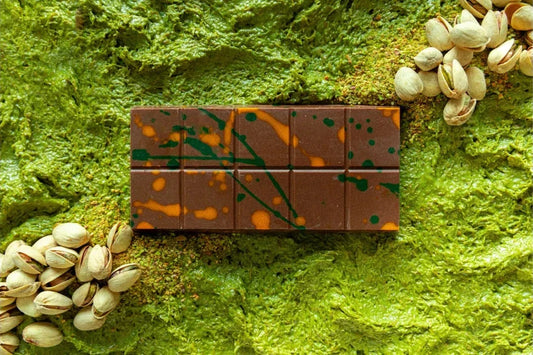
Once a food trend gets big enough, it stops belonging to whoever started it. That's exactly what happened to Dubai chocolate. What began as a single handcrafted bar from one small chocolatier in Dubai — FIX Dessert Chocolatier's "Can't Get Knafeh of It" — is now a name slapped on hundreds of products worldwide, most of which have no connection to Dubai, the original recipe, or the craftsmanship that made the bar worth talking about in the first place.
That's not automatically a scam — plenty of chocolatiers make an honest, clearly-labeled version of the flavor without pretending to be the original. The problem is the products that blur that line on purpose: vague sourcing claims, stock photography borrowed from other brands, ingredient lists padded with cheaper substitutes, and marketplace listings designed to look official when they aren't.
This guide breaks down exactly what separates an authentic Dubai chocolate bar from a copycat or outright counterfeit, what red flags to check before you order, and what to do if you've already been sold something that isn't what it claimed to be. It's written to be useful whether you've never tried the original and want to make sure your first bar is the real thing, or you've already ordered something that landed and left you second-guessing whether you got what you paid for.
Why Dubai Chocolate Became a Counterfeiter's Dream
Three things happened at once that made this particular trend unusually easy to copy — and unusually profitable to fake.
- The name isn't trademarked as a product. "Dubai chocolate" describes a flavor category, not a specific brand, the same way "cronut" briefly did before it was legally protected. Anyone can print those two words on packaging without breaking any law, regardless of where the product is actually made.
- Demand outpaced the original supply almost immediately. FIX built its business as a small, handcrafted operation. When the bar went viral globally in 2024, demand vastly exceeded what one Dubai kitchen could produce and ship internationally — and counterfeiters and copycats rushed in to fill that gap before the original brand had scaled.
- Most buyers had never tasted the original. Unlike a copied version of a well-known national brand, most people encountering "Dubai chocolate" for the first time had no baseline for what it was supposed to taste or look like — which made it far easier for a mediocre imitation to pass as authentic.
The result is a market where a search for "Dubai chocolate" returns everything from faithful, honestly-labeled interpretations to outright scam listings using stolen product photos — with very little to visually distinguish one from the other at a glance.
Dubai Chocolate Isn't the First Viral Food to Get Copied — But It's a Worse Case
Food trends getting imitated the moment they go viral isn't new. The cronut, the rainbow bagel, and the birthday cake–flavored everything wave of the 2010s all spawned countless copies within months of their originals breaking through. What makes Dubai chocolate different is the scale of the gap between how fast it spread and how little legal protection existed around the name.
The cronut, for example, was trademarked almost immediately by its creator, which meant copies had to call themselves something else — "croissant-donut hybrids" instead of "cronuts." Dubai chocolate never had that kind of naming protection, partly because the name itself was never the original brand's chosen name to begin with; it was a nickname the internet applied after the fact, once the bar had already gone viral internationally under a name most people outside the Gulf couldn't easily find or remember.
That's the structural reason this particular trend produced so many more imitators, so much faster, than most viral food moments before it — there was simply nothing stopping anyone from using the exact phrase people were searching for.
Why It's So Easy to Get Fooled
Beyond the lack of trademark protection, a few very ordinary consumer psychology patterns make this specific trend especially easy to get tricked by:
- No reference point. Most buyers encountering a Dubai chocolate listing for the first time have never tasted the original, so they have nothing to compare it against — any bar that looks roughly right can pass.
- Urgency from scarcity messaging. Listings that emphasize limited stock or high demand push buyers to decide quickly, skipping the kind of research they might otherwise do.
- Trust transferred from the platform, not the seller. A listing on a well-known marketplace can feel implicitly vetted, even though the marketplace itself has no real ability to verify sourcing claims for a niche imported food product.
- Visual pattern matching over label reading. A green pistachio filling and a similar-looking wrapper is often enough to convince a buyer's brain it's "the same thing," even when the ingredient list tells a completely different story.
None of this is about buyers being careless — it's simply how trust and urgency are designed to work in fast-moving trend-driven markets, and counterfeit sellers know it.
Original vs. Copycat: A Side-by-Side Comparison
Before getting into individual red flags, it helps to see the differences laid out directly. This is a general comparison between how an authentic, handcrafted Dubai chocolate bar is typically made versus how most mass-produced copycats are made — not every fake will match every row, but the pattern holds in most cases.
| Detail | Authentic Bar | Common Copycat |
|---|---|---|
| Origin | Handcrafted in Dubai, clearly stated | Made elsewhere; origin vague or unstated |
| Chocolate type | Belgian-style couverture chocolate | Compound chocolate (waxy, doesn't temper the same) |
| Pistachio filling | Real ground pistachio cream + tahini | Pistachio "flavoring," green coloring, little real nut content |
| Kadayif texture | Hand-toasted, audibly crisp | Pre-fried filler, often soft or stale by the time it arrives |
| Production scale | Small-batch, handmade | Mass-manufactured on an assembly line |
| Seller | Official brand website | Unverified marketplace or social media shop |
| Price | Reflects real ingredient and labor cost | Unusually cheap for the claimed ingredients |
| Certifications | Halal certification disclosed, allergens listed | No certification info, vague allergen disclosure |
The label "Dubai chocolate" tells you almost nothing on its own. It's the ingredient list, the seller, and the price that actually tell the story.
What to check before you trust a listingPackaging & Listing Red Flags
Most counterfeit and low-quality copycat listings share a handful of warning signs. None of these alone is definitive proof of a fake, but two or three together should make you pause before ordering.
⚠ Stock or Stolen Photography
Product photos that look professionally shot but appear identical across multiple unrelated seller listings — a sign the images were lifted from the original brand or a stock supplier rather than taken of the actual product being shipped.
⚠ No Named Company or Address
Legitimate food businesses are required to disclose a producer name and, in most regions, a contact address. If a listing or storefront has no identifiable company behind it, that's a serious warning sign — not just for authenticity, but for food safety.
⚠ Vague or Missing Ingredient Lists
Authentic producers list their ingredients in full, including allergens. A listing that only says "chocolate, pistachio filling" with no further breakdown is either hiding something or wasn't produced under real food-labeling standards.
⚠ Brand-Name Mimicry
Names, fonts, and packaging colors designed to look like a well-known original at a glance — close enough to cause confusion, different enough to avoid a direct trademark claim.
⚠ Marketplace-Only Presence
No official website, no verifiable social presence beyond the listing itself, and no way to contact the business directly outside the platform you found them on.
⚠ Prices That Don't Match the Claims
Real pistachio cream, tahini, and Belgian chocolate are not cheap inputs. A bar priced dramatically below what handcrafted competitors charge is very likely cutting corners somewhere in the recipe.
What to Look for in the Ingredient List
If you only check one thing before buying, make it the ingredient list — it's the hardest thing for a copycat to fake convincingly, because misrepresenting ingredients on packaging is a real regulatory risk in most countries, so lower-effort counterfeiters tend to either omit details or use vague catch-all terms instead of lying outright.
Signs of a real pistachio filling
- Pistachios or pistachio paste/cream listed as an early, prominent ingredient — not buried after a long list of sugars, oils, and stabilizers.
- Tahini or sesame paste listed alongside the pistachio, which is what gives the authentic filling its rounded, slightly savory depth.
- A muted, natural olive-green filling color rather than an artificially bright, uniform green — real pistachio cream is rarely a perfectly saturated color.
Signs of a cut-corner filling
- "Pistachio flavor" or "natural flavoring" instead of actual pistachios or pistachio paste.
- Artificial coloring (such as green food dye) listed, especially combined with a low percentage of actual nuts.
- Palm oil or vegetable oil high on the ingredient list, often used to substitute for the richness real pistachio cream provides at a fraction of the cost.
Signs of real vs. compound chocolate
- Real (couverture) chocolate: Lists cocoa butter as a primary fat; snaps cleanly when broken; melts smoothly on the tongue.
- Compound chocolate: Uses vegetable fat or palm oil instead of cocoa butter; often has a slightly waxy texture and doesn't melt the same way in the mouth.
Signs of properly toasted kadayif
- Listed as "kadayif," "kataifi," or "shredded phyllo pastry" — not a vague "crispy filling" or "wafer pieces," which are often cheaper substitutes with a different texture entirely.
- A deep golden-brown color throughout the strands, not pale or unevenly toasted, which usually signals a rushed or lower-quality preparation process.
- A dry, audible crunch rather than a chewy or slightly damp texture — kadayif that's absorbed moisture from the filling around it has usually been sitting too long, whether from age or poor packaging.
The Legal Side: Why "Dubai Chocolate" Isn't Protected Like a Brand Name
It's worth understanding the actual legal distinction here, because it explains why this problem hasn't simply been solved by enforcement. Trademark law generally protects specific brand names and logos — things like "Can't Get Knafeh of It" or the FIX Dessert Chocolatier name and branding — but it does not typically protect generic or descriptive terms that describe a category of product, the way "chocolate cake" or "peanut butter cookie" can't be trademarked by any single company.
"Dubai chocolate" functions the same way: it describes a flavor category (pistachio, tahini, kadayif, chocolate shell) rather than a specific branded product, which means competitors are generally free to use the term descriptively. What crosses the line legally is when a seller goes further — copying a specific brand's actual product name, logo, packaging design, or making explicit false claims about being that particular brand. That's where copycats become counterfeits in a legal sense, not just a quality sense.
Practically, this means enforcement tends to focus on the clearest cases of brand impersonation, while the broader flood of generic "Dubai chocolate" products — good, mediocre, and bad — remains largely a buyer-beware market rather than something that gets cleaned up through legal action alone.
Common Seller Excuses — and What They Actually Mean
If you contact a seller with questions before buying, the response itself can be as informative as the answer. A few common patterns worth recognizing:
- "It's made using an authentic Dubai recipe." This phrase describes inspiration, not origin — it's a common way to imply a Dubai connection without actually claiming the product was made there, because the seller usually knows it wasn't.
- "We can't disclose our supplier for competitive reasons." Legitimate food businesses can share where a product is manufactured without revealing proprietary recipes — refusing to disclose basic origin information is a bigger red flag than it might first appear.
- "Photos may vary from the actual product." A standard disclaimer in itself, but combined with generic or clearly stock photography, it often means the seller hasn't photographed their actual inventory at all.
- "Ingredients are proprietary." In most countries, food ingredient disclosure isn't optional — it's a legal labeling requirement. A seller treating a basic ingredient list as a trade secret is usually avoiding the question, not protecting a recipe.
None of these phrases prove bad intent on their own, but a listing that leans on several of them at once, while avoiding a direct answer to "where is this actually made," is telling you something worth listening to.
A Quick Glossary for Reading Ingredient Labels
Couverture chocolate
High-quality chocolate with a higher percentage of cocoa butter, used for its clean snap and smooth melt. This is the standard for handcrafted chocolate bars, including the original Dubai chocolate recipe.
Compound chocolate
A cheaper chocolate substitute made with vegetable fat instead of cocoa butter. Common in mass-produced or budget copycat bars because it's more heat-stable and less expensive, at the cost of texture and flavor.
Pistachio paste vs. pistachio flavoring
Pistachio paste is made from ground, real pistachios. "Flavoring" is a broad term that can mean anything from a nut-based extract to an entirely artificial flavor compound — it's not a reliable indicator of real nut content.
Halal certification
An official verification that a product's ingredients and production process meet Islamic dietary law. Legitimate certification is typically issued by a recognized certifying body and can usually be verified, not just claimed on packaging.
Where Counterfeits and Unauthorized Resellers Usually Show Up
The viral popularity of Dubai chocolate created exactly the conditions counterfeiters look for: high demand, limited official supply, and buyers who don't yet know what the real thing is supposed to look or taste like. In practice, unauthorized and counterfeit listings tend to cluster in a few predictable places.
- 1General marketplaces like Amazon and eBay, where third-party sellers can list products with minimal verification of who's actually producing them.
- 2Social media shops built directly into Instagram, TikTok, or Facebook, often set up quickly to ride a trending hashtag and taken down just as quickly if complaints pile up.
- 3Unofficial "drop-ship" storefronts that never touch the product themselves — they take your order and payment, then attempt to source a cheap version from a third party, if they fulfill the order at all.
- 4Local resellers and market stalls in tourist-heavy areas, sometimes genuinely unaware they're not selling the original, sometimes fully aware and relying on buyers not knowing the difference.
A Direct Warning From the Original Brand
FIX Dessert Chocolatier has stated publicly that its bars are not sold through Amazon, eBay, or unauthorized social media shops, and that the only official source for genuine FIX products is its own website. If you've seen bars claiming to be from FIX sold anywhere else, they are not an authorized seller — regardless of how official the listing looks.
How Counterfeit Patterns Differ by Market
Where you're shopping from actually changes what kind of fake you're most likely to run into, since the trend spread through different channels in different regions.
- Tourist areas in and around Dubai: The most common issue isn't outright counterfeiting so much as opportunistic pricing — local shops and market stalls selling a legitimate but unrelated "Dubai chocolate" product at a markup to tourists who assume any bar bought in Dubai must be the original.
- The United States and Canada: Marketplace listings and social media shops dominate, often importing lower-cost copycat bars in bulk and reselling them with minimal disclosure about origin or ingredients, sometimes alongside stock photography borrowed from other brands.
- The United Kingdom and Europe: A mix of genuinely independent chocolatiers making honest, clearly-labeled versions, alongside a smaller number of imported bulk-copycat products sold through pop-up stalls and market stands, particularly around holiday seasons.
- Southeast Asia and Australia: Rapid adoption through specialty dessert cafes, where the bigger risk tends to be inconsistent quality between locations rather than deliberate misrepresentation, since much of the market there developed through legitimate small businesses rather than resellers.
Knowing which pattern is most common in your region doesn't replace checking the specifics of any individual seller, but it does help calibrate how much scrutiny a given listing deserves.
Three Warning Patterns Worth Recognizing
These are composite patterns built from the kinds of listings that show up repeatedly across marketplaces and social shops — not any single real seller, but recognizable combinations of the red flags covered above.
Pattern One: The Rebrand
A storefront with professional-looking branding, product photos that closely echo a well-known original's visual style, and copy that heavily implies — without directly stating — a Dubai origin. Ingredient list is either missing or unusually short. Price sits just below the well-known original's, positioned as "the same thing, cheaper."
Pattern Two: The Vanishing Listing
A social media shop that appears quickly around a trending hashtag, uses urgency language ("selling out," "limited batch"), and has no company name, address, or way to contact the seller beyond direct messages. Often disappears or rebrands under a new account within a few months.
Pattern Three: The Local Markup
A legitimately operating local shop or market stall, often in a tourist area, selling a real but unrelated pistachio-kadayif bar at a significant markup, relying on location alone to imply authenticity. Not fraudulent in a legal sense, but misleading through omission.
None of these patterns require special investigative skill to spot — they're all identifiable from the checklist earlier in this guide. The goal in naming them explicitly is just to make the pattern recognizable faster, before you've already paid.
A Pre-Purchase Verification Checklist
Before you check out on any Dubai chocolate order, run through this list. It takes about two minutes and will filter out the vast majority of low-quality or outright fraudulent listings.
- ✓Is the seller's actual website — not just a marketplace profile — easy to find and does it clearly identify the company behind the product?
- ✓Does the listing name real ingredients (pistachio, tahini, cocoa butter) instead of vague terms like "flavoring"?
- ✓Is the country or city of production stated clearly, rather than implied only by the product name?
- ✓Are the product photos specific to that seller, with consistent branding, rather than generic or reused across multiple unrelated listings?
- ✓Is the price roughly in line with other handcrafted competitors, rather than dramatically undercutting everyone else?
- ✓Does the seller disclose allergen information and, if relevant to you, halal or other certifications?
- ✓Can you find independent reviews of that specific seller, not just generic comments about "Dubai chocolate" as a category?
What to Do If You Already Ordered a Fake
If a bar arrives and clearly doesn't match what was advertised — wrong ingredients, damaged or clearly non-food-safe packaging, or a product that never arrives at all — there are a few steps worth taking in order.
- Contact the seller directly first, with photos of what you received versus what was advertised. Legitimate sellers, even ones selling a lower-quality copycat rather than a scam, will usually respond to a reasonable complaint.
- Use your payment provider's buyer protection. Credit cards and services like PayPal generally offer chargeback or dispute processes for goods that were "not as described" — keep your screenshots of the original listing as evidence.
- Report the listing to the platform it was sold on. Marketplaces and social platforms do act on pattern complaints, even if a single report doesn't get immediate results.
- Leave an honest, specific review if the platform allows it — vague one-star reviews get ignored, but specific details about mismatched ingredients or origin claims help other buyers immediately.
It's worth keeping a simple record as you go: the original listing (screenshotted, since listings can be edited or removed after a complaint), your order confirmation, and dated photos of what actually arrived. That documentation is what turns a dispute from "he said, she said" into something a payment provider or platform can act on quickly. Most disputes are resolved within one to two billing cycles once that evidence is submitted.
How an Authentic Bar Should Actually Taste
Even with a clean ingredient list and a legitimate seller, the final test is the bar itself. A few sensory cues tend to separate the real thing from a well-disguised imitation.
If a bar tastes overwhelmingly sweet with no savory depth, has a filling that's more oily than creamy, or has a chocolate shell that feels slightly waxy and coats your mouth rather than melting cleanly, those are strong signs of a lower-quality copycat — even if the packaging looked convincing.
Running your own side-by-side comparison
If you already have a bar you're unsure about, the most reliable test is a direct comparison against a known-authentic bar, tasted back to back:
- Break both bars the same way and listen before you taste. A clean snap versus a dull, slightly bendy break is often audible before it's even in your mouth.
- Taste the filling on its own where possible, separate from the chocolate shell. This isolates whether the pistachio flavor is coming from real nuts or a flavoring agent.
- Pay attention to how it finishes. Real tahini-and-pistachio filling tends to leave a slightly nutty, savory aftertaste. A purely sweet, flat finish with no complexity usually signals a simplified or substituted filling.
- Check how the chocolate melts on your tongue, not just how it looks. Cocoa-butter-based chocolate melts smoothly at body temperature; compound chocolate tends to sit and coat rather than dissolve.
How to Verify You're Buying From the Original FIX
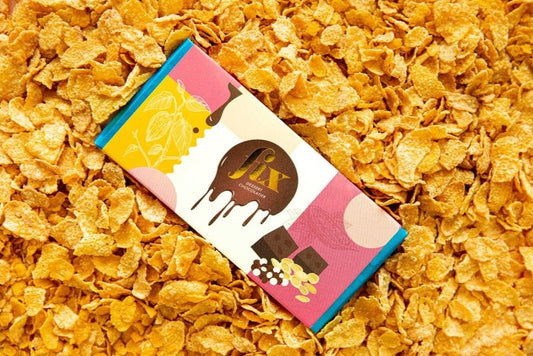
Since FIX Dessert Chocolatier is the business that developed the original recipe and launched "Can't Get Knafeh of It" in 2022, it's also one of the most frequently imitated names in the category. A few concrete checks:
- The only official source is officialfixdessertchocolatier.com — not third-party marketplace listings, not unrelated social media shops using the FIX name or similar branding.
- Genuine FIX products are halal-certified, and that certification is stated directly on the site rather than left ambiguous.
- FIX ships internationally from Dubai with tracked delivery — a listing offering the "original FIX bar" with no shipping origin disclosed, or shipping from a warehouse in an unrelated country, should be treated with suspicion.
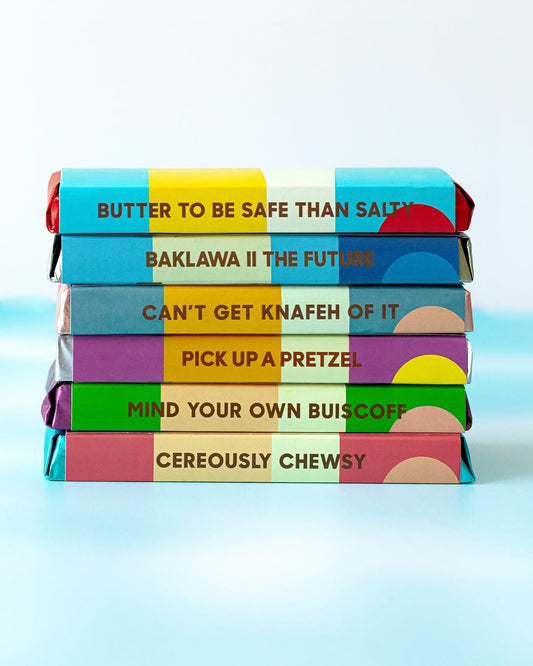
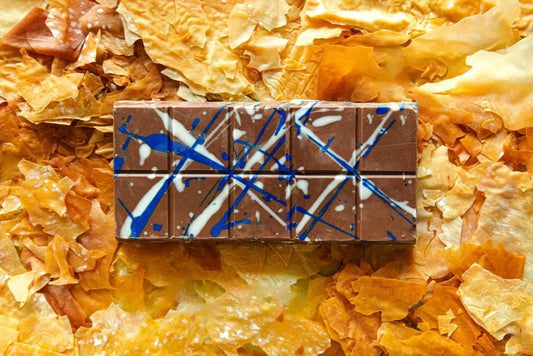
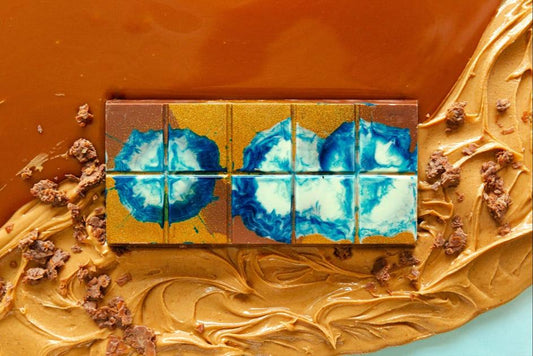
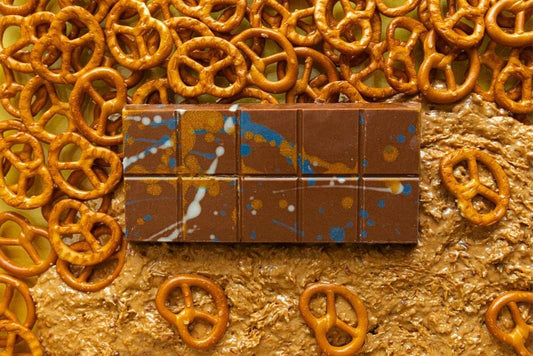
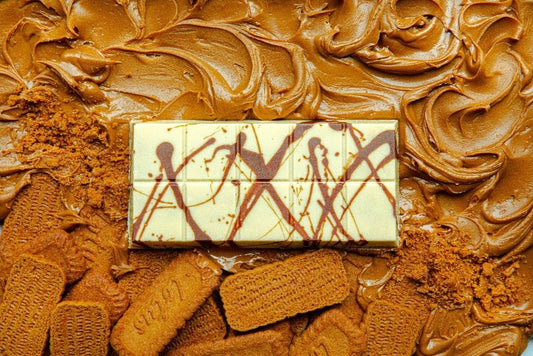
- Flavor names matter: the original lineup includes bars like Can't Get Knafeh of It, Baklawa 2 The Future, and Mind Your Own Speculoos — generic "Dubai chocolate bar" listings with none of the actual flavor names or branding are not FIX products, even if they visually resemble one.
None of these checks take more than a minute or two, and together they rule out the overwhelming majority of listings falsely claiming to be the original.
Common Questions About Fake Dubai Chocolate
Is it illegal to sell chocolate labeled "Dubai chocolate" if it's not from Dubai?
Generally no, since "Dubai chocolate" functions as a descriptive category name rather than a trademarked product name. It becomes a legal issue only if a seller falsely claims to be a specific brand (like FIX), misrepresents ingredients on its label, or copies protected branding and packaging design.
How can I tell if pistachio cream is real or artificial before I open the bar?
Check the ingredient list before ordering. Real pistachio cream will be listed as an actual ingredient, often alongside tahini. Terms like "pistachio flavor," "natural flavoring," or a suspiciously long ingredient list dominated by sugars and oils are signs of a substitute filling.
Why is Dubai chocolate sold on Amazon or eBay not always genuine?
General marketplaces allow many third-party sellers to list similar products with limited verification of sourcing claims. Well-known original brands, including FIX, have stated they do not sell through these platforms, so listings claiming to be the "original" there should be treated as unverified at best.
Does a higher price guarantee a bar is authentic?
No — price alone isn't proof of authenticity, and some counterfeit operations intentionally charge premium prices to seem more credible. Price is only useful as one signal among several; it should be considered alongside ingredients, seller transparency, and origin claims, not on its own.
What's the difference between a "copycat" and a "counterfeit" Dubai chocolate bar?
A copycat is a competing product that makes its own honest version of the flavor without pretending to be a specific original brand — that's generally legitimate business competition. A counterfeit specifically misrepresents itself as a particular brand (using its name, logo, or copied packaging) to deceive buyers, which is a different and more serious problem.
Can I get sick from a fake or low-quality Dubai chocolate bar?
It's possible, particularly with unverified sellers who don't disclose full ingredients or allergen information, or who don't follow proper food safety and storage standards. This is one of the more serious reasons to avoid unverified marketplace listings, beyond simply getting a lower-quality product.
Are all dark chocolate Dubai bars fake?
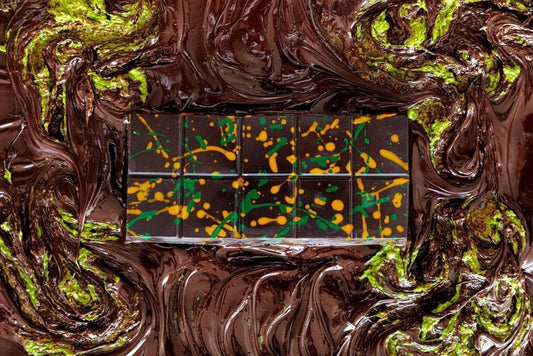
No. Dark chocolate versions can be entirely legitimate — some official brands, including FIX, offer dark chocolate variants alongside the original milk chocolate recipe. The chocolate type alone doesn't indicate authenticity; it needs to be evaluated alongside the other factors in this guide.
Why do some tourist shops in Dubai sell overpriced or lower-quality versions?
Some sellers in tourist-heavy areas rely on the assumption that any chocolate bar purchased in Dubai must be authentic or connected to the original trend, and price accordingly. Buying in Dubai itself doesn't automatically mean you're getting the original recipe — the same verification checklist applies regardless of location.
Can a legitimate business sell a "Dubai chocolate" bar without being dishonest?
Yes. Plenty of chocolatiers make an honest, clearly-labeled interpretation of the flavor without claiming to be the original inventor or a specific brand like FIX. That's ordinary market competition, not fraud — the concern is specifically with sellers who misrepresent origin, ingredients, or brand identity to deceive buyers.
Does it matter if a copycat bar still tastes good?
It can be a perfectly enjoyable bar on its own terms — the concern in this guide is specifically about misrepresentation, not about whether every non-original bar is automatically bad. The issue is when a seller implies or claims a connection to the original recipe, brand, or origin that doesn't actually exist, regardless of how the product tastes.
Is there a way to permanently avoid counterfeit risk with Dubai chocolate?
The most reliable approach is ordering directly from a brand's own official website rather than a third-party marketplace or reseller. That removes most of the verification burden, since you're buying straight from the source rather than trying to confirm a middleman's claims.
How do I report a counterfeit Dubai chocolate listing?
Most marketplaces and social platforms have a "report this listing" or "report seller" option directly on the product page. If you've been charged for a product that never arrived or was misrepresented, your payment provider's dispute or chargeback process is usually the fastest way to recover your money.
When in Doubt, Buy From the Source
None of these checks require special expertise — they're the same due diligence you'd apply to any product with a lot of hype and very little regulation around who's allowed to use the name. Real ingredients, a named and locatable company, a price that reflects real costs, and an official website are the fastest way to filter out the overwhelming majority of copycats and outright counterfeits.
The simplest version of all of this: if you want the exact bar that started the entire trend, order directly from the business that invented it, rather than trusting a name alone.
Trends built around a single viral moment rarely come with built-in consumer protection — that has to come from the buyer doing a small amount of homework before checkout, not from the marketplace or the label doing it for them. A few minutes spent checking a seller against the list above is a lot cheaper than an order that turns out to be nothing like what was pictured.
And if you'd rather skip the checklist entirely: buying straight from the chocolatier that developed the recipe removes almost all of the guesswork described in this guide.
Buy Directly From the Original Source
FIX Dessert Chocolatier is the only official source for the bar that started the Dubai chocolate trend — handcrafted in Dubai, halal-certified, and shipped directly from our kitchen, not a third-party marketplace.