







Is Dubai Chocolate Healthy? Nutrition, Calories & Ingredients Breakdown
Is Dubai Chocolate Healthy? Nutrition, Calories & Ingredients Breakdown
A clear, honest look at what's actually in a pistachio-kadayif chocolate bar — calories, macros, allergens, and how it really compares to a standard candy bar.
Dubai chocolate is not a health food, but it's also not a nutritionally empty candy bar. A typical bar (roughly 60–80g) runs somewhere around 350–420 calories, and because it's built around real pistachios, tahini, and Belgian chocolate rather than corn syrup and filler, it tends to deliver more protein, more fiber, and a better fat profile than a standard mass-market candy bar of a similar size — while still being high enough in sugar and calories that it belongs in the "treat," not "snack," category.
The honest framing: it's an indulgence made with better ingredients than most candy, not a diet food. Portion size and frequency matter more than any single nutrition fact below.
"Is it healthy?" is one of the most common questions people ask before trying Dubai chocolate for the first time — and it's a fair one, given how rich the bar looks in every video that made it famous. The honest answer isn't a simple yes or no. It depends on what you're comparing it to, how much you're eating, and which part of the nutritional picture matters most to you.
This guide breaks the bar down ingredient by ingredient, walks through calories and macros in context, covers the allergens worth knowing about, and compares it directly to the kind of mass-market chocolate it's most often lumped in with. The goal isn't to talk you into or out of eating it — it's to give you the actual information so you can make that call yourself.
Why Nutrition Varies So Much Between Brands
One thing worth understanding before diving into specific numbers: "Dubai chocolate" describes a flavor category, not a single standardized recipe, which means nutrition can vary meaningfully from one brand to the next. A handcrafted bar built around real pistachio paste and tahini will have a noticeably different nutrition profile than a mass-produced version using pistachio flavoring, palm oil, and a higher proportion of sugar to cut costs — even though both are marketed under the same name.
That's part of why this guide presents ranges rather than a single fixed number for every claim. If you want bar-specific precision rather than category-level estimates, the only reliable source is the nutrition label on the exact product you're buying — the figures here are meant to give you realistic context, not replace that label. Two bars sold under the same "Dubai chocolate" name can genuinely differ enough in ingredient quality that treating them as nutritionally identical would be misleading.
What's Actually in a Dubai Chocolate Bar
Nutrition starts with ingredients, and Dubai chocolate is built from four core components, each of which brings a different nutritional profile to the final bar.
Chocolate Shell
Milk, dark, or white chocolate. Contributes most of the bar's saturated fat and sugar, along with some calcium if milk chocolate. Dark chocolate versions bring modest amounts of flavanol antioxidants.
Pistachio Cream
The main source of unsaturated fat, plant protein, and fiber in the bar. Pistachios are also a source of potassium, vitamin B6, and antioxidants like lutein.
Tahini
Sesame paste, used in smaller quantities. Adds healthy unsaturated fat, a small amount of protein, and micronutrients like calcium, iron, and magnesium.
Toasted Kadayif
Shredded, fried phyllo pastry. Contributes carbohydrates and most of the bar's textural crunch; nutritionally it's closer to a light pastry than to a whole grain.
Compared to a standard filled candy bar — usually built from chocolate, sugar syrup or caramel, and sometimes a small amount of peanuts — Dubai chocolate's filling leans more heavily on whole-food ingredients like real nuts and seed paste rather than sugar-based fillers. That's the core reason it tends to compare favorably on protein and fiber, even though total calories land in a similar range.
Does the type of chocolate shell change the nutrition?
Yes, noticeably. The three common shell options each shift the bar's nutrition profile in a different direction:
- Milk chocolate — the most traditional option. Higher in sugar and saturated fat than dark chocolate, with a small amount of calcium from the added milk solids.
- Dark chocolate — generally lower in sugar than milk chocolate at an equivalent cocoa percentage, and higher in flavanol antioxidants, which have been studied for potential cardiovascular benefits in moderate amounts. Still calorie-dense.
- White chocolate — technically not "chocolate" in the cocoa-solids sense, since it's made from cocoa butter, milk, and sugar without cocoa solids. Typically the highest in sugar and saturated fat of the three, with none of the antioxidant content dark or milk chocolate carry.
If nutrition is a genuine priority for you and you still want to try the category, a dark chocolate shell is generally the better-positioned option of the three — though the difference is incremental, not dramatic, since the pistachio filling and kadayif stay the same across all three versions.
How It Affects Blood Sugar
One underappreciated detail: the fat, fiber, and protein from the pistachios and tahini actually slow down how quickly the sugar in the bar is absorbed, compared to eating an equivalent amount of sugar on its own — plain candy with little fat or fiber tends to spike blood sugar faster and more sharply. That doesn't cancel out the sugar content, but it does mean the bar's overall impact on blood sugar is somewhat gentler than a straight sugar-and-chocolate candy bar of the same size, largely thanks to the nut and seed content working alongside the sugar rather than instead of it.
This is a meaningful nuance for context, not a reason to disregard portion size — a large amount of fat-buffered sugar is still a large amount of sugar, and anyone actively managing blood glucose should still treat a full bar as a substantial carbohydrate serving.
Estimated Nutrition Facts (Per Standard Bar)
Exact numbers vary by brand, flavor, and bar size, so treat the figures below as a realistic range for a typical 60–80g handcrafted Dubai chocolate bar rather than a precise label for any single product. If you're checking a specific bar, always defer to the nutrition label printed on that product's actual packaging.
| Nutrient | Typical Range (per bar, ~70g) |
|---|---|
| Calories | 350–420 kcal |
| Total Fat | 22–28g |
| Saturated Fat | 9–13g |
| Carbohydrates | 28–36g |
| Sugar | 18–24g |
| Fiber | 2–4g |
| Protein | 6–9g |
| Sodium | 40–90mg |
For context, 350–420 calories represents roughly 17–20% of a standard 2,000-calorie daily diet in a single bar — a meaningful portion of a day's intake, which is exactly why portion size matters more here than with a smaller, single-serving candy bar.
How It Compares to a Standard Candy Bar
"Healthy" only means something in context. Here's how Dubai chocolate stacks up against typical mass-market filled chocolate bars of a similar size.
✅ Where It Compares Favorably
- ✔ Higher protein, from real pistachios and tahini rather than filler
- ✔ 3–4x more fiber than most candy bars, largely from the pistachios and kadayif
- ✔ A better fat profile — mostly unsaturated fat from nuts and seeds, versus saturated/trans fat common in mass-market candy
- ✔ Fewer artificial additives; ingredient lists are typically shorter and more recognizable
⚠️ Where It's Similar or Worse
- ✘ Calorie count is comparable to candy bars — not a low-calorie option
- ✘ Sugar content is on par with, or only slightly lower than, standard candy
- ✘ Larger portion sizes than a typical snack-size candy bar, so total calories per serving run higher
- ✘ Not a source of significant vitamins or minerals in the amounts most people need daily
Dubai chocolate bars are healthier than conventional candy, but they aren't a health food. They're an indulgence made with better ingredients — which is a real difference, just not the same thing as "good for you."
The honest middle-ground verdictWhat Pistachios Actually Bring to the Table
Pistachios are one of the more nutritionally dense nuts commonly used in desserts, and they're doing real work in this bar, not just adding flavor.
Whole pistachios eaten on their own are widely regarded by nutrition researchers as a nutrient-dense snack food — rich in protein, fiber, and antioxidants like lutein and zeaxanthin. It's worth being clear-eyed, though: once pistachios are turned into a sweetened cream and combined with sugar, chocolate, and fried pastry, the bar as a whole doesn't retain the same nutritional profile as a handful of plain pistachios. The benefit is real, but it's diluted by everything else in the recipe.
The micronutrients worth knowing about
Beyond the headline macros, pistachios and tahini both contribute smaller amounts of micronutrients that are easy to overlook on a standard nutrition label:
- Potassium (from pistachios) — supports normal muscle and nerve function; pistachios are one of the more potassium-rich common nuts.
- Vitamin B6 (from pistachios) — involved in metabolism and normal brain development and function.
- Magnesium and calcium (from tahini) — sesame paste is a meaningful source of both, more so than most other nut or seed butters used in desserts.
- Iron (from tahini and dark chocolate) — present in modest amounts; not enough to rely on as a primary iron source, but a small contribution nonetheless.
None of these amounts are large enough to market the bar as a meaningful source of any single nutrient — a full nutrition label would typically show these in the single-digit percent-daily-value range — but they do mean the bar isn't nutritionally empty in the way a plain sugar candy is.
Does pistachio quality actually matter nutritionally?
Yes, more than most people expect. Higher-quality, less-processed pistachio paste retains more of the nut's natural fiber, protein, and micronutrient content than a heavily processed pistachio flavoring or paste diluted with sugar and oil. Two bars can list "pistachio" on the label and still differ meaningfully in actual nutrition, depending on how much real pistachio content is present relative to fillers — another reason the ingredient list matters more than the marketing copy.
Is it keto or low-carb friendly?
No. With 28–36g of carbohydrates per bar, mostly from sugar and the kadayif pastry, a standard Dubai chocolate bar would use up a significant portion — in many cases the majority — of a typical daily carb allowance on a strict ketogenic diet in a single serving. It doesn't fit a low-carb eating pattern any better than a standard chocolate bar would, regardless of the nut content.
The Sugar and Calorie Reality Check
It's worth being direct about this part: Dubai chocolate is a dessert, and it carries a dessert-level sugar and calorie load. An 18–24g sugar content per bar is roughly equivalent to 4.5–6 teaspoons of sugar — in the same range as many standard candy bars, and higher than what most nutrition guidelines recommend as an added-sugar target for an entire day, let alone one snack.
None of this makes the bar uniquely unhealthy compared to other treats — it just means it should be thought of the same way you'd think about any other indulgent dessert: enjoyable in moderation, not something to eat daily without noticing the cumulative calorie and sugar intake.
Allergens & Dietary Considerations
This is the section worth reading carefully if you or someone you're buying for has food allergies or dietary restrictions. Dubai chocolate bars typically contain several major allergens by design.
That's a meaningful list — tree nuts, dairy, gluten, and sesame are four of the most common major food allergens, all present in the same product. If you're buying for someone else, or ordering for the first time without knowing every ingredient, it's worth checking the specific product's allergen statement directly rather than assuming based on the category.
🌱 Dietary Restriction Quick Reference
Vegetarian: Typically yes. Vegan: Typically no, due to dairy in the chocolate. Gluten-free: Typically no, due to the wheat-based kadayif pastry. Nut-free: No — pistachios are a core ingredient, not an optional add-in. Halal: Depends on the brand and certification; verify with the specific seller.
Who Should Be Extra Mindful
- People with tree nut or sesame allergies should avoid this category of product entirely — pistachio and tahini aren't garnishes here, they're structural ingredients throughout the filling.
- People managing blood sugar, including those with diabetes or insulin resistance, should treat a full bar as a significant sugar and carbohydrate serving, similar to any other dessert of that size, and plan accordingly.
- People tracking saturated fat intake for cardiovascular reasons should note that a full bar can contain 9–13g of saturated fat — roughly half of a common daily guideline in a single serving, mostly from the chocolate shell.
- Children, given the combination of high sugar content and choking-hazard considerations around nuts and crunchy pastry for very young kids, should be given age-appropriate portions with supervision.
What to Actually Look at on a Nutrition Label
Nutrition labels have a lot of numbers, and not all of them matter equally for a treat like this. If you only have a few seconds to scan a label before buying, these are the fields worth prioritizing:
- Serving size first, always. A bar's stated "per serving" numbers are meaningless without checking whether the serving size is the whole bar or a fraction of it — some labels list nutrition per half-bar, which can make the numbers look smaller than what you'd actually eat.
- Added sugars, not just total sugars, where the label distinguishes between them. Total sugar includes naturally occurring sugars in ingredients; added sugar reflects what was actually mixed in during production.
- Saturated fat over total fat. Total fat includes the healthy unsaturated fat from pistachios and tahini, which isn't the number worth worrying about — saturated fat, mostly from the chocolate, is the more relevant figure if that's a concern for you.
- The ingredient list order. Ingredients are listed by weight, from most to least. If sugar or a sugar-based ingredient appears before pistachios on the list, that tells you something about the actual filling ratio, regardless of what the marketing emphasizes.
How to Enjoy It Without Overthinking It
None of the information above is meant to talk anyone out of trying Dubai chocolate — it's meant to help you enjoy it the way most indulgent foods are best enjoyed: intentionally, rather than mindlessly.
- Treat a bar as a full dessert serving, not an anytime snack, given the calorie and sugar density per bar.
- Splitting a bar is a simple way to enjoy the flavor and texture experience at half the calorie and sugar load, without needing to track anything precisely.
- Pair it with something else you're already eating, like an afternoon coffee or tea, rather than adding it on top of a full dessert course.
- Read the label once per brand you try, since recipes (and therefore nutrition) genuinely vary between makers, even within the same "Dubai chocolate" category.
A Note for Athletes and Highly Active People
If you're training heavily or have higher daily energy needs, a treat like this fits more easily into your overall calorie budget than it would for someone with more moderate energy needs — the same 350–420 calories represents a much smaller share of daily intake for someone burning 3,000+ calories a day than for someone with a 1,800–2,000 calorie target.
That said, the protein content, while higher than typical candy, still isn't high enough to meaningfully contribute to post-workout recovery goals the way a dedicated protein source would. It's reasonable to enjoy as an occasional treat within a higher-calorie training diet, but it shouldn't be counted toward protein or recovery-nutrition targets in any meaningful way.
A Simple Portion-Size Reference
If you'd rather think in portions than in grams and percentages, here's a rough guide to how different serving sizes translate.
| Portion | Approx. Calories |
|---|---|
| 1 small square (~10g) | ~50–60 kcal |
| Half a standard bar (~35g) | ~175–210 kcal |
| 1 full standard bar (~70g) | ~350–420 kcal |
| 1 large/premium bar (~100g) | ~500–600 kcal |
Sharing a bar, saving half for later, or choosing a smaller-format bar are all straightforward ways to enjoy the flavor without committing to the full calorie count in one sitting — none of which requires giving up the experience that made the bar popular in the first place.
Does Homemade Dubai Chocolate Have Better Nutrition?
Not automatically — and often not at all. Homemade versions frequently use the same core ingredients (chocolate, pistachio paste, tahini, kadayif), which means the nutritional profile ends up in a similar range to a well-made commercial bar. The main variable isn't "homemade vs. store-bought," it's ingredient quality and proportions, regardless of who's making it.
Where homemade can genuinely differ is portion control (you decide exactly how large a bar to make) and ingredient substitutions (using less sugar, swapping in dark chocolate, adjusting the pistachio-to-filler ratio). If nutrition is your main motivation for making it yourself rather than buying, those adjustable variables — not the act of making it at home itself — are what actually change the numbers.
How It Compares to Traditional Knafeh
Since Dubai chocolate is directly inspired by knafeh, it's worth comparing the two. Traditional knafeh is typically served warm, made with shredded phyllo, a soft cheese layer, butter, and a sugar syrup soak — a preparation that, per serving, is often comparable in calories to a chocolate-bar-format Dubai chocolate, and in some traditional preparations can run higher, given the butter and syrup involved.
Neither dessert is the "lighter" choice in any meaningful sense — they're both rich, syrup- or sugar-forward desserts built around the same shredded pastry base. The chocolate-bar format does have one practical nutritional advantage: because it comes in a fixed, portioned size, it's generally easier to control how much you eat in one sitting than with a warm tray of knafeh served family-style, where portion size is far more variable.
Why Ingredient Sourcing Affects More Than Just Taste
Ingredient quality shows up nutritionally, not just on the palate. A bar made with real couverture chocolate, whole pistachios, and tahini will generally have a shorter, more recognizable ingredient list than one built around compound chocolate, pistachio flavoring, and stabilizers — and shorter ingredient lists with fewer additives are generally considered a marker of a less processed product, independent of calorie count.
This is one of the more practical reasons the "healthier than typical candy" comparison holds up: it's not that handcrafted Dubai chocolate is dramatically lower in calories than mass-market candy, it's that what calories are there come from more nutritionally useful ingredients, with fewer of the artificial thickeners, emulsifiers, and flavor compounds that pad out cheaper, mass-produced confections.
Why This Particular Bar Feels So Satisfying
Part of what makes Dubai chocolate feel more satisfying than a typical candy bar isn't purely nutritional — it's structural. The combination of fat, protein, and fiber from the pistachios and tahini tends to promote a stronger sense of fullness than sugar alone, which is part of why a single bar often feels sufficient in a way that a same-calorie amount of plain sugar-based candy doesn't.
The textural contrast plays a role too — the audible crunch of the kadayif against the smooth filling engages more of the eating experience than a uniformly soft candy bar, which can contribute to feeling satisfied with a smaller amount, even though that's a psychological and sensory effect rather than a purely nutritional one.
How It Stacks Up Against Other Viral Desserts
Context helps here too. Dubai chocolate isn't the only indulgent dessert trend to go viral in recent years, and comparing calorie ranges across a few of them shows it's roughly in line with — not dramatically worse than — other popular treats people already eat without a second thought.
| Item | Typical Calorie Range |
|---|---|
| Dubai chocolate bar (~70g) | 350–420 kcal |
| Cronut (1 pastry) | ~400–450 kcal |
| Large flavored latte with syrup | ~250–400 kcal |
| Slice of standard birthday cake | ~350–450 kcal |
| Fun-size candy bar (2–3 pieces) | ~150–250 kcal |
The takeaway isn't that any of these are "healthy" — it's that Dubai chocolate's calorie profile sits comfortably within the range of desserts most people already eat occasionally without much scrutiny. What sets it apart nutritionally isn't a dramatically lower calorie count; it's the ingredient quality behind those calories.
Common Myths About Chocolate and Health
Myth: Dark chocolate is basically a health food.
Fact: Dark chocolate has real benefits from flavanol antioxidants, but it's still calorie-dense and often still contains meaningful sugar. Beneficial in moderation, not a substitute for actual healthy foods.
Myth: "Made with real ingredients" means low-calorie.
Fact: Real pistachios and tahini are more nutrient-dense than filler ingredients, but they're also calorie-dense in their own right. Quality ingredients don't automatically mean fewer calories.
Myth: Nuts in a dessert cancel out the sugar.
Fact: Nuts can slow sugar absorption and add nutritional value, but they don't offset or "cancel" the calorie and sugar content already in the bar — both effects are simply present at once.
Myth: If it's viral and expensive, it must be healthier.
Fact: Popularity and price reflect demand and ingredient cost, not nutritional value. A bar's actual nutrition comes down to its ingredient list, not its cultural moment.
A Quick Checklist for Health-Conscious Shoppers
- Check whether pistachio is listed as an actual ingredient, not just "pistachio flavoring."
- Look at the saturated fat number specifically, not just total fat, if that's a personal concern.
- Confirm allergen statements directly on the product page before ordering for someone else.
- If choosing between flavors, dark chocolate versions generally offer a slight nutritional edge.
- Decide on your portion (whole bar, half, a few squares) before opening it, not after.
Common Questions About Dubai Chocolate Nutrition
How many calories are in a Dubai chocolate bar?
A typical handcrafted bar (roughly 60–80g) generally falls in the 350–420 calorie range, though exact figures vary by brand, size, and flavor. Always check the specific product's nutrition label for precise numbers.
Is Dubai chocolate healthier than regular chocolate bars?
It tends to offer more protein, more fiber, and a better fat profile than a typical mass-market candy bar, largely due to the real pistachios and tahini. However, calories and sugar are generally comparable, so "healthier" applies to specific nutrients, not to the bar as a whole.
Does Dubai chocolate contain nuts?
Yes. Pistachios are a core ingredient in the filling, not an optional garnish, which makes this category unsuitable for anyone with a tree nut allergy.
Is Dubai chocolate gluten-free?
Typically no. The kadayif (shredded phyllo pastry) used for crunch is made from wheat flour, which means most Dubai chocolate bars are not suitable for a gluten-free diet unless a specific brand offers a verified gluten-free version.
Is Dubai chocolate vegan?
Generally no, since the chocolate shell is typically milk chocolate containing dairy. Some brands may offer a dark chocolate version, but that alone doesn't guarantee it's vegan — check the full ingredient list, since some fillings may still contain dairy or other animal-derived ingredients.
How much sugar is in a Dubai chocolate bar?
Typically around 18–24g of sugar per bar, roughly equivalent to 4.5–6 teaspoons — comparable to or slightly lower than many standard candy bars of a similar size.
Can I eat Dubai chocolate if I'm watching my weight?
It can fit into most balanced eating patterns in moderation, the same as any other dessert — the key is treating it as an occasional treat at an appropriate portion size, rather than an everyday snack, given its calorie density.
Is Dubai chocolate high in protein?
It contains more protein than most candy bars — typically 6–9g per bar, largely from the pistachios and tahini — but it's not a significant protein source on the scale of something like a protein bar, which is usually formulated specifically to be high in protein.
Does the crunchy kadayif add any nutritional value?
Kadayif is primarily a textural ingredient. It contributes some carbohydrates and a small amount of fiber, but nutritionally it's closer to a light, fried pastry than to a whole grain, so its main contribution to the bar is texture rather than nutrition.
Is milk, dark, or white chocolate Dubai chocolate the healthiest option?
Dark chocolate is generally the better-positioned option nutritionally, offering more antioxidants and typically less sugar than milk or white chocolate at an equivalent cocoa percentage. The difference is incremental rather than dramatic, since the pistachio filling and kadayif remain the same across all three versions.
How does Dubai chocolate compare to a protein bar?
It's not a comparable category. Protein bars are specifically formulated to maximize protein content, often 15–20g or more per bar, while Dubai chocolate typically contains 6–9g of protein as a byproduct of its nut and seed ingredients, not as a designed feature. It shouldn't be used as a protein-bar substitute.
Can eating Dubai chocolate spike my blood sugar?
It can raise blood sugar, given its sugar and carbohydrate content, though the fat, fiber, and protein from the pistachios and tahini tend to slow that rise compared to a plain sugar-based candy of the same size. Anyone managing blood glucose closely should still treat a full bar as a significant carbohydrate serving and consult their own management plan.
Is it okay to eat Dubai chocolate every day?
Given the calorie and sugar content of a full bar, daily consumption would represent a significant and consistent addition to most people's diets. As with any dessert of similar calorie density, occasional enjoyment fits more comfortably into a balanced diet than a daily habit.
Does storing Dubai chocolate in the fridge change its nutrition?
No — refrigeration affects texture and shelf life, not nutritional content. Calories, fat, sugar, and other nutrients stay the same whether the bar is stored at room temperature or chilled; only the crunch and how the chocolate melts on your tongue are affected.
Why do some Dubai chocolate bars list more sugar than others?
Because "Dubai chocolate" isn't a standardized recipe, brands vary in how much sugar they add to the pistachio filling and which chocolate they use for the shell. Milk and white chocolate shells generally push sugar content higher than dark chocolate versions, and cheaper fillings sometimes use added sugar to compensate for a lower proportion of real pistachio.
So, Is Dubai Chocolate Healthy?
The most accurate answer is the least dramatic one: it's a real dessert, made with better ingredients than most mass-market candy, which gives it a genuinely better nutritional profile in a few specific ways — more protein, more fiber, better fat quality — while still carrying the calorie and sugar load you'd expect from any indulgent chocolate bar of that size. That combination — real ingredients, real indulgence, real calories — is the whole picture, and it's a more useful way to think about the bar than either dismissing it as junk food or overselling it as a health food.
That's not a disappointing answer, it's just an honest one. Quality ingredients don't turn a dessert into a health food, but they do make it a better dessert to reach for when you're going to have one anyway. That's a genuinely useful distinction, even if it's a less exciting headline than either "superfood" or "junk food" would be.
If you're weighing whether to try it for the first time, the nutrition profile shouldn't be the deciding factor either way — it's comparable to other desserts people already enjoy without much hesitation. The more useful questions are the practical ones covered in this guide: whether you or anyone you're sharing it with has a tree nut, dairy, gluten, or sesame allergy, and how large a portion actually makes sense for you. Get those two things right, and the rest is simply a matter of taste.
Everything in this guide is meant to inform, not to gatekeep — dessert doesn't need to justify itself nutritionally to be worth enjoying. Knowing what's actually in the bar just means you're choosing it on purpose, rather than being surprised by it later.
And if the ingredient list is what matters most to you, that's exactly where to focus — not the hype, not the packaging, and not the calorie count in isolation, but what's actually listed on the label of the specific bar in front of you.
Made With Real Ingredients, Not Filler
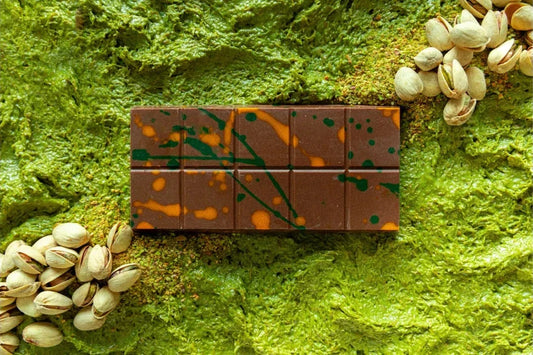
Every FIX bar is handcrafted in Dubai with real pistachio cream, tahini, hand-toasted kadayif, and premium Belgian chocolate — full ingredient and allergen information listed on every product page.
This article is for general informational purposes and isn't personalized nutrition or medical advice. Nutrition figures are typical ranges for this dessert category, not lab-verified values for a specific product — always check the label of the exact bar you're buying. If you have diabetes, a heart condition, food allergies, or other health concerns, check with a doctor or registered dietitian about how a specific product fits your diet.