

Dubai Chocolate vs Traditional Middle Eastern Desserts
A Cultural Journey from Ancient Knafeh to the Viral Sensation That Captivated the World
Before Dubai chocolate went viral on TikTok, before it became a global phenomenon, there was knafeh—a Middle Eastern dessert that has been bringing joy to families for over a thousand years. The story of how ancient Levantine pastry traditions evolved into the world's most talked-about chocolate bar is a tale of cultural heritage, entrepreneurial vision, and the perfect fusion of East meets West.
This isn't just a food story—it's a cultural narrative about how traditions travel, transform, and triumph in unexpected ways. It's about a British-Egyptian entrepreneur's pregnancy craving in Dubai, a centuries-old dessert from the Levant, Swiss chocolate-making expertise, and social media's power to turn local delicacies into global obsessions.
📋 Your Cultural Journey
The Ancient Origins of Knafeh: From 10th Century Palestine to Modern Dubai
Knafeh (also spelled kunafa, kenafeh, or kanafeh depending on the region) is far more than a dessert—it's a living piece of history, a cultural touchstone, and the spiritual ancestor of Dubai chocolate. The earliest written references date back to the 10th century, appearing in medieval Arabic cookbooks from the Fatimid period.
📜 The Journey of Knafeh Through History
First written mentions appear in Fatimid-era Arabic cookbooks. Knafeh was served to royalty and at special occasions, made with shredded phyllo dough, cheese, and sweetened with honey or sugar syrup.
As the Ottoman Empire spread, knafeh traveled with it. Each region developed its own variation—Nabulsi in Palestine, Turkish künefe, Egyptian konafa—but the core remained: cheese, shredded pastry, syrup.
Middle Eastern diaspora communities brought knafeh to Europe, the Americas, and Australia. What was once a regional specialty became a global comfort food for those far from home.
Sarah Hamouda reimagines knafeh's essence in chocolate form. The crispy kataifi, the creamy filling, the sweet satisfaction—all reinterpreted through Belgian chocolate craftsmanship.
What Made Knafeh Special: The Original Formula
Traditional knafeh consists of three essential components, each with its own significance:
Nabulsi Cheese
A white brined cheese from Nablus, Palestine. Semi-soft, slightly salty, and crucially—it doesn't melt into liquid when heated, creating stretchy, gooey texture.
Kataifi/Shredded Phyllo
Hair-thin strands of phyllo dough, buttered and toasted to golden perfection. Provides the signature crunch and visual appeal—looks like shredded wheat or angel hair.
Sugar Syrup (Ater)
Simple syrup flavored with orange blossom water or rose water, poured over the hot knafeh the moment it comes out of the oven. Sweet meets floral meets savory.
🎭 THE THEATRICAL ELEMENT
Traditional knafeh isn't just eaten—it's performed. In many Middle Eastern sweet shops, the knafeh is flipped onto a large platter in a dramatic motion, revealing the golden crust. This showmanship—the visual drama, the satisfying textures, the aromatic steam—is ancestral to Dubai chocolate's "crack and ooze" appeal on TikTok. Both desserts understand that how food looks and sounds matters as much as how it tastes.
In Middle Eastern culture, knafeh holds a place of honor—served at weddings, births, religious holidays (Eid al-Fitr, Eid al-Adha, Ramadan iftar), family gatherings, and as a sign of hospitality. This deep cultural meaning is why Dubai chocolate resonates so powerfully. It's not appropriation—it's reinterpretation by someone with cultural ties (Sarah Hamouda's Egyptian heritage), honoring the past while creating something new.
"Knafeh isn't just a dessert—it's a love letter written in cheese and sugar syrup, passed down through generations. When Sarah created Dubai chocolate, she was translating that love letter into a language the world could understand."
Traditional Middle Eastern Desserts That Inspired FIX Flavors
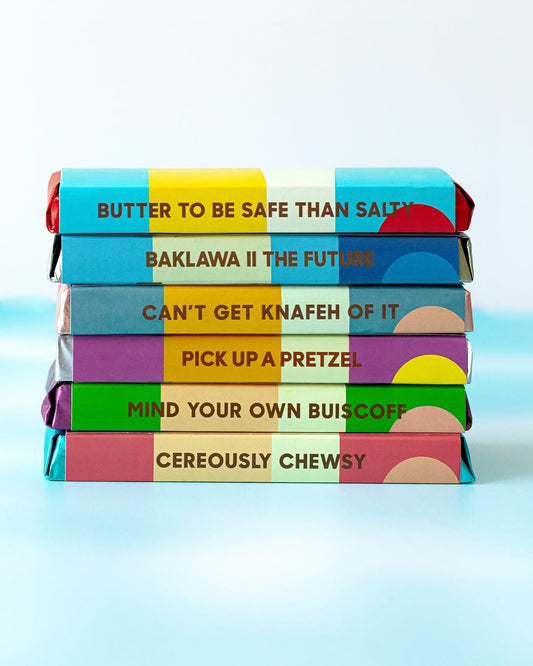
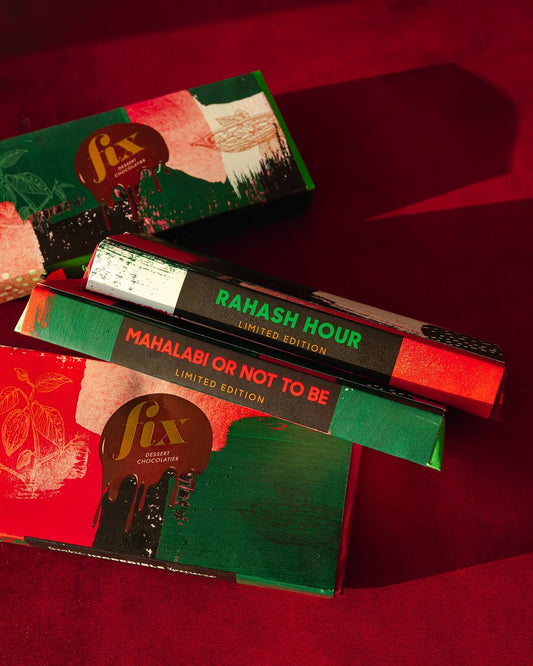
FIX Dessert Chocolatier's flavor roster reads like a tour through Middle Eastern sweet shops. Each bar name is a playful reference to traditional desserts, reimagined through chocolate. Let's explore the heritage behind each inspiration.
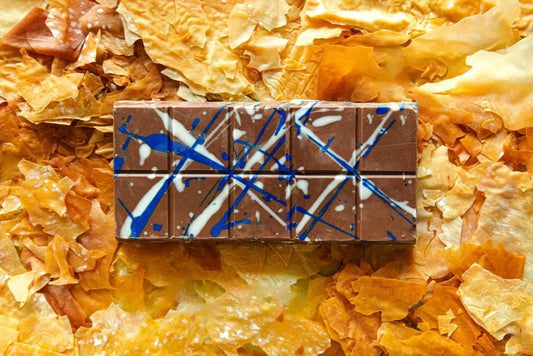
Baklava → "Baklawa 2 The Future"
Traditional: Layers of phyllo, nuts, butter, honey • FIX Version: Pistachio and walnut blend in chocolate
Baklava's origins are hotly contested—Turkey, Greece, and the Arab world all claim it. What's certain: it dates back to the Ottoman Empire (possibly earlier to Byzantine times), representing the pinnacle of layered pastry craftsmanship. Traditional baklava requires patience—up to 40 layers of paper-thin phyllo, each brushed with butter, filled with spiced nuts (pistachios, walnuts, or almonds), baked until golden, then drenched in honey or sugar syrup. FIX captured baklava's essence through creamy filling and chocolate shell. The "2 The Future" name acknowledges they're not replicating the past; they're honoring it while moving forward.
Mahalabiya → "Mahalabi Or Not To Be"
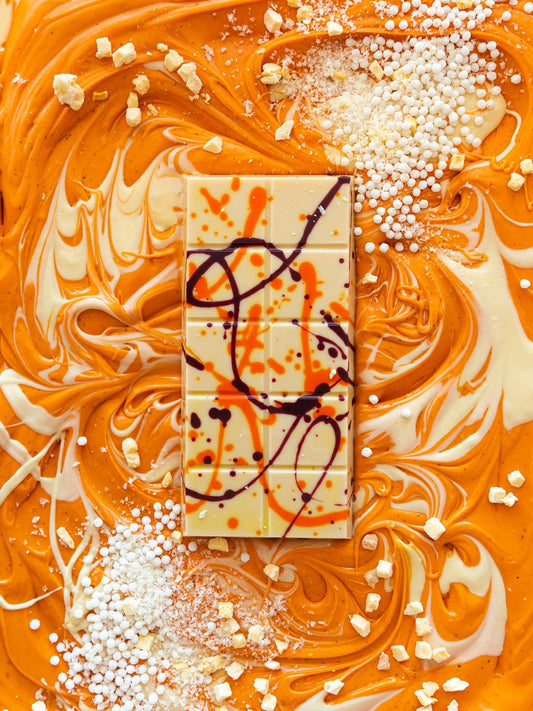
Traditional: Milk pudding with rose/orange blossom water • FIX Version: Creamy white chocolate with floral notes
Mahalabiya (also muhallebi or mahalabia) is a delicate milk pudding that dates back to medieval Persia and became beloved across the Middle East and Mediterranean. Made with milk, sugar, cornstarch (or rice flour), and scented with rose water or orange blossom water, it's topped with pistachios or almonds. Unlike Western puddings, mahalabiya is lighter, more aromatic, and served chilled. FIX's Shakespeare-referencing name ("To be or not to be") is pure playfulness, but the flavor profile is serious—capturing mahalabiya's creamy, floral character through white chocolate infused with those same traditional aromatics.
🌍 The Geographic Spread of Middle Eastern Desserts
What makes FIX special is that they don't just borrow these flavors—they understand the stories behind them. Each bar is a bridge between cultures, a conversation between past and present, tradition and innovation.
Taste Centuries of Tradition
Experience Middle Eastern heritage reimagined through Belgian chocolate craftsmanship.
🌍 Explore All FlavorsSarah Hamouda's Story: British-Egyptian Heritage Meets Dubai Innovation
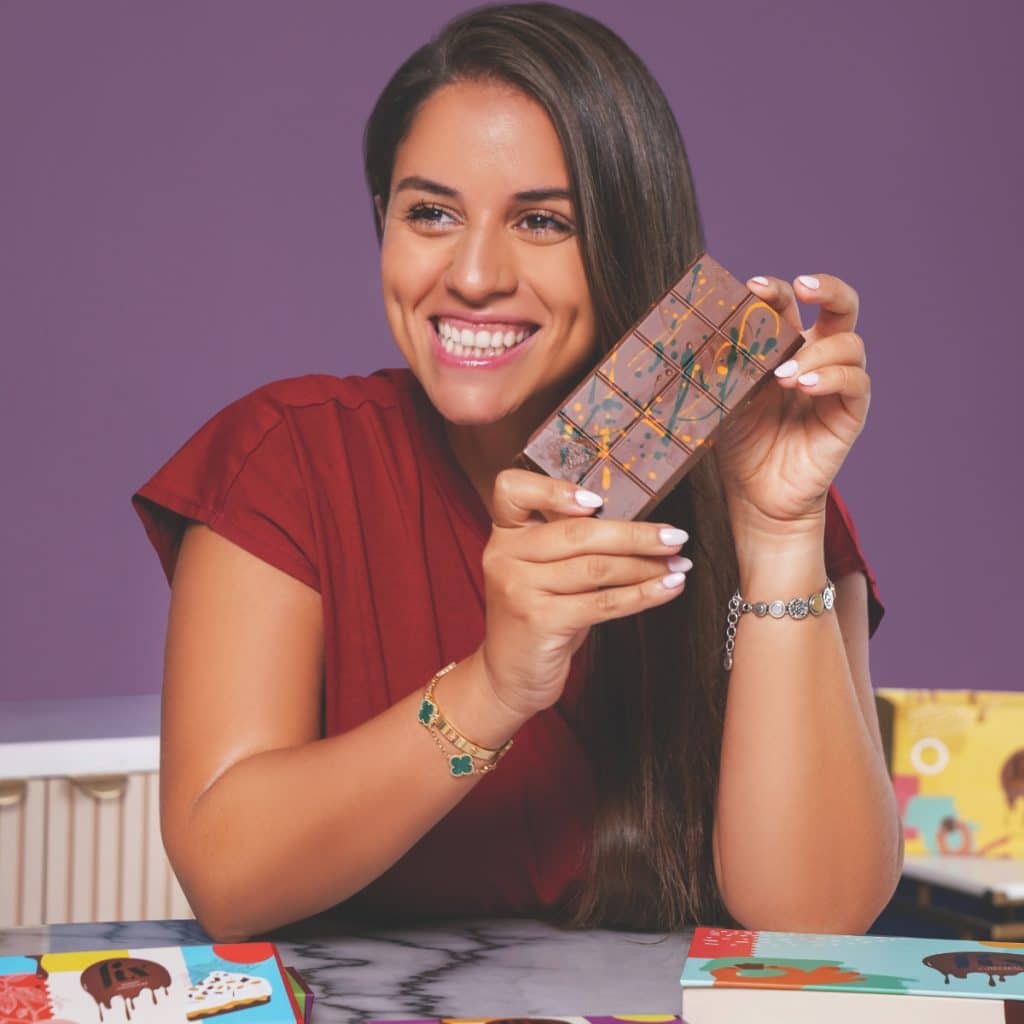
Every transformative product has an origin story, and Dubai chocolate's is as compelling as the dessert itself. Sarah Hamouda didn't set out to create a viral sensation—she simply wanted to satisfy a craving while honoring her heritage.
The Pregnancy Craving That Changed Everything
In 2021, Sarah was pregnant and living in Dubai. Like many expectant mothers, she experienced intense cravings—but hers was specific: she wanted knafeh, the dessert she'd grown up with through her Egyptian heritage. But not just any knafeh. She wanted something that captured its essence but was more portable, more shelf-stable, more... modern.
📖 The Birth of FIX Dessert Chocolatier
While pregnant in Dubai, Sarah Hamouda craves knafeh but wants something innovative. She begins experimenting with combining traditional Middle Eastern flavors with chocolate.
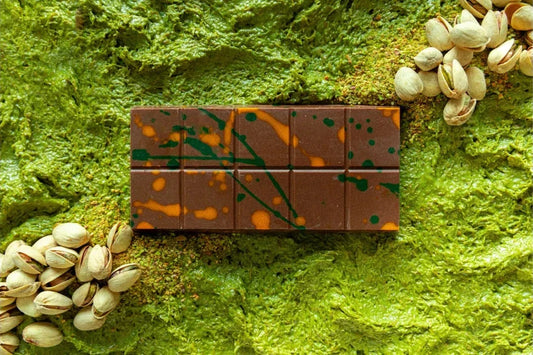
Sarah partners with Chef Nouel Catis, who had always been drawn to Arabic flavors. Together, they develop "Can't Get Knafeh of It"—layering pistachio cream, tahini, crispy kataifi, and Belgian chocolate.
FIX launches in Dubai as a limited-batch, artisanal operation. Locals and travelers discover the bars. Demand exceeds supply. But it remains largely a Dubai secret.
A single TikTok video showing the bar being cracked open goes explosively viral. Overnight, "Dubai chocolate" becomes a global search term. The world discovers what Dubai already knew.
FIX expands globally while maintaining artisanal quality. New flavors honor other Middle Eastern desserts. Major brands launch knockoffs. But the original remains the gold standard.
The British-Egyptian Identity: Bridging Two Worlds
Sarah's British-Egyptian background wasn't incidental to FIX's success—it was essential. Growing up between two cultures gave her a unique perspective: she understood Middle Eastern dessert traditions deeply (through her Egyptian heritage) but also knew how to make them accessible to global audiences (through her British upbringing and Dubai's cosmopolitan environment).
🌍 THE THIRD CULTURE ADVANTAGE
Third culture individuals—people who grow up between multiple cultures—often become exceptional cultural translators. Sarah didn't "tone down" knafeh to make it palatable to Westerners, nor did she make it so authentic that only Middle Easterners would appreciate it. She found the universal language: quality ingredients, perfect textures, visual appeal, and authentic flavor that needed no translation.
Dubai itself is a cultural fusion—over 200 nationalities coexist, creating a culinary landscape where a British-Egyptian entrepreneur creating Belgian chocolate inspired by Palestinian desserts isn't unusual—it's quintessentially Dubai. The city provided economic infrastructure, global connectivity, luxury association, cultural openness, and social media savvy. FIX couldn't have been born in London (too far from Middle Eastern authenticity) or Cairo (perhaps too traditional). Dubai was the perfect location.
"The idea began with a craving. In 2021, while pregnant, British-Egyptian entrepreneur Sarah Hamouda found herself longing for knafeh. But instead of reaching for something familiar, she decided to create something entirely new."— The Dubai Chocolate Origin Story
Kataifi: The Secret Weapon That Made Dubai Chocolate Viral
Of all the traditional elements Sarah incorporated, kataifi (also spelled kadayıf or angel hair pastry) was the genius move that made the entire concept work. This ingredient—so common in Middle Eastern kitchens yet virtually unknown in the West—became the texture element that made Dubai chocolate irresistible both to eat and to film.
Visual Appeal
Looks like delicate angel hair. When golden-brown and crispy, it's photogenic perfection—perfect for social media.
ASMR Satisfaction
Creates that irresistible crunch—the ASMR-friendly sound that makes viewers want to bite into the screen.
Texture Contrast
Crispy shards against creamy pistachio and smooth chocolate create dynamic contrast our brains find deeply satisfying.
Why Kataifi Made the Bar "TikTokable"
- 📹 The Crack: When the chocolate shell breaks, the kataifi strands are revealed in all their golden glory—instantly recognizable and aesthetically pleasing
- 🎬 The Ooze: Pistachio cream flows around the crispy kataifi, creating movement and visual interest perfect for slow-motion capture
- 🔊 The Crunch: Biting into kataifi produces that satisfying ASMR sound that makes people want to replay videos
- 💚 Color Contrast: Golden-brown kataifi against vibrant green pistachio cream creates visual drama
- ❓ Curiosity Factor: Most Western viewers had never seen kataifi, creating "What IS that?" moments that drive engagement
Kataifi wasn't just the secret ingredient for flavor—it was the secret ingredient for virality. Sarah Hamouda didn't invent kataifi—she honored its thousand-year history by finding a new context where its unique properties could shine.
Regional Variations: How Different Cultures Interpret the Same Desserts
One fascinating aspect of Middle Eastern desserts is how they've evolved differently across regions. The same base dessert takes on distinct characteristics depending on local tastes, available ingredients, and cultural preferences.
The Great Knafeh Debate: Regional Styles
| Region | Cheese Type | Sweetness | Unique Features |
|---|---|---|---|
| Palestinian | Nabulsi (salty) | Very sweet syrup | Sweet-salty contrast, thick cheese layer |
| Egyptian | Soft white/cream | Moderate | Often has custard layer, richer texture |
| Turkish | Unsalted fresh | Less sweet | Served with kaymak, individual portions |
| Lebanese | Akkawi (mild) | Balanced | Often with ashta cream, delicate flavors |
| Syrian | Mix of cheeses | Sweet | Generous pistachio topping, rose water |
💡 THE HYBRID ADVANTAGE
By not claiming to be "authentic Palestinian knafeh" or "traditional Egyptian konafa," FIX avoids the trap of cultural gatekeeping. Instead, it positions itself as inspired by these traditions—a respectful homage that creates something new rather than claiming to replicate the past. This gives creative freedom while honoring heritage.
The Fusion Revolution: When Swiss Chocolate Met Arabian Nights
The meeting of Belgian/Swiss chocolate craftsmanship and Middle Eastern dessert traditions represents a broader trend in global cuisine where technique and tradition from different cultures create something greater than the sum of their parts.
🇨🇭 European Chocolate
- Precision and technique
- Quality ingredients
- Smooth, refined textures
- Balanced sweetness
- Elegant presentation
- Innovation through science
🌙 Middle Eastern Desserts
- Craftsmanship and artistry
- Premium nuts and ingredients
- Textural variety (crispy + creamy)
- Generous sweetness
- Visual drama
- Innovation through tradition
Both traditions prioritize quality, craftsmanship, and sensory pleasure. The fusion works because these values align—European precision refines Middle Eastern abundance, while Middle Eastern boldness enlivens European restraint. Dubai chocolate joins a tradition of successful East-meets-West fusions: Japanese-French pastries, matcha everything, ube in Filipino desserts, and the cronut.
Taste 1,000 Years of Tradition
From ancient Levantine kitchens to modern Dubai innovation—experience the authentic FIX bars that honor heritage while creating something entirely new.
Love This Cultural Journey? Share It!