







Are Dubai Chocolate Bars Healthy?
A Nutritionist's Complete Breakdown of Pistachio Chocolate Benefits, Risks, and How to Enjoy It Mindfully
The viral Dubai chocolate bar has taken the world by storm—but beneath the Instagram-worthy green pistachio cream and satisfying crack lies a more nuanced nutritional story. Is this indulgent treat actually good for you? Can pistachios and chocolate coexist in a healthy diet? And how do you enjoy this luxury without guilt?
As a registered dietitian who's analyzed hundreds of chocolate products and advised thousands of clients on balanced eating, I'm breaking down everything you need to know about Dubai chocolate's nutritional profile. We'll explore the science behind pistachios' impressive health benefits, examine the role of quality chocolate in wellness, address the concerns, and provide practical strategies for incorporating these bars into a healthy lifestyle.
Spoiler alert: The answer isn't simply "yes" or "no." Like most nutrition questions, it's about context, quality, portion size, and how these treats fit into your overall dietary pattern. Let's dig into the delicious details.
📋 Your Nutrition Guide to Dubai Chocolate
- ▸ What's Actually Inside a Dubai Chocolate Bar: Ingredient Breakdown
- ▸ The Pistachio Advantage: 9 Science-Backed Health Benefits
- ▸ Chocolate Quality Matters: Belgian vs. Mass-Market Chocolate
- ▸ The Complete Nutritional Profile: Calories, Macros, and Micronutrients
- ▸ Potential Health Concerns and Who Should Be Cautious
- ▸ Comparison: Dubai Chocolate vs. Traditional Candy Bars
- ▸ How to Enjoy Dubai Chocolate in a Balanced Diet
- ▸ Expert Tips: Portion Control and Mindful Indulgence Strategies
What's Actually Inside a Dubai Chocolate Bar: Ingredient Breakdown
Before we can assess whether Dubai chocolate is healthy, we need to understand exactly what you're eating. The authentic FIX Dessert Chocolatier bars—the original that sparked the global phenomenon—contain a carefully curated selection of ingredients, each with its own nutritional profile.
The Core Components
Premium Belgian Chocolate
High-quality milk, dark, or white chocolate made from fine cocoa beans. Contains cocoa butter, cocoa solids, milk solids, and sugar.
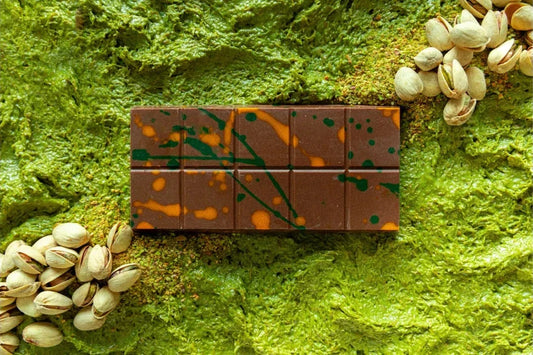
Pistachio Paste/Cream
Made from ground pistachios, creating a nutrient-dense filling rich in protein, healthy fats, fiber, and essential vitamins.
Kataifi Pastry
Shredded phyllo dough (made from wheat flour, water, oil) toasted to create crispy strands. Provides texture and carbohydrates.
Tahini (Optional)
Sesame seed paste adding creaminess and additional healthy fats, calcium, and minerals to some variations.
Unlike mass-produced candy bars filled with corn syrup, artificial flavors, and preservatives, authentic Dubai chocolate uses real, whole-food ingredients. The pistachio paste is made from actual pistachios, not pistachio "flavoring." The chocolate is genuine couverture chocolate with cocoa butter, not palm oil substitutes. This matters enormously from a nutritional perspective.
⚠️ INGREDIENT QUALITY MATTERS
When analyzing the healthfulness of any food, ingredient quality is paramount. A Dubai chocolate bar made with real Belgian chocolate, authentic pistachio paste, and minimal additives is nutritionally superior to a knockoff made with compound chocolate (hydrogenated oils), artificial pistachio flavor, and excessive sugar. Always check the ingredient list—it should be short and recognizable.
What's NOT in Quality Dubai Chocolate
Equally important is what's absent from authentic bars:
- ❌ High fructose corn syrup: Premium chocolate uses cane sugar, not HFCS
- ❌ Artificial preservatives: Handcrafted batches don't need shelf-stabilizers
- ❌ Artificial colors or flavors: The green comes from pistachios, not dye
- ❌ Trans fats: Real cocoa butter, not partially hydrogenated oils
- ❌ Excessive additives: Minimal ingredient lists vs. 30+ ingredients in some candy
This cleaner ingredient profile—though still an indulgent treat—positions Dubai chocolate differently than ultra-processed confectionery. It's closer to artisanal dark chocolate with nuts than to a mass-market candy bar.
The Pistachio Advantage: 9 Science-Backed Health Benefits
Pistachios aren't just delicious—they're nutritional powerhouses that have been studied extensively for their health benefits. According to research published in the British Journal of Nutrition and supported by data from Cleveland Clinic, Harvard Health, and the National Institutes of Health, pistachios offer impressive advantages for human health.
Let's examine what makes the pistachio component of Dubai chocolate particularly beneficial:
1. 💪 Complete Protein Source with All Essential Amino Acids
Pistachios are one of the few plant foods that qualify as a complete protein, containing all nine essential amino acids your body cannot produce. A 1-ounce serving (about 49 kernels) provides 6 grams of protein—making them one of the highest-protein nuts available.
Why it matters: Protein is essential for muscle repair, immune function, hormone production, and satiety. The protein in Dubai chocolate helps slow sugar absorption and keeps you satisfied longer.
2. ❤️ Heart Health and Cholesterol Management
Multiple clinical trials have shown that regular pistachio consumption improves heart health markers. Pistachios are rich in monounsaturated and polyunsaturated fats, which help lower LDL ("bad") cholesterol while maintaining or increasing HDL ("good") cholesterol. They also contain the highest phytosterol content among nuts—compounds that block cholesterol absorption.
Research findings: Studies show pistachio consumption reduces total cholesterol by 8-11% and LDL cholesterol by 9-12%. The effect increases with higher pistachio intake, and benefits are observed even when pistachios replace less healthful snacks.
3. 👁️ Eye Health: Lutein and Zeaxanthin
Pistachios contain the highest levels of lutein and zeaxanthin among all nuts—approximately 13 times more than other tree nuts. These carotenoids are concentrated in the retina of your eyes and are crucial for protecting against age-related macular degeneration and cataracts.
Clinical significance: Regular consumption of lutein and zeaxanthin-rich foods is associated with 40% lower risk of age-related macular degeneration, the leading cause of vision loss in older adults.
🥜 Pistachio Nutrition Powerhouse
4. 🩸 Blood Sugar Regulation and Diabetes Management
Pistachios have a low glycemic index (GI of 15), meaning they don't cause rapid blood sugar spikes. They're rich in fiber, protein, and healthy fats—all of which slow carbohydrate digestion and improve glucose control. Research shows pistachio polyphenol extracts may affect enzymes involved in glucose regulation.
For diabetics: Studies indicate that replacing carbohydrate-rich snacks with pistachios improves HbA1c levels, insulin sensitivity, and inflammatory markers in people with type 2 diabetes.
5. 🦠 Gut Health and Prebiotic Effects
The fiber in pistachios acts as a prebiotic—food for beneficial gut bacteria. Research shows pistachio consumption positively modulates the human gut microbiota, increasing beneficial bacteria that produce short-chain fatty acids important for digestive and immune health.
Microbiome benefits: A healthy gut microbiome is linked to improved digestion, immunity, mental health, and reduced inflammation throughout the body.
6. ⚖️ Weight Management Support
Despite being energy-dense, pistachios don't contribute to weight gain when consumed in moderation. A 2020 review of 11 studies found that regular pistachio consumption may reduce body mass index (BMI). Participants who ate pistachios experienced reductions in blood pressure, ate fewer sweets, and increased fiber intake—all factors contributing to weight management.
The satiety factor: Pistachios are among the lowest-calorie nuts (160 calories per ounce vs. 180-200 for others), and their protein and fiber create lasting fullness. Research also suggests their fat content isn't fully absorbed during digestion.
7. 🧠 Cognitive Function and Brain Health
Emerging research shows pistachio consumption may play a role in cognitive function. Pistachios are rich in vitamin B6 (providing 25% of daily needs per ounce), which is important for neurotransmitter production and brain health. They also contain antioxidants that protect against oxidative stress.
Memory & mood: Vitamin B6 deficiency is associated with cognitive dysfunction and depression. Adequate intake supports memory, concentration, and emotional regulation.
8. 💪 Antioxidant Powerhouse
Pistachios contain high levels of antioxidants—second only to walnuts and pecans among nuts. These include polyphenols, flavonoids, carotenoids, and phenolic acids that fight free radicals, reduce oxidative stress, and lower inflammation.
Disease prevention: Antioxidants play a key role in reducing risk of chronic diseases including cancer, heart disease, diabetes, and neurodegenerative conditions.
9. 🧬 Mineral-Rich for Overall Health
Pistachios provide significant amounts of essential minerals: copper (helps with iron absorption and energy production), manganese (bone health and metabolism), phosphorus (14% DV per ounce—for bones and energy), potassium (more than half a banana per ounce—for blood pressure and heart function), and magnesium (supports hundreds of enzymatic reactions).
Nutritional density: This mineral profile makes pistachios one of the most nutrient-dense nuts, delivering substantial micronutrients relative to their calorie content.
"Pistachios are growing in popularity. From their role in much-loved Dubai chocolate to their versatile use in both savory and sweet dishes, pistachios are enjoying some time in the spotlight. But are pistachios good for you? The science says yes—emerging research suggests that this small nut may have several potential health benefits."— GoodRx Health, February 2026
The pistachio component of Dubai chocolate is unquestionably nutritious. These benefits don't disappear just because pistachios are combined with chocolate—though portion size and overall diet context matter, which we'll address in detail later.
Taste the Nutritional Powerhouse
Experience the real pistachio benefits in our authentic FIX chocolate bars—handcrafted with premium ingredients.
🥜 Shop NowChocolate Quality Matters: Belgian vs. Mass-Market Chocolate
Not all chocolate is created equal—and the type of chocolate in Dubai bars makes a significant nutritional difference. FIX Dessert Chocolatier uses premium Belgian couverture chocolate, which differs substantially from the compound chocolate found in mass-market candy.
What Makes Belgian Chocolate Different?
Belgian chocolate—and high-quality dark chocolate in general—contains cocoa solids, cocoa butter, sugar, and (in milk chocolate) milk solids. The cocoa content is what determines both the flavor profile and the nutritional benefits.
| Component | Premium Belgian | Mass-Market Candy |
|---|---|---|
| Fat Source | Cocoa butter (natural) | Often palm oil, hydrogenated fats |
| Cocoa Content | 30-70% (higher = more benefits) | 10-25% (minimal cocoa) |
| Sweetener | Cane sugar | HFCS, artificial sweeteners |
| Processing | Less processed, conching | Highly processed, emulsifiers |
| Additives | Minimal (vanilla, lecithin) | Artificial flavors, colors, preservatives |
The Health Benefits of Quality Chocolate
Real chocolate—particularly dark chocolate with high cocoa content—offers documented health benefits:
🍫 Proven Chocolate Health Benefits
- Flavonoids and Antioxidants: Cocoa is rich in flavanols that improve blood flow, reduce inflammation, and protect against cellular damage
- Heart Health: Moderate chocolate consumption is associated with reduced cardiovascular disease risk
- Brain Function: Flavanols may improve cognitive performance and blood flow to the brain
- Blood Pressure: The flavanols in dark chocolate can help lower blood pressure
- Mood Enhancement: Chocolate triggers endorphin release and contains compounds that boost serotonin
- Skin Health: Chocolate antioxidants may protect skin from UV damage (though not a sunscreen replacement!)
However, these benefits are dose-dependent and quality-dependent. The darker the chocolate (higher cocoa percentage), the more pronounced the benefits. Milk chocolate has fewer flavanols than dark chocolate, but premium milk chocolate still contains beneficial compounds that mass-market candy lacks.
The Dubai Chocolate Advantage
By using high-quality Belgian chocolate, authentic Dubai chocolate bars deliver:
- ✅ Real cocoa butter instead of hydrogenated oils (no trans fats)
- ✅ Higher antioxidant content from quality cocoa
- ✅ No artificial ingredients that may trigger sensitivities
- ✅ Better satiety from natural fats and minimal processing
- ✅ More nuanced flavor that encourages mindful eating vs. mindless consumption
This doesn't make Dubai chocolate a "health food," but it does position it as a more nutritious indulgence than typical candy bars. Think of it like the difference between artisanal gelato made with real cream and fruit versus a neon-colored popsicle with artificial everything—both are treats, but one offers superior ingredients and nutrition.
The Complete Nutritional Profile: Calories, Macros, and Micronutrients
Let's get specific. While exact nutritional values vary by flavor and portion size, here's an estimated nutritional breakdown for a standard Dubai chocolate bar (approximately 60-80g):
Nutrition Facts
Breaking Down the Numbers
Let's contextualize these numbers to understand what they mean for your health:
📊 CALORIE CONTEXT
350-400 calories represents roughly 17-20% of a 2,000-calorie daily diet. This is comparable to a meal replacement bar, a large latte with whole milk, or two slices of pizza. It's a substantial snack or small dessert portion.
Reality check: One bar is meant to be enjoyed mindfully, possibly shared, or consumed as a special treat—not as a daily staple or unconscious snack.
Fat Profile: The Good News
The 22-26g of fat breaks down into:
- 💚 Monounsaturated fats (10-12g): Heart-healthy fats from pistachios that improve cholesterol profiles
- 💚 Polyunsaturated fats (3-4g): Essential fatty acids including omega-6
- 💛 Saturated fats (8-10g): From chocolate and dairy; manageable within daily limits
- ✅ Trans fats (0g): None from real cocoa butter (unlike compound chocolate)
The fat profile is actually quite favorable—dominated by beneficial unsaturated fats from pistachios. Compare this to a typical candy bar where fats often come from palm oil or hydrogenated sources.
Sugar: The Honest Conversation
Let's address the elephant in the room: 28-35g of sugar is significant. That's roughly 7-9 teaspoons of sugar, or about 56-70% of the American Heart Association's recommended daily limit for added sugars (25g for women, 36g for men).
However, context matters:
- The sugar comes from cane sugar in the chocolate, not high-fructose corn syrup
- The protein, fiber, and fat from pistachios slow sugar absorption, preventing sharp blood sugar spikes
- This is a dessert/treat, not a snack marketed as healthy (honesty matters)
- One bar contains less sugar than a 20oz soda (which has 65-77g) or many "healthy" smoothie bowls (40-50g)
The sugar content is the main reason Dubai chocolate should be consumed occasionally and mindfully—not daily. For people managing diabetes, insulin resistance, or trying to reduce sugar intake, this is a "special occasion" food, potentially split into half or quarter portions.
Protein and Fiber: The Satiety Duo
The 6-8g of protein and 3-4g of fiber are Dubai chocolate's secret weapons. These nutrients:
- Create genuine fullness that lasts (unlike pure sugar treats)
- Slow down digestion and sugar absorption
- Prevent the crash-and-crave cycle common with candy
- Support blood sugar stability despite the sugar content
This is why Dubai chocolate feels more satisfying than equivalent-calorie candy—it's engineered (albeit through traditional ingredients) for satiety, not just sweetness.
Potential Health Concerns and Who Should Be Cautious
Balanced nutrition information requires honesty about potential downsides and who should exercise caution. Here are the legitimate concerns and considerations:
⚠️ Calorie Density
Issue: At 350-400 calories per bar, it's easy to consume excess calories if eaten mindlessly or daily.
Who should be cautious: People trying to lose weight, those with limited calorie budgets, or anyone who struggles with portion control around sweets.
⚠️ High Sugar Content
Issue: 28-35g of sugar can spike blood glucose and contribute to tooth decay, inflammation, and metabolic issues if consumed frequently.
Who should be cautious: Diabetics, pre-diabetics, those with insulin resistance, PCOS, metabolic syndrome, or anyone limiting sugar intake.
⚠️ Tree Nut Allergen
Issue: Pistachios are tree nuts—one of the top 9 major food allergens. Cross-contamination is possible in facilities processing multiple nuts.
Who should avoid: Anyone with tree nut allergies. Always check labels for allergen statements and manufacturing facility information.
⚠️ Oxalate Content
Issue: Pistachios and chocolate both contain oxalates, which can contribute to kidney stone formation in susceptible individuals.
Who should be cautious: People with history of calcium oxalate kidney stones or on low-oxalate diets. Portion size and individual tolerance matter.
⚠️ FODMAP Sensitivity
Issue: Pistachios are moderately high in FODMAPs (fermentable carbohydrates) that can trigger digestive issues in sensitive individuals.
Who should be cautious: People with IBS, SIBO, or on low-FODMAP diets. Small portions may be tolerated; individual testing recommended.
⚠️ Caffeine Content
Issue: Chocolate contains caffeine and theobromine, which can affect sensitive individuals or pregnant women.
Who should be cautious: Pregnant/breastfeeding women, caffeine-sensitive individuals, children (especially before bedtime), those with anxiety disorders.
💡 PERSPECTIVE MATTERS
These concerns don't make Dubai chocolate "unhealthy" for most people—they simply require awareness and appropriate context. A healthy person consuming one bar occasionally as a special treat faces minimal risk. Someone with specific health conditions or dietary restrictions needs to be more thoughtful about frequency and portion size. The difference between "healthy indulgence" and "problematic consumption" is often about quantity, frequency, and individual context.
Comparison: Dubai Chocolate vs. Traditional Candy Bars
To truly understand Dubai chocolate's nutritional positioning, let's compare it to popular alternatives—because "healthy" is always relative.
| Product (70g) | Calories | Protein | Fiber | Sugar | Quality |
|---|---|---|---|---|---|
| Dubai Chocolate (FIX) | 350-400 | 6-8g | 3-4g | 28-35g | ★★★★★ |
| Snickers Bar | 370 | 6g | 1g | 37g | ★★☆☆☆ |
| Milky Way | 340 | 3g | 1g | 42g | ★☆☆☆☆ |
| Kit Kat (4 bars) | 350 | 4g | 1g | 38g | ★★☆☆☆ |
| Dark Chocolate (70%) | 410 | 5g | 8g | 28g | ★★★★☆ |
| Ferrero Rocher (3 pieces) | 225 | 3g | 1g | 18g | ★★★☆☆ |
Key Takeaways from the Comparison
- ✅ Higher Protein: Dubai chocolate delivers comparable or more protein than traditional candy bars, thanks to pistachio content
- ✅ Much More Fiber: 3-4x the fiber of most candy bars (from pistachios and kataifi), which aids digestion and satiety
- ✅ Better Fat Profile: Dominated by heart-healthy unsaturated fats vs. saturated/trans fats in many candies
- ⚠️ Similar Calories: Calorie count is comparable to candy bars—it's not a low-calorie option
- ⚠️ Significant Sugar: Sugar content is on par with or slightly lower than candy bars—still high
- ✅ Ingredient Quality: Real chocolate, whole nuts, minimal processing vs. corn syrup, artificial flavors, and cheap oils in mass-market candy
The verdict: Dubai chocolate is nutritionally superior to typical candy bars but not as "virtuous" as plain dark chocolate or raw nuts. It occupies a middle ground—an indulgent treat made with quality ingredients that delivers some nutritional benefits alongside the sugar and calories.
Think of it as the difference between a gourmet burger with quality beef and fresh vegetables versus a fast-food burger. Both are indulgences, but one offers better nutrition density per calorie and fewer questionable additives.
Quality Ingredients = Better Nutrition
Experience the difference that real pistachios, Belgian chocolate, and artisanal craftsmanship make.
Shop Premium BarsHow to Enjoy Dubai Chocolate in a Balanced Diet
The healthfulness of Dubai chocolate isn't just about the bar itself—it's about how, when, and how often you enjoy it. Here's how to incorporate these treats into a balanced lifestyle without guilt or negative health impacts.
The 80/20 Principle
Sustainable healthy eating follows the 80/20 rule: 80% nutrient-dense whole foods, 20% room for flexibility and enjoyment. Dubai chocolate fits perfectly into that 20%—it's a conscious indulgence, not a dietary foundation.
🎯 Strategic Integration Guidelines
Meal Pairing Strategies
How you pair Dubai chocolate with other foods affects its metabolic impact. Here are smart pairing strategies:
🥗 Best Consumed After:
- Protein-rich meals: The protein slows sugar absorption (e.g., after grilled salmon and vegetables)
- Fiber-heavy dinners: Fiber buffers glucose response (e.g., after lentil stew with greens)
- Balanced lunches: When you're active and can utilize the energy (vs. late-night when it might disrupt sleep)
- Mediterranean-style meals: Olive oil, vegetables, whole grains create metabolic buffer
❌ Avoid Pairing With:
- Sugary drinks: Don't compound sugar load with soda or sweet coffee drinks
- High-carb meals: Pasta + Dubai chocolate = major glucose spike
- Empty stomach: Eating on empty stomach causes rapid blood sugar swing
- Alcohol: Both impact blood sugar and metabolic processing
Portion Size Wisdom
One full Dubai chocolate bar is a generous portion. Here are alternatives based on your goals:
Full Bar (70g)
350-400 calories
Best for: Sharing with others, special celebrations, or as a meal replacement (not ideal but acceptable occasionally)
Half Bar (35g)
175-200 calories
Best for: Regular treat size, dessert after dinner, those watching calorie intake but wanting quality indulgence
Quarter Bar (18g)
88-100 calories
Best for: Diabetics, those on strict diets, or anyone wanting just a taste of luxury without significant calorie impact
Pro tip: Pre-portion the bar when you first open it. Wrap quarters or halves individually. This creates natural stopping points and prevents mindless overconsumption.
For Specific Health Goals
🎯 Goal-Specific Guidelines
Limit to once weekly, quarter or half portions. Account for calories in daily budget. Never eat from package—portion first. Consider as "treat meal" within structured plan.
Consult your healthcare provider. If approved, stick to quarter portions after fiber/protein-rich meals. Monitor blood glucose response. The protein and fat help, but sugar content is still significant.
Can work as pre-workout fuel (simple carbs for energy) or post-workout recovery (protein for muscle, carbs for glycogen). Timing matters—use the calories when active.
Generally safe in moderation (the pistachio benefits are actually great for pregnancy!). Watch caffeine intake if consuming multiple chocolate products daily. The protein, healthy fats, and minerals support fetal development.
Enjoy 1-2 times weekly as desired. Focus on savoring the experience. The quality ingredients make it a superior choice to conventional candy when you want something sweet.
Expert Tips: Portion Control and Mindful Indulgence Strategies
The difference between healthy indulgence and problematic overconsumption often comes down to mindfulness and strategy. Here are evidence-based techniques for enjoying Dubai chocolate (or any treat) in a balanced way:
The Mindful Eating Framework
🧘 The 5-Step Savoring Process
Sit down. Turn off screens. Create a pleasant setting. Make it an event, not mindless munching.
Observe the colors, smell the pistachio and chocolate. Acknowledge the craftsmanship.
Take small bites. Let chocolate melt. Notice texture transitions. Chew kataifi thoroughly.
Pause mid-portion. Assess satisfaction. Are you enjoying it or just eating it?
Finish when satisfied, not stuffed. It's okay to save some for later. Quality over quantity.
Practical Portion Control Hacks
- 🔪 Pre-portion immediately: When you receive the bar, cut it into quarters or halves and wrap individually. Out of sight = out of mind.
- 🍽️ Use a plate: Never eat directly from packaging. Plate your portion. It signals "this is the amount" to your brain.
- ⏰ Set a timer: Commit to making your portion last at least 10 minutes. This allows satiety hormones to register.
- 💧 Pair with water: Sip water between bites. Helps with digestion, slows eating, increases mindfulness.
- 👥 Share the experience: Split a bar with a friend or family member. Social enjoyment enhances satisfaction without doubling calories.
- 🗓️ Schedule treats: Plan when you'll have it ("Saturday after dinner"). Reduces impulsive consumption and builds anticipation.
- 📝 Food journal: If tracking intake, log it before eating. Conscious awareness prevents overconsumption.
- 🏠 Strategic storage: Don't keep multiple bars at home if you struggle with moderation. Buy one at a time for special occasions.
The "Crowding Out" Strategy
Instead of focusing on restriction, emphasize nutrition addition. Fill your diet with so many nutrient-dense foods that there's less room and desire for excess treats:
- 🥬 Eat vegetables at every meal (they fill you up with minimal calories)
- 🍗 Prioritize protein (increases satiety and reduces sugar cravings)
- 💧 Stay well-hydrated (thirst often masquerades as hunger/cravings)
- 😴 Get adequate sleep (sleep deprivation increases cravings for sugar/fat)
- 🏃 Move regularly (exercise reduces stress-eating and sugar dependence)
When your baseline diet is nutritionally solid, occasional indulgences like Dubai chocolate don't derail anything—they're simply part of a balanced, sustainable approach to eating.
"Pistachio Dubai Chocolate is more than just a luxurious indulgence; it's a nutritional powerhouse that offers numerous health benefits. From supporting heart health and weight management to improving mood and cognitive function, this delicious treat proves that you can enjoy the best of both worlds—taste and wellness."— Health & Nutrition Analysis, 2026
The Bottom Line: Are Dubai Chocolate Bars Healthy?
After examining the ingredients, nutritional profile, scientific research, and contextual factors, here's the honest answer:
✅ The Verdict
Dubai chocolate bars are healthier than conventional candy but not a health food.
They occupy a unique middle ground: made with quality ingredients (pistachios, Belgian chocolate) that offer genuine nutritional benefits (protein, healthy fats, antioxidants, vitamins, minerals), but still containing significant calories and sugar that make them an indulgence, not a dietary staple. The key to enjoying them healthfully is context—frequency, portion size, overall diet quality, individual health status, and mindful consumption habits.
Who Can Enjoy Them Most Freely?
- ✅ Active individuals with high energy needs
- ✅ People maintaining healthy weight with balanced diets
- ✅ Those without blood sugar or metabolic issues
- ✅ Anyone who can practice moderation and mindful eating
- ✅ Pregnant women seeking nutrient-dense treats (in moderation)
Who Should Be More Cautious?
- ⚠️ People with diabetes or pre-diabetes
- ⚠️ Those actively losing weight on restricted calories
- ⚠️ Individuals with nut allergies (obviously avoid)
- ⚠️ People sensitive to FODMAPs or oxalates
- ⚠️ Anyone with history of kidney stones
Remember: Food isn't just fuel—it's pleasure, culture, connection, and experience. Dubai chocolate bars honor this complexity. They're crafted with care, rooted in tradition, made with quality ingredients, and offer genuine sensory delight. That has value beyond macronutrients.
The healthiest approach isn't deprivation or daily indulgence—it's conscious enjoyment. Buy the authentic FIX bars. Savor them slowly. Share them with people you love. And let them be what they're meant to be: a special treat that brings joy, not guilt.
"The question isn't whether Dubai chocolate is 'healthy'—it's whether you can enjoy it as part of a healthy life. And the answer to that is absolutely yes."
Ready to Experience Quality Ingredients?
Taste the difference that real pistachios, Belgian chocolate, and artisanal craftsmanship make. These aren't just treats—they're experiences.
✨ Halal Certified • Premium Ingredients • Handcrafted in Dubai 🚀
Found This Helpful? Share It!