

Everything You Need to Know About Dubai Chocolate
The definitive guide
Everything You Need to Know
About Dubai Chocolate
What it is, how it's made, what's inside, how to spot fakes, and why the world can't stop talking about it.
In this guide
- What is Dubai chocolate?
- What is knafeh?
- What is kataifi pastry?
- What is pistachio cream?
- Why Belgian chocolate?
- What is baklava?
- What is Biscoff?
- How is it made?
- How to store it
- How to taste like an expert
- How to spot fakes
- How to order online
- How it went viral
- What is halal chocolate?
- What is artisan chocolate?
- History of chocolate
If you've been anywhere near social media in the past two years, you've seen it: a thick bar of chocolate cracked open to reveal a jewel-green, crackling, pistachio-laced filling that stretches and shimmers like something from another world. That's Dubai chocolate. And the question everyone's asking is: what exactly is in that bar? This guide answers every question — from the ancient Middle Eastern ingredients inside, to how the bars are handcrafted, to how to tell the real thing from the fakes flooding the market.
What is Dubai chocolate?
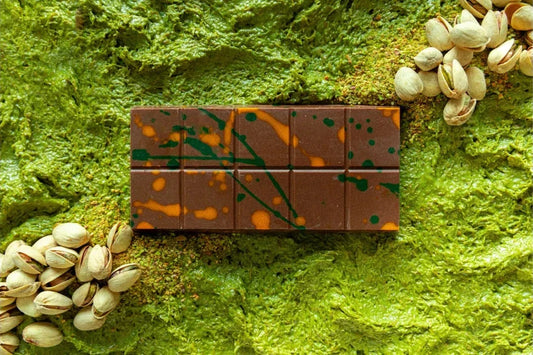
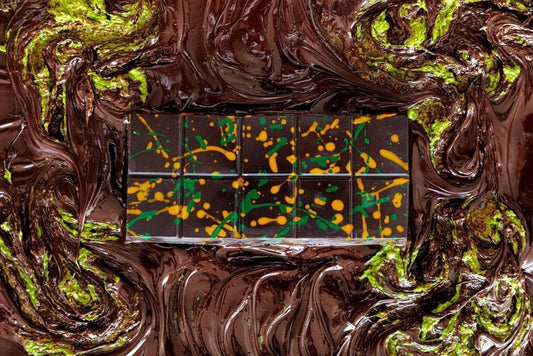
Dubai chocolate is a category of premium filled chocolate bars that originated in Dubai, UAE. Unlike a conventional chocolate bar — solid, sweet, predictable — a Dubai chocolate bar is a vessel. A thick shell of high-quality Belgian chocolate encloses a filling of toasted kataifi (shredded filo pastry) bound with pistachio cream, creating a texture that is simultaneously crunchy, creamy, nutty, and deeply floral.
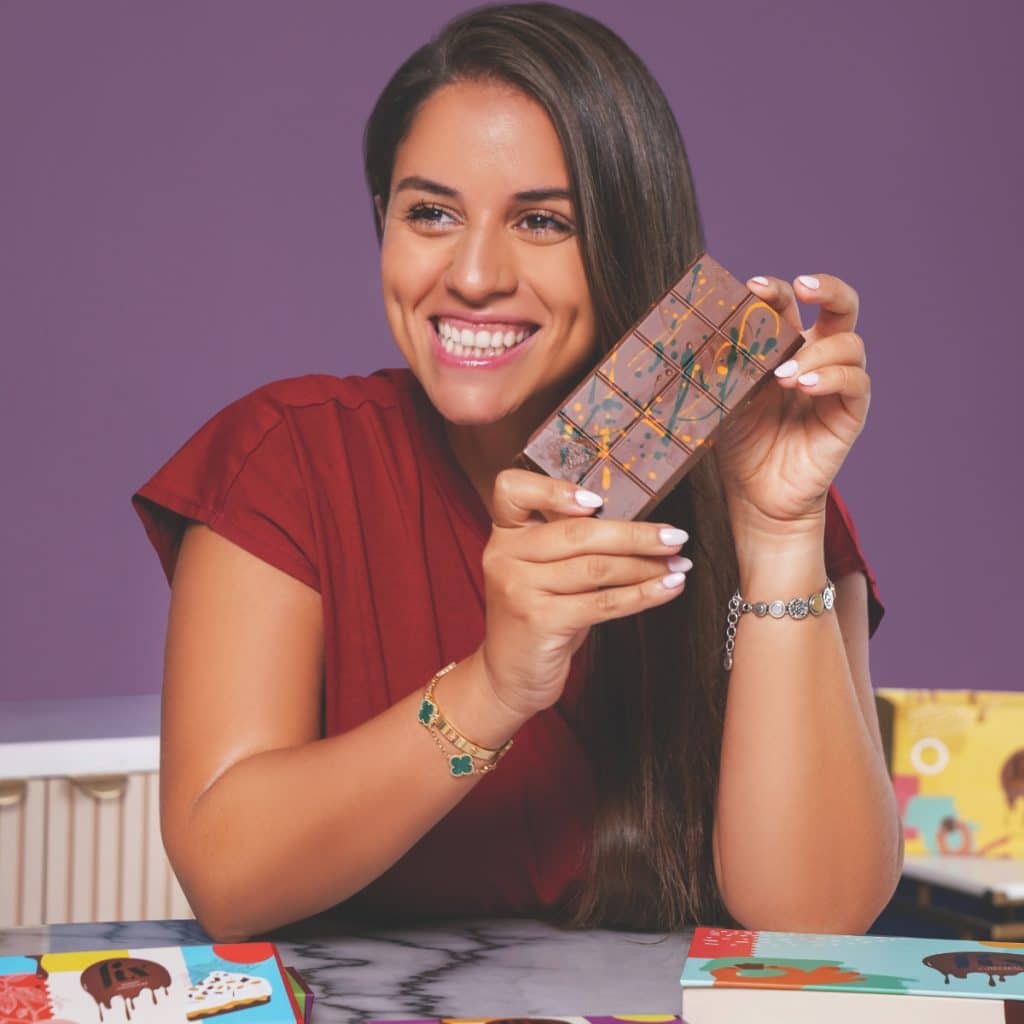
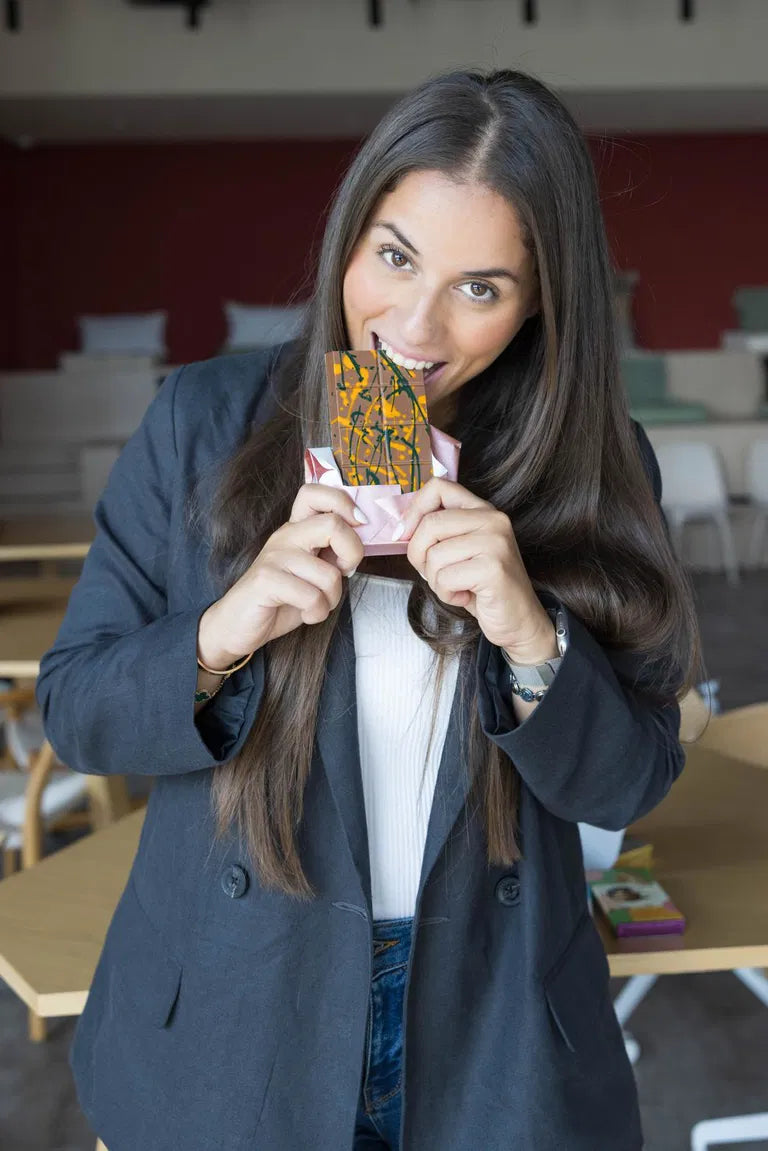
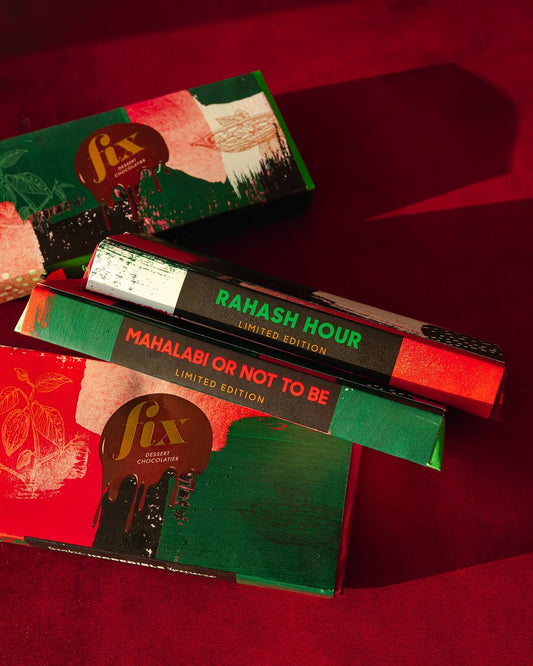
The bars were pioneered by FIX Dessert Chocolatier, founded in Dubai in 2021 by Sarah Hamouda. The concept was rooted in pregnancy cravings — a desire for something that tasted like the great Middle Eastern desserts of her childhood, wrapped in the luxury of fine chocolate. What emerged was something the world had never seen: a fusion of Levantine pastry tradition and European chocolatiering, packaged in a single, hand-poured bar.
The bars went viral in 2023 and 2024, accumulating over one billion views on TikTok. By 2025, FIX was shipping to over 100 countries. The "Dubai chocolate" name now loosely refers to any pistachio-kataifi filled bar, but FIX remains the original and the standard against which all others are measured.
"It wasn't meant to go viral. It was meant to be perfect."
— Sarah Hamouda, founder of FIX Dessert Chocolatier
What is knafeh?
Knafeh (also spelled kunafa, konafa, or kanafeh) is one of the most beloved desserts across the Arab world, with roots stretching back to the Ottoman Empire and Levantine cooking traditions that predate it by centuries. At its core, knafeh is a baked dessert made from kataifi pastry — gossamer threads of shredded dough — layered with cheese or cream, soaked in sugar syrup scented with rose water and orange blossom, and often finished with crushed pistachios.
The flavor profile is extraordinary: sweet but not cloying, with the floral notes of the syrup playing against the savory edge of the cheese (or richness of the cream), all held together by the golden, toasted crunch of the pastry. In the Levant and across the Gulf, knafeh is morning food, celebration food, comfort food. It is the taste of family and home.
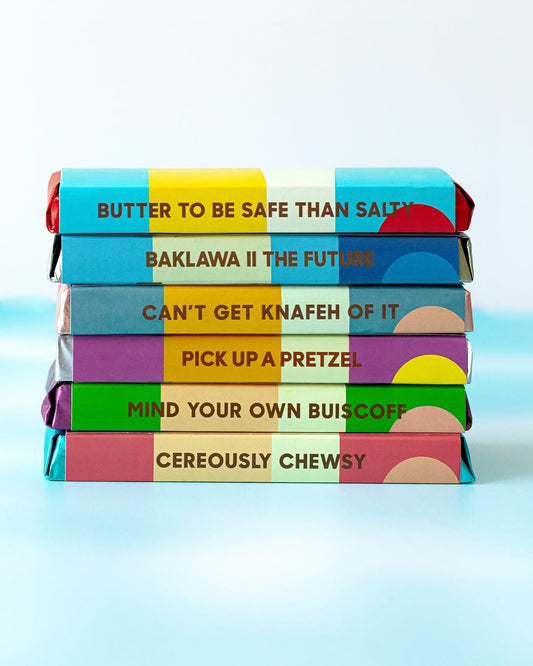
When Sarah Hamouda set out to recreate those flavors inside a chocolate bar, knafeh was the natural inspiration. The FIX signature bar "Can't Get Knafeh of It" distills these ancient flavors — the crunch of toasted kataifi, the creaminess, the pistachio — into a format the world could eat on the go. It is, in essence, knafeh in your pocket.
Key flavor note
Rose water & orange blossom — the floral heart of knafeh
Origin
Levant region, traced back over 1,000 years of culinary history
What is kataifi pastry?
Kataifi is the secret ingredient that made Dubai chocolate different from every other luxury chocolate bar on the market. Visually, kataifi looks like a bird's nest or fine shredded wheat — it is a dough extruded through tiny holes into hair-thin threads, similar to the technique used to make vermicelli. Raw, it is soft and pliable. Toasted in butter, it transforms into something magical: light, impossibly crispy, with a nutty, caramelized depth.
In traditional Middle Eastern cooking, kataifi is used to make pastries like knafeh and a Greek dessert also called kataifi — a rolled pastry filled with walnuts, cinnamon, and honey. The key property that makes it revolutionary inside a chocolate bar is its ability to retain crunch even when encased in chocolate or mixed with cream. Where other inclusions go soft over time, properly toasted kataifi holds its texture.
At FIX, the kataifi is toasted in-house until it reaches a specific golden color and crunch. It is then combined with pistachio cream while still warm, so the fat from the cream coats each strand and further seals in the crispiness. This is why a FIX bar still snaps and crackles on day five in a way that most other chocolate inclusions simply cannot.
What is pistachio cream?
Pistachio cream — sometimes called pistachio paste or pistachio butter — is made by grinding roasted pistachios into a smooth, spreadable paste, often enriched with a small amount of oil and sometimes sweetened. Think of it like peanut butter's more sophisticated, Middle Eastern cousin: deeply green, intensely nutty, with a flavor that manages to be both rich and delicate at the same time.
The quality of pistachio cream varies enormously. Mass-produced versions may use as little as 40–50% actual pistachio content and bulk up with vegetable oils, sugar, and artificial flavoring. Authentic, high-quality pistachio cream — the kind used at FIX — is made from a high percentage of real pistachios, and the flavor difference is immediately apparent: vivid, grassy, floral, and genuinely nutty rather than synthetically sweet.
The natural oils in pistachio cream also serve a functional purpose inside a chocolate bar: they bind the kataifi strands together without making them soggy, acting as both a flavor carrier and a structural glue for the filling. This is part of what gives Dubai chocolate its distinctive "filling that stretches" quality seen in every unboxing video.
Why Belgian chocolate?
Belgium has been synonymous with premium chocolate since the 19th century, and for good reason. Belgian law mandates that chocolate labeled "Belgian" must be produced in Belgium, and the country's chocolate industry adheres to strict standards around cocoa butter content, ingredient quality, and processing. The result is a chocolate with a specific set of properties: smooth melt, clean snap, deep cocoa aroma, and a creamy finish that doesn't leave a waxy coating on the palate.
For a bar like FIX, where the shell is as important as the filling, chocolate quality isn't optional. The shell must be thick enough to provide structural integrity and audible snap, thin enough not to overpower the filling, and flavored well enough to complement — not compete with — the pistachio and kataifi inside. Belgian chocolate's naturally balanced cocoa notes make it the ideal partner for the nutty, floral, slightly savory filling at the core of a FIX bar.
FIX sources both milk and dark Belgian chocolate depending on the bar variant, with the milk chocolate delivering a creamier, sweeter experience that highlights the pistachio, and the dark offering a more complex, bittersweet contrast to the sweet kataifi filling.
What is baklava?
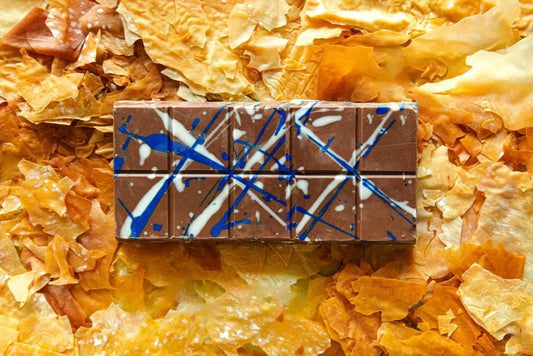
Baklava is perhaps the most internationally recognized Middle Eastern and Mediterranean pastry. It consists of many thin layers of phyllo (filo) dough — paper-thin sheets of unleavened pastry — brushed with clarified butter (ghee) and filled with chopped nuts (most commonly pistachios, walnuts, or a blend), then baked until golden and immediately soaked in syrup scented with rose water, orange blossom water, or honey.
The word "baklava" derives from Arabic and Ottoman Turkish roots, and the dessert appears across Turkish, Greek, Lebanese, Syrian, Persian, and Central Asian cuisines — each with its own regional variation in nuts, syrup flavor, and shape. The Levantine version tends toward pistachio, while the Greek version typically features walnut and honey; both are extraordinary.
At FIX, baklava inspired the bar "Baklawa 2 The Future" — a bar that layers pistachio cream and honey-soaked phyllo inside Belgian chocolate, translating the specific textural pleasure of baklava (crispy layers, sticky syrup, nutty richness) into a form that can be shipped across the world without losing its integrity.
What is Biscoff?
Biscoff is the brand name for a type of Belgian speculoos cookie — a thin, caramelized biscuit spiced with cinnamon, nutmeg, clove, ginger, and cardamom, originally from Belgium. The cookies are known for their deep amber color, satisfying snap, and intensely caramelized, spice-forward flavor. They're the biscuits served on Delta flights. They became a global cult obsession.
Biscoff spread (or Biscoff butter) takes those same cookies and grinds them into a smooth, spreadable paste with a consistency similar to peanut butter. It is sweet, spiced, and extraordinarily versatile — and it has become one of the great modern pantry obsessions worldwide. When combined with chocolate, the spiced caramel notes of Biscoff play beautifully against cocoa bitterness.
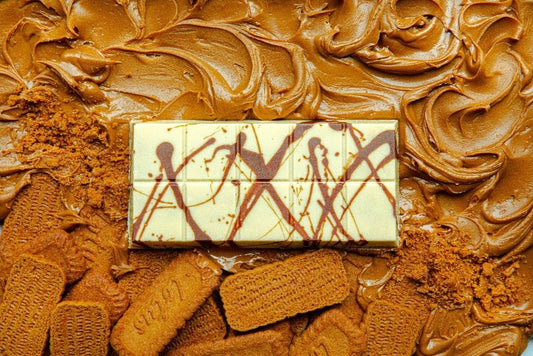
FIX's "Mind Your Own Speculoos" bar pairs Biscoff with Belgian chocolate and — in FIX's signature move — adds textural contrast through crushed biscuit pieces inside the filling. The result is a bar that hits crunchy, creamy, spiced, and chocolatey all at once.
How is Dubai chocolate made?
Every FIX bar is handcrafted in our Dubai kitchen. Here's what that process looks like, step by step:
Tempering the chocolate
Belgian couverture chocolate is melted and tempered — a precise heating and cooling process that aligns the cocoa butter crystals to create a bar with glossy finish, sharp snap, and smooth melt. This is the most technically demanding step and what separates artisan chocolate from mass-produced.
Moulding the shell
Tempered chocolate is poured into custom moulds, then inverted to drain the excess, leaving a thin, even chocolate shell. The moulds are tapped to remove air bubbles and chilled to set.
Toasting the kataifi
Kataifi pastry is toasted in clarified butter until it reaches a specific golden-amber color. The timing matters: under-toasted kataifi will turn soggy in the filling; over-toasted becomes bitter. The FIX team toasts by sight and smell, not a timer.
Making the filling
Warm toasted kataifi is folded into pistachio cream, coating every strand. The mixture is left to cool slightly so it holds its shape when piped into the chocolate shell.
Filling & sealing
The filling is piped into the chocolate shells by hand, then sealed with a final pour of tempered chocolate. The bars are tapped to level the base and refrigerated to set completely.
Quality check & packaging
Each bar is inspected for visual finish, weight, and snap. Bars that don't meet the standard are recycled back into the kitchen. Passed bars are wrapped in our signature packaging and prepared for dispatch — cold-chain where required for international orders.
How to store your FIX bar
Chocolate is a living thing. Treat it right and it will reward you with the exact experience we intended. Here are the rules:
Temperature
Store between 16–18°C (60–65°F). This is cooler than most room temperatures in summer — consider a wine cooler or the coolest room in your home.
Fridge rules
If refrigerating, wrap in foil first to prevent moisture and odor absorption. Remove 20 minutes before eating to let the chocolate bloom to full flavor.
Avoid direct light
Sunlight accelerates fat bloom (the white dusty coating) and degrades flavor compounds. Keep bars in their wrapper or a dark box.
Shelf life
FIX bars are best consumed within 3 months of production. The kataifi crunch peaks in the first 4 weeks after production.
How to taste chocolate like an expert
Most people eat chocolate. Tasters experience it. The difference is attention — and once you've tasted this way, you can't go back.
Snap: Break a piece in half. A sharp, clean snap indicates well-tempered chocolate with stable cocoa butter crystals. A soft, dull break suggests poor tempering or temperature damage.
Aroma: Hold the broken piece under your nose. Inhale. Good Belgian milk chocolate should smell of cream, caramel, and mild cocoa. Dark should be earthy, fruity, and complex. If it smells like nothing, that tells you something too.
Melt: Place a piece on your tongue and do nothing. Good chocolate should melt slowly and evenly from body heat alone within 15–20 seconds. Waxy chocolate (from cheaper fats) doesn't melt properly — it feels like chewing wax.
Texture: Once the chocolate shell has melted, the filling takes over. In a FIX bar, you should experience a layer of crunchy, toasted kataifi followed by smooth pistachio cream — two completely different textures arriving in sequence, balanced against the now-thinning chocolate coat.
How to spot fake Dubai chocolate
The success of FIX has spawned hundreds of imitators — some honest alternatives, many outright fakes using our name, photography, and brand identity to sell inferior products. Here's how to protect yourself:
Red flags to watch for
- The price is too low. Authentic FIX bars start from AED 45. Any "Dubai chocolate" sold for the equivalent of $5–8 is not using quality Belgian chocolate or real pistachio cream.
- No kataifi crunch. If the filling is just pistachio cream with no textural contrast — no crunch, no snap — it is not the FIX formula.
- Synthetic pistachio color. Artificial green fillings are a giveaway. Real pistachio cream ranges from pale golden to muted olive green — never neon.
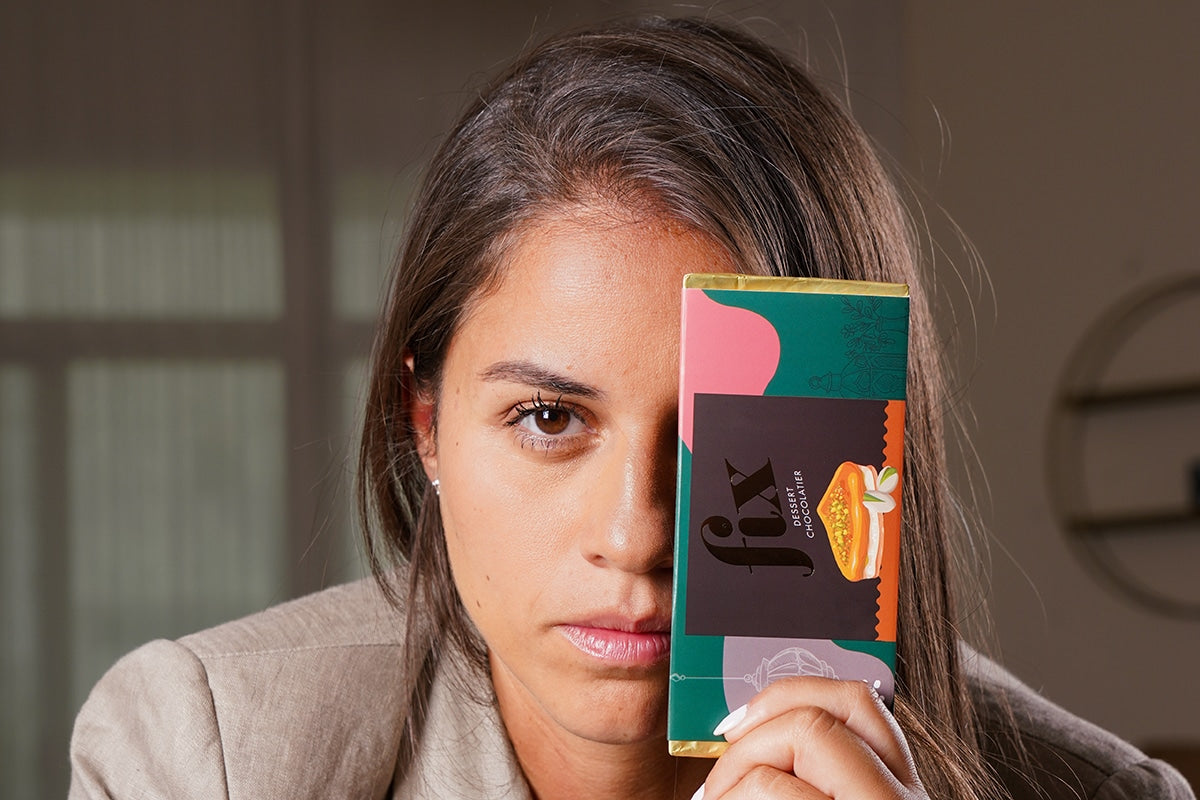
- No official packaging. FIX bars come in our signature packaging with clear branding, production dates, and a QR code linking to our website.
- Social media only. Sellers with no verifiable website or address selling "FIX bars" through Instagram DMs are almost certainly selling counterfeits.
- They're claiming to be us. The only official FIX Dessert Chocolatier website is officialfixdessertchocolatier.com. Any other domain is not us.
How to order Dubai chocolate online
We ship to over 100 countries worldwide from our Dubai kitchen. Here's how to order and what to expect:
Order from the official site only. Visit officialfixdessertchocolatier.com and select your bars or bundle. We offer single bars, gift boxes, and Hero Boxes for those who want to try everything.
Shipping & cold chain. Orders to warm climates or long-haul destinations are shipped with cooling inserts to protect the chocolate during transit. You'll receive tracking the moment your order ships.
Freshness windows. We bake and pack to order as much as possible. The kataifi crunch is at its absolute peak in the first 2 weeks after production — if you're ordering for a special occasion, plan your delivery date accordingly.
How did Dubai chocolate go viral?
In 2023, a food content creator in Dubai filmed herself opening and snapping a FIX bar — the iconic crack of the chocolate, the vivid green filling stretching as she pulled the two halves apart. The video posted to TikTok and collected millions of views within days. Then more creators filmed themselves. Then international news outlets picked it up. Then BBC, CNN, Forbes, and Vogue Arabia ran stories. By 2024, the cumulative TikTok view count for Dubai chocolate content crossed one billion.
The virality wasn't accidental — it was a product designed to be filmed. The crack, the stretch, the color contrast of dark chocolate against jewel-green filling, the ASMR quality of the sound — these are properties of the bar that emerged from the quality of the ingredients, not from a marketing strategy. But once they existed, the internet did the rest.
What's rarer is that the viral product turned out to be genuinely, objectively excellent. Many food trends arrive with hype and leave with disappointment. Dubai chocolate — the real thing, made properly — lives up to every second of its billion views.
What is halal chocolate?
Halal is an Arabic word meaning "permissible" under Islamic law. For food, halal certification means that the product contains no alcohol, no pork-derived ingredients, and has been produced and handled according to Islamic guidelines. In the context of chocolate, the most common non-halal ingredient is alcohol — sometimes used in flavoring extracts, in certain confectionery fats, or in some emulsifiers.
All FIX Dessert Chocolatier products are halal-certified. This is a founding commitment of the brand, rooted in both the Dubai context and in the desire to make our bars genuinely accessible to the 1.8 billion Muslims worldwide and to anyone who chooses halal products for any reason. Our Belgian chocolate suppliers, filling ingredients, and packaging materials all meet halal certification standards.
What makes artisan chocolate different?
The word "artisan" appears on a lot of chocolate wrappers. It doesn't always mean much. For FIX, artisan means something specific: every bar is made by hand, in small batches, in our Dubai kitchen, with no automation in the filling, moulding, or finishing steps.
It also means we don't use stabilizers, artificial flavoring, or industrial fats to extend shelf life or reduce cost. The result is a bar that tastes unlike anything manufactured at scale — because it cannot be manufactured at scale. The textural nuance of properly toasted kataifi, the delicate fold of filling into the shell, the visual finish of the bar — these are the outcomes of human judgment and craft applied thousands of times over, bar by bar.
The history of chocolate — from Mesoamerica to Dubai
Chocolate has one of the most extraordinary origin stories in food history. The cacao tree (Theobroma cacao — literally "food of the gods") is native to the tropical rainforests of Central and South America. The Olmec, Maya, and Aztec civilizations all consumed cacao — not as the sweet solid we know today, but as a bitter, spiced liquid drink used in religious ceremonies and as currency. Montezuma II reportedly drank fifty cups of xocolatl (the Aztec precursor to chocolate) a day.
Spanish conquistadors brought cacao back to Europe in the 16th century. The Europeans added sugar, vanilla, and cinnamon — and a craze was born. By the 17th century, chocolate houses in London were as common as coffee houses. By the 19th century, the Swiss and Belgians had developed the techniques of conching and tempering that gave us smooth, meltable chocolate bars. Lindt, Ghirardelli, Cadbury — the modern chocolate industry was built in that century.
The 20th century democratized chocolate. The 21st century elevated it again — through the bean-to-bar movement, through craft chocolatiers, and through the collision of European chocolate technique with the world's other great confectionery traditions.
FIX Dessert Chocolatier sits at the intersection of these histories: Belgian chocolate meeting Levantine pastry, European technique meeting Middle Eastern flavor, a 3,000-year-old food tradition arriving, crackling and green, in your inbox.
Ready to taste the original?
The bar that started everything.
Order the authentic FIX Dessert Chocolatier bars, handcrafted in Dubai and shipped to over 100 countries.
Shop Now