

The History of Knafeh from Ancient Middle East to Viral Chocolate Bar
The History of Knafeh
from Ancient Middle East
to Viral Chocolate Bar
A thousand-year journey through the souks, royal kitchens, and street vendors of the Arab world — ending inside the world's most viral chocolate bar.
In this article
We trace knafeh from its earliest recorded mention in 10th-century Arab cookbooks through the Ottoman empire, the Palestinian streets, and into the FIX Dessert Chocolatier kitchen in Dubai — where it became the filling that launched the world's most viral chocolate bar.
Before it was a chocolate bar, knafeh was a prayer. Every Friday morning across the Arab world, families gathered around trays of it — the shredded pastry baked until golden, soaked in floral syrup, layered over warm white cheese. A thousand years of ritual. A thousand years of the same remarkable thing.
When FIX Dessert Chocolatier took that tradition and folded it into a Belgian chocolate bar, they weren't just making a product. They were making an argument: that the greatest dessert in the Arab world belongs on the world stage. History, it turns out, agreed.
A thousand years of knafeh
The history of knafeh is, in many ways, the history of the Arab world itself — its trade routes, its empires, its hospitality culture, and its extraordinary culinary ingenuity.
The earliest known reference to knafeh appears in an Arab cookbook from the Fatimid Caliphate, describing a sweet pastry made from shredded wheat dough, cheese, and honey. Historians believe the dish predates this record significantly — oral tradition in the Levant traces it to the royal kitchens of the Umayyad dynasty in Damascus.
The Ottoman empire carried knafeh — along with baklava, halva, and dozens of other pastries — across its vast territories. It became a staple from Istanbul to Cairo, from Beirut to Jerusalem, each region adapting the filling and the syrup to local taste. The city of Nablus in Palestine became particularly celebrated for its version — knafeh nabulsiyya — using a stretchy white brine cheese unique to the region.
By the 19th century, knafeh had become deeply embedded in the social fabric of the Levant and wider Arab world. Specialised kunafajiyya — knafeh vendors — operated in the souks and markets of every major city. Families would gather at bakeries after Friday prayers to share trays warm from the oven. The dish acquired a ritual significance beyond its flavour: knafeh was celebration, hospitality, homecoming.
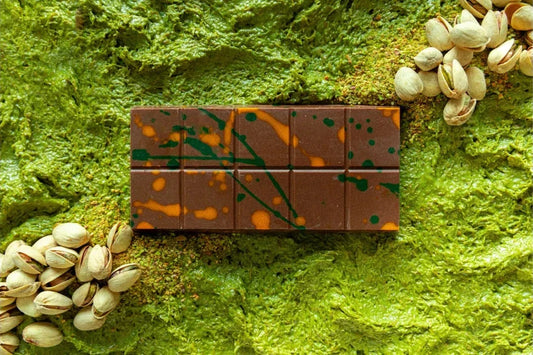
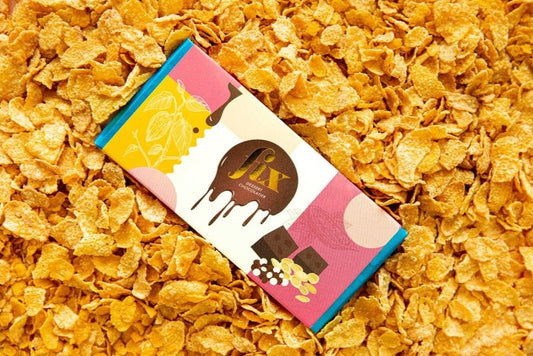
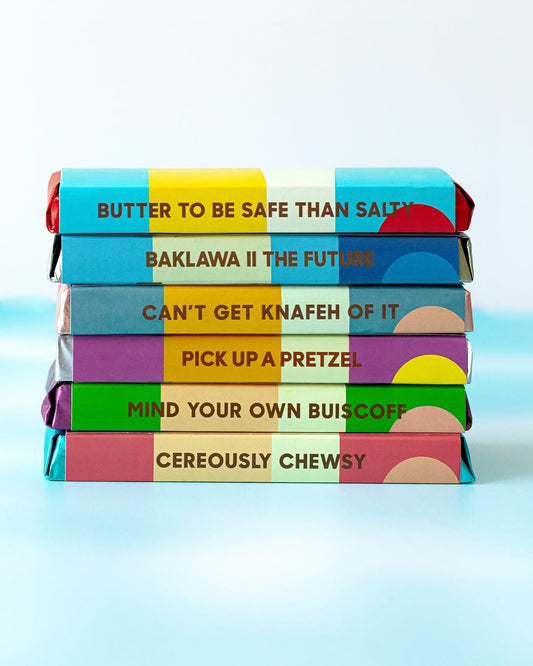
FIX Dessert Chocolatier is founded in Dubai with a singular ambition: to honour the greatest desserts of the Middle East by translating them into world-class chocolate bars. The first creation is Can't Get Knafeh of It — toasted kataifi pastry folded into real pistachio paste, sealed inside a thick Belgian chocolate shell. Knafeh, ten centuries old, reborn in chocolate.
A single TikTok video reaches hundreds of millions of people. The world searches "Dubai chocolate" and "knafeh chocolate" at a rate that breaks Google Trends records. An ancient pastry, born in the royal courts of the Umayyad dynasty, is now the most searched food item on earth. FIX Dessert Chocolatier ships to over 100 countries. The journey is complete.
Knafeh is not just a food. It is a memory. It is the smell of your grandmother's kitchen, the sound of syrup hitting hot pastry, the Saturday morning before anything went wrong. When you taste it in a chocolate bar, that memory travels with it.
FIX Dessert Chocolatier
What exactly is knafeh?
At its most traditional, knafeh is a baked sweet pastry made from one of two forms of shredded wheat dough — either kataifi (fine, hair-like strands) or semolina dough — layered over a white, slightly salty cheese, baked until golden, then drenched in a fragrant sugar syrup flavoured with rose water or orange blossom.
The contrast is everything: the crispy, golden pastry against the warm, stretchy cheese. The sweetness of the syrup against the slight saltiness of the cheese. It is, by any measure, one of the most architecturally sophisticated desserts ever devised.
Regional variations across the Arab world
Nablus, Palestine
The gold standard. Made with Nabulsi cheese — a stretchy white brine cheese unique to the region — and served from enormous round copper trays, often with a scattering of crushed pistachios.
Lebanon
Often made with a semolina base rather than kataifi strands, producing a denser, more cake-like texture. Lebanese versions frequently use akkawi cheese and heavy orange blossom syrup.
Egypt
Egyptian konafa is frequently made with a cream or clotted cream filling instead of cheese, producing a softer, richer result. Often cut into individual portions and heavily syruped.
Turkey
Called künefe, the Turkish version uses the famous Hatay string cheese, served on a small copper plate, hot from the oven, with clotted cream (kaymak) on the side. Often eaten for breakfast.
Knafeh vs kunafa: same thing?
Yes — knafeh and kunafa refer to the same dish. The spelling varies by region and by the language of transcription from Arabic. Knafeh is common in Palestinian and Jordanian Arabic; kunafa is the Egyptian and broader classical Arabic transliteration; künefe is the Turkish spelling; konafa is common in Egyptian dialect. All refer to the same ancient shredded pastry and cheese dessert.
FIX Dessert Chocolatier chose knafeh for their bar name — Can't Get Knafeh of It — to honour the Levantine origin of the dish and the specific tradition of the kataifi (fine shredded pastry) that forms the filling.
From the souk to the chocolate bar: what changed?
The leap from knafeh to the FIX chocolate bar required one crucial decision: to keep the kataifi as the hero.
In traditional knafeh, the kataifi is the structure — the crispy shell that holds everything together. In the FIX bar, the roles are reversed. The kataifi becomes the filling, while Belgian chocolate takes the role of the outer shell. The cheese is replaced by pistachio paste, which carries the same richness and slight savouriness, while being shelf-stable enough to travel worldwide.
The key to preserving the crunch — the defining quality of knafeh — was toasting the kataifi in butter before mixing it with the pistachio cream. This drives out moisture and coats each strand in fat, protecting the crispiness inside a sealed chocolate environment for months.
The result is a bar that carries something genuinely ancient inside it. When you taste the crunch of toasted kataifi in a FIX chocolate bar, you are tasting a technique refined over ten centuries. You are tasting the Friday morning markets of Nablus. You are tasting history.
Why this matters for Dubai chocolate
It is not a gimmick
The Dubai chocolate bar is rooted in a genuinely ancient culinary tradition. The kataifi inside is not a novelty ingredient — it has been the centrepiece of the Arab world's greatest dessert for over a thousand years.
It carries culture across borders
Over a billion people encountered the concept of knafeh for the first time through a Dubai chocolate bar video. That is extraordinary cultural reach — a Middle Eastern tradition transmitted through chocolate to every corner of the world.
FIX created something genuinely new
No one had put kataifi inside a chocolate bar before 2021. The world was waiting for something that tasted like this — they just didn't know what to call it yet. Now they do: Dubai chocolate.
Frequently asked questions
Where was knafeh invented?
The exact origin is debated, but the earliest written records appear in Fatimid-era Arab cookbooks from the 10th century. Many historians place its origin in the Levant — the region covering modern-day Palestine, Jordan, Lebanon, and Syria — with the city of Nablus, Palestine, credited as the home of the most celebrated version.
What is kataifi and how is it different from knafeh?
Kataifi is the name for the shredded wheat pastry dough used in knafeh. It looks like fine, pale noodles or shredded wheat and is made by forcing dough through a fine sieve onto a hot surface, producing thin, crispy strands. Knafeh is the finished dish that uses kataifi as its main structural component. In the FIX chocolate bar, kataifi is toasted and used as the crunchy filling ingredient.
Is the knafeh in a FIX bar authentic?
Yes. FIX uses real kataifi pastry — the same shredded wheat dough used in traditional knafeh — toasted in butter until golden and crispy, then folded into real pistachio paste. We do not use kataifi substitutes or simulate the crunch with other ingredients. Authenticity of ingredients is non-negotiable for us.
Why did knafeh become associated with Dubai specifically?
Because FIX Dessert Chocolatier — the company that created the viral knafeh chocolate bar — is based in Dubai. The bar went viral under the name "Dubai chocolate" because it was discovered and shared from Dubai. Knafeh itself is a Levantine dish, but the chocolate bar format and the global virality originated entirely from FIX, a Dubai company.
A thousand years in the making
History never tasted
this good.
The original Dubai chocolate bar. Real kataifi. Real pistachio. Real Belgian chocolate. Handcrafted in Dubai and shipped to your door, anywhere in the world.