



The Complete Science Behind Why Dubai Chocolate Went Viral
Psychology, Social Media Algorithms, and the Pistachio Phenomenon That Changed the Chocolate Industry Forever
One chocolate bar. One TikTok video. Over 120 million views. What happened next transformed a Dubai dessert shop into a global phenomenon, triggered international pistachio shortages, and rewrote the playbook for viral food trends in the digital age.
The story of Dubai chocolate's meteoric rise isn't just about a delicious treat—it's a masterclass in the intersection of psychology, social media algorithms, cultural authenticity, and perfectly-timed market disruption. From a single viral moment to billion-dollar economic impact, let's decode exactly how and why this happened.
📋 What You'll Discover in This Deep Dive
- ▸ The Viral Moment: How 120 Million Views Changed Everything
- ▸ The Psychology of Viral Food Trends: Why Our Brains Couldn't Resist
- ▸ The Dubai Effect: Luxury Branding Meets Middle Eastern Authenticity
- ▸ Social Media Algorithms and the "Satisfying Crack" Phenomenon
- ▸ Economic Impact: From Pistachio Shortages to Global Copycats
- ▸ What Brands Can Learn From FIX's Unprecedented Success
- ▸ The Future: Angel Hair Chocolate and What's Coming Next
The Viral Moment: How 120 Million Views Changed Everything
It started with a craving. In 2021, British-Egyptian entrepreneur Sarah Hamouda was pregnant and longing for knafeh—a traditional Middle Eastern dessert made with shredded pastry, soft cheese, pistachios, and sweet syrup. But instead of reaching for something familiar, she decided to create something entirely new.
📊 The Numbers That Broke the Internet
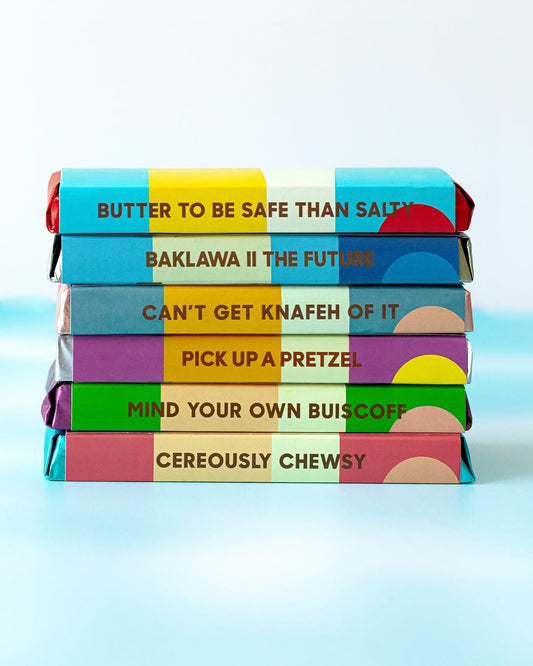
Working with Chef Nouel Catis, who had always been drawn to Arabic flavors, Hamouda developed what would become the Can't Get Knafeh of It bar—layered with creamy pistachio paste, crispy kataifi pastry, tahini, and encased in premium Belgian chocolate. The partnership was natural; the product was revolutionary.
FIX Dessert Chocolatier launched the bar as a limited-time offering in Dubai in 2021. For nearly two years, it remained a beloved local secret—a cult favorite among Dubai residents and a must-try for travelers. Then came the moment that changed everything.
In late 2023, a single TikTok video showing the bar being cracked open—revealing the oozing pistachio cream and crispy kataifi layers—went explosively viral. The video wasn't professionally produced. It wasn't part of a massive marketing campaign. It was simply authentic, satisfying, and impossible to scroll past.
"That single post set off a global reaction. It delivered a sensory moment that was hard to ignore—visual, tactile, and strangely satisfying. More importantly, it offered a rare sense of authenticity."— Food Industry Analysis, 2025
Within days, the hashtag #dubaichocolate began trending across platforms. Creators posted unboxing videos, filmed the satisfying "break" in slow motion, and shared reviews praising the flavor and texture. Others attempted homemade versions using store-bought ingredients. What started as a local indulgence had transformed into a global fixation.
According to data from Tastewise, social conversations around Dubai chocolate exploded by 1,259% year-over-year. The platform tracked 15,264 social mentions and 8,749 unique posters engaging with the trend. In the UAE alone, over 1.2 million chocolate bars were sold in Q1 2025—a staggering number for what was essentially a small-batch, handcrafted product.
But these numbers only tell part of the story. To understand why this particular chocolate bar became a cultural phenomenon, we need to dig deeper into the psychology, the platforms, and the perfect storm of factors that made it irresistible.
The Psychology of Viral Food Trends: Why Our Brains Couldn't Resist
Dubai chocolate didn't go viral by accident. It hit every psychological trigger that makes content shareable, memorable, and crave-inducing. Let's break down the neuroscience and behavioral psychology that made this bar impossible to ignore.
1. The "Oddly Satisfying" Effect
When you crack open a Dubai chocolate bar, several things happen simultaneously: the chocolate shell snaps with a clean break, the pistachio cream slowly oozes out, and the crispy kataifi strands create a textural contrast that's both visual and auditory. This multi-sensory experience triggers what psychologists call "ASMR-adjacent satisfaction"—a deeply pleasurable response that our brains are hardwired to enjoy.
Research in sensory marketing shows that foods with contrasting textures activate more areas of the brain than uniform textures. The combination of smooth (chocolate), creamy (pistachio), and crunchy (kataifi) creates what food scientists call "dynamic contrast"—and our brains are evolutionarily wired to seek out these experiences because they signal nutrient diversity.
🧠 THE NEUROSCIENCE OF "SATISFYING"
When we watch or experience something "oddly satisfying," our brains release dopamine—the same neurotransmitter associated with reward and pleasure. The crack of the chocolate, the slow reveal of the filling, and the textural contrast create a dopamine loop that makes viewers want to watch again and again. This is why "satisfying" content has over 32 billion views on TikTok alone.
2. Visual Appeal and the "Instagrammability" Factor
The vibrant green of the pistachio cream is no accident—it's a visual cue that triggers curiosity and memorability. In a sea of brown chocolate products, the bright green filling creates what marketers call "pattern disruption." Our brains are wired to notice things that break patterns, and that pop of color is evolutionarily significant (green often signals freshness and nutrition).
Moreover, the bar photographs beautifully. The glossy chocolate shell, the oozing green cream, the golden kataifi strands—every element is photogenic. In the age of "pics or it didn't happen," Dubai chocolate offered the perfect combination of visual drama and aesthetic appeal. Studies show that food posts with high color contrast receive 38% more engagement than monochromatic food images.
3. Scarcity and Exclusivity: The FOMO Effect
FIX Dessert Chocolatier didn't initially plan for global distribution. They released limited batches twice daily, and bars sold out within minutes. This scarcity wasn't a marketing gimmick—it was a constraint of handcrafted production—but it had a profound psychological effect.
Behavioral economists have long documented that scarcity increases perceived value. When something is hard to get, we want it more. The "fear of missing out" (FOMO) is a powerful motivator, and Dubai chocolate leveraged this perfectly. People weren't just buying chocolate; they were securing access to a cultural moment, a taste of something exclusive and globally desired.
4. Novelty and Cultural Fusion
Our brains are hardwired to seek novelty—it's how we learned to explore our environment and find new resources. Dubai chocolate offered something genuinely new: a fusion of Middle Eastern dessert traditions (knafeh has been made for centuries) with European chocolate craftsmanship (Belgian couverture chocolate).
This wasn't just another chocolate bar or another Middle Eastern sweet—it was a bridge between cultures, a innovation that respected tradition while creating something contemporary. This cultural fusion appealed to both adventurous eaters seeking new experiences and those with cultural connections to Middle Eastern cuisine.
💡 Key Psychological Triggers
- Multi-sensory satisfaction: Visual, auditory, and tactile pleasure
- Dopamine activation: The "satisfying crack" creates reward loops
- Pattern disruption: Bright green filling breaks visual expectations
- Scarcity effect: Limited availability increases perceived value
- Novelty seeking: Cultural fusion creates genuine innovation
- Social proof: 120M+ views validate the experience
When you combine all these factors—satisfying textures, visual appeal, scarcity, novelty, and cultural authenticity—you create what viral marketing expert Jonah Berger calls "social currency": content that makes people look good when they share it. Dubai chocolate gave people a reason to participate in a global conversation, to show they were "in the know," and to share an experience that was genuinely remarkable.
The Dubai Effect: Luxury Branding Meets Middle Eastern Authenticity
Dubai itself is a brand—synonymous with luxury, innovation, and the spectacular. The city has built a reputation for turning the impossible into reality, from the world's tallest building to artificial islands shaped like palms. When something is labeled "Dubai chocolate," it carries implicit associations of quality, extravagance, and exclusivity.
The Power of Place-Based Branding
Place-based branding is incredibly powerful in the food industry. Think "Belgian chocolate," "French wine," "Italian pasta," or "Japanese wagyu." Each carries centuries of cultural weight and expertise. "Dubai chocolate" tapped into this phenomenon, but with a modern twist—it represented the new, the innovative, and the globally connected.
Dubai's reputation as a luxury destination added an aspirational quality to the product. Consumers weren't just buying chocolate; they were buying a taste of Dubai's glamorous lifestyle. This geographic association created what marketers call "borrowed equity"—the product benefited from the city's carefully cultivated image of opulence and innovation.
Authenticity in an Age of Copycats
As Dubai chocolate went viral, hundreds of imitators emerged—from major corporations like Lindt releasing "Mediterranean Pistachio" bars to small bakeries recreating the recipe at home. But FIX maintained a crucial advantage: authenticity.
Sarah Hamouda's British-Egyptian heritage, her pregnancy craving that sparked the creation, the collaboration with a chef who loved Arabic flavors, the handcrafted production in Dubai—these weren't marketing narratives; they were genuine origin stories. In an era where consumers are increasingly skeptical of corporate authenticity, FIX's story resonated because it was real.
"FIX capitalized early on this shift, positioning itself as a premium, concept-driven chocolate brand rather than a traditional confectionery company. As a result, each release now generates anticipation rather than passive availability."— Industry Analysis, 2026
The Heritage Factor: Knafeh's 1,000-Year Legacy
Knafeh isn't a trendy new dessert—it's been a staple of Middle Eastern cuisine for over a millennium. This deep cultural history gave Dubai chocolate a foundation that no imitator could replicate. When FIX created Can't Get Knafeh of It, they weren't inventing a gimmick; they were reinterpreting a beloved classic for a modern, global audience.
This heritage connection resonated with multiple audiences: Middle Eastern communities worldwide saw a familiar taste elevated to global recognition; food enthusiasts appreciated the cultural education; and adventurous eaters were drawn to the exotic-yet-accessible flavor profile.
🌍 The Global-Local Paradox
Dubai chocolate succeeded by being simultaneously hyperlocal and globally minded. It was rooted in specific Middle Eastern traditions (knafeh, tahini, pistachios) but presented in a format (chocolate bars) that was universally understood. It was handcrafted in Dubai but shipped worldwide. This balance—authentic yet accessible, traditional yet innovative—is notoriously difficult to achieve.
The result was a product that appealed to locals proud of their culinary heritage AND to global consumers seeking authentic experiences. It was Dubai in edible form: cosmopolitan, luxurious, rooted in tradition, and always looking forward.
The Dubai brand effect also created a halo around the entire experience. Consumers reported that eating the chocolate felt like a mini-vacation, a taste of somewhere exotic and glamorous. This emotional connection transformed a chocolate bar into an experience—and experiences are what drive sharing, conversation, and ultimately, virality.
Social Media Algorithms and the "Satisfying Crack" Phenomenon
Dubai chocolate's viral success wasn't just about human psychology—it was also about understanding and leveraging social media algorithms. The content performed exceptionally well because it matched what platforms were designed to promote.
TikTok's Perfect Storm
TikTok's algorithm prioritizes three key metrics: watch time, completion rate, and engagement (likes, comments, shares). Dubai chocolate videos excelled at all three. Let's break down why:
- High completion rate: Videos were typically 15-30 seconds—short enough that viewers watched to the end, but long enough to show the full "crack and reveal" moment.
- Rewatch value: The satisfying nature of the content made people watch multiple times. TikTok's algorithm interprets rewatches as a strong engagement signal.
- Comment engagement: Videos sparked questions ("Where can I buy this?"), debates ("Is it worth the hype?"), and sharing of experiences ("I tried it and it's amazing!").
- Share rate: People tagged friends, saved videos to their "want to try" collections, and sent them to group chats—all signals that tell the algorithm "this content is valuable."
The "Oddly Satisfying" Category Advantage
The "oddly satisfying" content category has over 32 billion views on TikTok. This established audience was already primed to engage with content like Dubai chocolate videos. When creators used hashtags like #oddlysatisfying, #satisfying, and #asmr alongside #dubaichocolate, they tapped into multiple existing communities simultaneously.
The sound design was equally important. The crack of the chocolate, the slight crunch of the kataifi, even the background sounds of unwrapping—these audio elements created an ASMR-like experience that kept viewers engaged. TikTok users often watch videos with sound on, unlike Instagram where many scroll silently, making audio quality a crucial factor in performance.
Instagram's Visual Storytelling
While TikTok drove initial virality, Instagram became the platform for aspirational storytelling. Food bloggers, travel influencers, and luxury lifestyle accounts featured Dubai chocolate as part of broader narratives about exotic travel, culinary adventures, and premium experiences.
Instagram's algorithm favors high-quality visuals and strong engagement in the first hour after posting. Dubai chocolate photographs beautifully—the green pistachio cream against the brown chocolate created stunning visual contrast. The bars were photogenic enough to appear in flat-lay compositions, dessert tables, and even fashion/lifestyle content.
User-Generated Content: The Multiplier Effect
Perhaps the most powerful aspect of Dubai chocolate's viral success was the volume of user-generated content. According to Tastewise data, 15,264 unique social mentions came from 8,749 different creators—meaning this wasn't driven by a few mega-influencers but by thousands of everyday users sharing their experiences.
This organic, distributed approach created what marketers call "social proof at scale." When potential customers saw hundreds of regular people (not just influencers) raving about the product, it built trust and credibility that no amount of paid advertising could replicate.
📱 The Content Creation Loop
Dubai chocolate created a self-reinforcing content loop: Videos went viral → More people wanted to try it → Those who got it shared their own videos → Those videos introduced new audiences → More demand created → Scarcity increased → FOMO intensified → Even more content created. This flywheel effect is the holy grail of viral marketing, and it can't be manufactured—it has to emerge organically from a genuinely remarkable product.
The algorithm advantage also extended to search. As more people created content using "Dubai chocolate" in titles, descriptions, and hashtags, the term became increasingly searchable. Google Trends data showed search volume for "Dubai chocolate" increased by 450% year-over-year in January 2026, creating a secondary discovery channel beyond social media.
Experience the Original Dubai Chocolate Bar
Don't settle for copycats. Taste the authentic FIX chocolate that started the global phenomenon.
🍫 Shop NowEconomic Impact: From Pistachio Shortages to Global Copycats
The Dubai chocolate phenomenon didn't just create viral content—it disrupted global supply chains, triggered agricultural challenges, and transformed the economics of the chocolate and nut industries. The ripple effects continue to reshape markets worldwide.
The Great Pistachio Shortage of 2024-2025
As Dubai chocolate demand exploded, so did the demand for pistachios. According to Tastewise, pistachio drives 39% of all Dubai chocolate social mentions. Search volume for "pistachio chocolate filling" surged by 137% in 2025. This sudden spike in demand exposed vulnerabilities in the global pistachio supply chain.
Iran and Turkey, two of the world's largest pistachio producers, were already dealing with drought conditions and reduced yields. The Dubai chocolate trend hit right as these countries were experiencing agricultural stress. While global pistachio prices hadn't yet risen to the same extent as cocoa (which saw its own crisis), industry experts warned of potential long-term impacts.
⚠️ Climate Change Connection
"Iran and Turkey, two of the world's largest pistachio producers, are suffering from drought, and pistachio production is down as a result. Global pistachio prices have not yet risen to the same extent as cocoa, but Dubai chocolate may not be a less expensive product to produce in the long term if current climate conditions persist and likely worsen."
— Max Dugan-Knight, Climate Data Scientist, Deep Sky Research
The pistachio shortage created a secondary market effect: premium pricing. What was already a luxury product became even more exclusive. FIX's pricing strategy—already positioned at the premium end—was validated by market realities. Competitors attempting to undercut on price often sacrificed quality, using less pistachio paste or lower-grade nuts, which consumers quickly noticed and criticized.
The Copycat Economy
Success breeds imitation, and Dubai chocolate spawned an entire ecosystem of copycats, variations, and "inspired by" products. Within months of going viral, the trend appeared in:
🌎 Global Dubai Chocolate Variations
- Major Corporations: Lindt's Mediterranean Pistachio bar, launched December 2024
- Foodservice: Starbucks Dubai Chocolate Bar Matcha Latte, Shake Shack Dubai Chocolate Pistachio Shake
- Bakeries: Paris Baguette's Dubai Chocolate Mochi Donut, LA croissant shops featuring pistachio-kunafa fillings
- Ice Cream: Marble Slab Creamery's Dubai Chocolate Sundae, UK supermarket sundae tubs
- Home Recipes: Thousands of DIY tutorials on TikTok and YouTube
- Regional Variations: Egyptian feteer versions, Turkish café interpretations, Japanese convenience store editions
This proliferation had both positive and negative effects. On the positive side, it expanded awareness and kept the trend alive. Dubai chocolate became a category, not just a product. On the negative side, it created confusion in the market and diluted the original product's exclusivity.
The Cocoa Crisis Connection
Ironically, Dubai chocolate's rise coincided with a global cocoa crisis. Volatile weather conditions in West Africa—particularly extreme heat—devastated cocoa crops, causing prices to soar. Traditional chocolate manufacturers faced significant cost pressures.
Dubai chocolate, with its emphasis on filling rather than chocolate shell thickness, inadvertently offered a solution. As one analyst noted: "Producers of Dubai-style chocolate have been able to keep costs down while traditional chocolate production has become more and more expensive." The format required less cocoa relative to traditional bars, making it economically viable even as cocoa prices climbed.
Economic Lessons: The Value of Authenticity
Despite hundreds of competitors entering the market, FIX maintained price power and brand loyalty. Their bars consistently commanded premium prices ($20-$25 per bar) while imitators struggled at lower price points. This demonstrated a crucial economic principle: authentic products with compelling origin stories can maintain premium positioning even in crowded markets.
The controlled scarcity model also proved economically sound. Rather than scaling to meet all demand immediately (which would have required massive capital investment and risked quality dilution), FIX maintained their artisanal approach. This preserved margins, maintained quality control, and kept the brand aspirational. It's a model more aligned with luxury fashion than mass-market confectionery—and it worked.
What Brands Can Learn From FIX's Unprecedented Success
The Dubai chocolate phenomenon offers valuable lessons for any brand hoping to create viral success, build lasting customer loyalty, and navigate the modern digital landscape. Let's extract the strategic principles that made this possible.
Lesson 1: Authenticity Can't Be Manufactured
Every successful viral trend has a genuine origin story. Sarah Hamouda's pregnancy craving, her cultural heritage, the collaboration with a chef who loved Arabic flavors—these weren't marketing narratives retrofitted onto a product. They were the actual genesis of the creation.
In an age of AI-generated content and corporate focus groups, consumers have developed sophisticated BS detectors. They can sense when something is manufactured versus when it emerged organically from genuine passion, cultural roots, or problem-solving. Brands trying to "create" the next viral sensation often fail because they're optimizing for virality rather than creating something meaningful first.
💡 The Authenticity Checklist
- Does your product solve a real problem or fulfill a genuine desire?
- Can you tell its origin story in 2-3 sentences without corporate jargon?
- Would this product exist even if it never went viral?
- Do the creators have genuine connection to the cultural traditions involved?
- Is the product quality consistent with the brand story?
Lesson 2: Scarcity Works, But Only If It's Real
FIX's limited-batch model created genuine scarcity. They released bars twice daily, and they sold out quickly because production capacity was limited by the handcrafted nature of the product. This wasn't artificial scarcity designed to manipulate consumers—it was operational reality.
When scarcity feels authentic (e.g., "we can only make 200 bars per day because each requires 30 minutes of hand-assembly"), consumers accept it. When scarcity feels manipulative (e.g., "limited edition!" for a mass-produced item), it backfires. The key is that your constraints should be intrinsic to your product quality, not extrinsic marketing tactics.
Lesson 3: Multi-Sensory Experiences Win in Video-First Platforms
Dubai chocolate succeeded because it was designed (perhaps accidentally) for the TikTok era. The crack, the ooze, the crunch, the color contrast—every element was made for video. Modern food products need to consider: "How will this look and sound in a 15-second video?"
This doesn't mean abandoning taste for aesthetics. It means recognizing that in the social media age, visual and auditory appeal IS part of the product. The best products deliver on both the sensory experience in-person AND the digital representation.
🎯 Strategic Framework for Viral Success
Lesson 4: Let Customers Drive Content Creation
FIX didn't create the viral videos that made Dubai chocolate famous—customers did. The brand's role was to create a product so remarkable that people wanted to share their experience. This organic, user-generated content had far more credibility than any paid campaign could achieve.
The modern marketing playbook isn't about controlling the message—it's about creating experiences worth talking about and then getting out of the way. FIX understood this intuitively. They focused on product excellence and let the community become their marketing engine.
Lesson 5: Premium Positioning Can Survive Copycats
When Lindt, Starbucks, and countless others launched their Dubai chocolate variations, many predicted it would hurt FIX. The opposite happened. The imitators validated the category and introduced more people to the concept—many of whom then sought out the authentic original.
Premium brands often benefit from mass-market adoption of their innovations because it creates awareness while maintaining differentiation through quality and authenticity. Apple doesn't suffer when competitors copy their designs—they benefit from the market education. FIX experienced the same dynamic.
Lesson 6: Cultural Timing Matters
Dubai chocolate emerged at the perfect cultural moment: global interest in Middle Eastern cuisine was rising, consumers were seeking authentic experiences over mass-produced products, and social media had created infrastructure for rapid trend dissemination. The product matched the zeitgeist.
Brands can't manufacture perfect timing, but they can recognize cultural currents and position themselves accordingly. FIX's success was about reading the room—understanding that consumers in 2023-2024 were hungry for exactly what they offered: authentic, culturally-rooted, visually stunning, premium experiences.
The Future: Angel Hair Chocolate and What's Coming Next
As Dubai chocolate enters its maturity phase, industry watchers are already identifying the next wave of viral dessert trends. Understanding these emerging patterns helps predict where the market is heading—and what might be the "next Dubai chocolate."
Angel Hair Chocolate: The Rising Star
According to Taste Tomorrow's 2026 chocolate trends report, the Angel Hair chocolate bar is experiencing 3,900% growth online and is being positioned as Dubai chocolate's potential successor. This variation features Turkish cotton candy (pişmaniye or "angel hair") mixed with pistachio cream, creating an even more ethereal texture than kataifi.
What makes Angel Hair compelling is that it follows the Dubai chocolate formula—texture contrast, Middle Eastern ingredients, visual drama—while offering genuine novelty. The cotton candy dissolves on the tongue while the pistachio cream and chocolate remain, creating a multi-phase tasting experience.
🔮 Emerging Chocolate Trends for 2026-2027
- Angel Hair/Cotton Candy Fillings: Texture innovation with melt-in-mouth characteristics (3,900% online growth)
- Plant-Based Premium: Vegan versions of Dubai chocolate using cashew or almond-based creams
- Regional Flavor Fusions: Rose + pistachio, saffron + tahini, sesame + honey variations
- Frozen Formats: Dubai chocolate ice cream, popsicles, and frozen dessert bars
- Mini/Snackable Sizes: Bite-sized versions for portion control and price accessibility
- Sustainable Sourcing Narratives: Transparency about cocoa and pistachio origins
FIX's 2026 Innovation Strategy
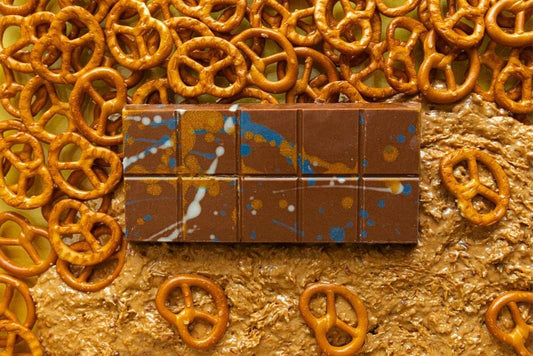
Rather than resting on the success of Can't Get Knafeh of It, FIX has continued innovating. Their 2026 limited-edition releases—Honey I'm Comb (featuring honeycomb toffee) and Jam or Go Nuts (peanut butter and jam blondie chocolate)—demonstrate strategic diversification.
These releases show FIX moving beyond pure Middle Eastern flavors while maintaining their texture-forward, premium approach. Honey I'm Comb offers balanced sweetness with crunch (appealing to those who found pistachio too rich), while Jam or Go Nuts provides familiar Western flavors in FIX's signature format.
This product strategy is smart: diversify the catalog to encourage repeat purchases while maintaining the limited-edition scarcity model that drives urgency. According to industry data from Statista, premium chocolate demand continues to rise globally, supporting FIX's high-end positioning.
The Sustainability Challenge
As climate change continues to impact both cocoa and pistachio production, the chocolate industry faces an existential challenge. Max Dugan-Knight's warning bears repeating: "The effects of climate change can sometimes feel distant and abstract, but impacting the kind of chocolate we eat is pretty direct. And more disruption is on the way."
Future iterations of premium chocolate—whether Dubai-style or otherwise—will need to address sustainability directly. This might mean:
- Transparent supply chains showing pistachio and cocoa sourcing
- Support for climate-resilient farming practices
- Investment in alternative ingredients that can withstand climate volatility
- Carbon-neutral shipping and packaging solutions
- Educational initiatives about the environmental impact of luxury foods
Brands that proactively address these challenges—rather than waiting for consumer backlash or regulatory pressure—will be positioned as leaders in the next generation of premium confectionery.
What Won't Change: The Human Craving for Joy
Regardless of trends, algorithms, or supply chain challenges, one constant remains: people seek joy, pleasure, and moments of delight. Dubai chocolate succeeded not just because of clever marketing or lucky timing, but because it delivered genuine happiness.
The crack of the shell, the first taste of pistachio cream, the satisfying crunch—these are moments of pure sensory pleasure in an increasingly complex world. As Taste Tomorrow notes, "chocolate is no longer just something consumers eat—it's something they experience." This experiential focus will remain central to successful products.
🎯 Predictions for 2027 and Beyond
The story of Dubai chocolate is far from over. While the initial viral explosion may have passed, the product has established itself as a category, influenced an entire industry, and demonstrated new paradigms for luxury food products in the social media age. What started as Sarah Hamouda's pregnancy craving has become a case study that will be taught in business schools for years to come.
The Lasting Legacy of a Viral Phenomenon
Dubai chocolate's viral moment was not random. It was the culmination of authentic storytelling, cultural heritage, product excellence, perfect timing, and an understanding (conscious or not) of how content spreads in the digital age.
The psychology that made people unable to scroll past that first cracking video, the algorithms that amplified satisfying content, the economic forces that created scarcity and desire—all these factors converged around a product that genuinely deserved the attention it received.
But perhaps the most important lesson is this: virality can be explained in retrospect, but it can't be manufactured in advance. FIX Dessert Chocolatier succeeded because they focused on creating something exceptional first, and the virality followed. They stayed true to their vision of handcrafted quality, cultural authenticity, and premium positioning—even when scaling would have been more profitable.
In an age of growth-at-all-costs mentality and viral-first thinking, Dubai chocolate reminds us that sometimes the old formula still works: make something genuinely remarkable, tell an authentic story, and trust that quality finds its audience.
"The Dubai chocolate bar phenomenon proves that in the age of algorithms and artificial intelligence, the most powerful force remains human: genuine passion, cultural pride, and the simple pleasure of creating something beautiful."
The numbers are impressive—120 million views, 1,259% growth, global distribution. But the real story is simpler: people around the world fell in love with a chocolate bar because it was actually worth falling in love with. That's not science. That's art. And in the end, that's why it worked.
Ready to Experience the Legend?
Don't just read about the viral Dubai chocolate phenomenon—taste what all the fuss is about. Order the authentic FIX bars that started it all.
✨ Free worldwide shipping on orders over $100 • Same-day shipping available in UAE 🚀
Enjoyed This Deep Dive? Share It!