

Can't Get Knafeh of It: What's Actually Inside Dubai's Most Famous Chocolate Bar
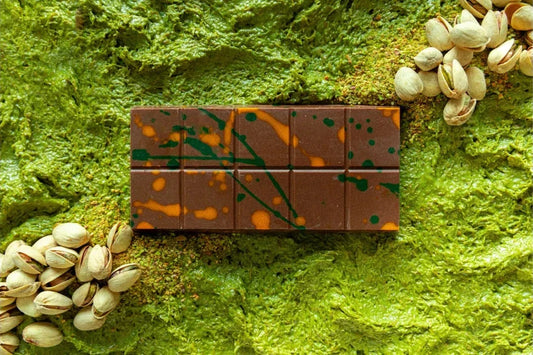
There's a moment that happens when you first break a Can't Get Knafeh of It bar open. The chocolate snaps cleanly — that satisfying, sharp crack that tells you the couverture is good. Then you see the inside: vivid pistachio green, threads of golden kataifi, a filling that pulls and stretches when you separate the two halves. And then you take a bite.
If you've experienced this, you understand why millions of people have shared the video of that moment. If you haven't yet, this guide will tell you exactly what you're in for — what's inside the bar, where each ingredient comes from, why the combination works so well, and what makes Can't Get Knafeh of It the bar that turned a Dubai chocolatier into a global phenomenon.
Starting with the Name
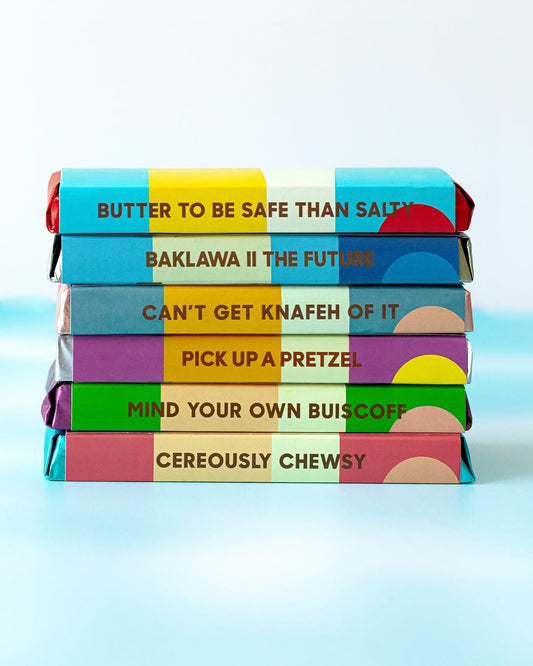
The name is a pun, and a good one. Can't Get Knafeh of It — a play on "can't get enough of it" — tells you immediately what the bar is inspired by: knafeh, one of the most beloved desserts in the Arab world.
Knafeh (also spelled kunafa, konafa, or kanafeh depending on the region) is a warm, sweet pastry that appears across the Middle East, Levant, and North Africa in dozens of local variations. At its core, it consists of a layer of stringy or fine pastry (kataifi) baked over a filling of soft white cheese or clotted cream, then soaked in sugar syrup and often topped with crushed pistachios. It's served hot, often from large round trays in pastry shops, and eaten fresh — the contrast between the crisp pastry, the molten filling, and the floral sweetness of the syrup is what makes it special.
Knafeh is a dessert with enormous emotional weight for people who grew up eating it. It's Eid morning, it's family gatherings, it's the particular smell of a pastry shop in the old city. It's comfort and celebration in equal measure.
The ambition behind Can't Get Knafeh of It was to take that emotional payload — all of that flavour memory — and put it into a chocolate bar. To make something portable, giftable, and globally shippable that still carried the spirit of the original dessert.
The result speaks for itself.
The Ingredients: A Deep Dive
Understanding what's inside Can't Get Knafeh of It is the key to understanding why it tastes the way it does — and why imitations always fall short. There are essentially four components, each one doing specific work.
1. Premium Belgian Chocolate
The outer shell of the bar is made with Belgian chocolate — specifically, premium couverture chocolate with a high cocoa butter content. This matters more than most people realise.
Couverture chocolate has a minimum cocoa butter percentage (typically 31% or higher) that gives it a glossier finish, a cleaner snap, and a smoother melt on the palate than standard chocolate. It's what professional chocolatiers and pastry chefs use because it behaves predictably, tastes better, and elevates every other ingredient it works with.
The Belgian chocolate in the Can't Get Knafeh of It bar provides the structural shell that holds the filling, the first flavour hit when you bite in (rich, smooth, slightly bitter in the dark variety, warm and milky in the milk chocolate version), and the clean finish after the filling has done its work.
This is the component that most imitation bars get most wrong. Cheap compound chocolate — made with vegetable fat instead of cocoa butter — tastes waxy, melts poorly, and doesn't provide the clean snap that makes the bar so visually satisfying. The Belgian couverture is not a detail. It's foundational.
2. Kataifi Pastry
Kataifi is the ingredient that, more than any other, defines the texture experience of Can't Get Knafeh of It. And it's the ingredient that most people outside the Middle East and Mediterranean had never heard of before the bar went viral.
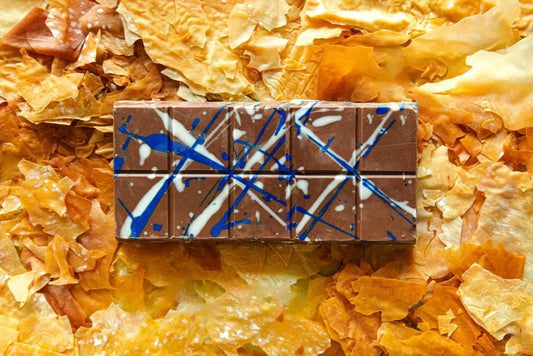
Kataifi (also written kadaifi or kadayıf) is a type of shredded filo pastry — thin, hair-like strands of dough made from a simple flour and water batter that is pushed through a fine-holed screen onto a hot rotating surface, creating long, continuous threads. It's used extensively in Middle Eastern, Greek, and Turkish pastry-making, most famously in knafeh and the Greek dessert kadaifi, where it's typically soaked in syrup and filled with nuts or cheese.
In its raw state, kataifi is pale and soft. When baked or toasted, it transforms dramatically — becoming golden, extraordinarily crisp, and developing a rich, nutty, almost caramel-like aroma. It's one of the most texturally distinctive ingredients in any pastry tradition anywhere in the world.
For Can't Get Knafeh of It, the kataifi is carefully toasted to a specific level of crispness and then incorporated into the filling. What this achieves inside the chocolate bar is remarkable: a crunch that persists through eating, that airy, toasted-grain fragrance that weaves through the richer pistachio and chocolate notes, and a textural contrast that makes every bite dynamic rather than monotonous.
This is also the ingredient that fades fastest in imitations. Toasted kataifi has a limited window before moisture softens it, and cheaper bars that use imitation versions or skip the kataifi altogether produce a filling that is simply smooth — pleasant enough, but missing the thing that makes the original genuinely exciting to eat.
3. Pistachio Cream
The green. The pull. The flavour backbone of the entire bar. The pistachio cream in Can't Get Knafeh of It is made from real pistachios, ground to a smooth, rich paste.
Pistachios have been central to Middle Eastern confectionery for thousands of years. They grow abundantly in Iran, Turkey, and the surrounding region, and appear in everything from baklawa to ice cream to the garnish on top of virtually every dessert in the Arab world. Their flavour profile is complex — sweet, slightly earthy, mildly tannic, with a richness that complements both chocolate and dairy beautifully.
The pistachio cream used in Fix bars is produced from pistachios in high enough concentration that it has both the vivid natural green colour and the intense flavour of the real nut. This is important because many imitation bars use either artificial pistachio flavouring (which tastes chemically sweet and one-dimensional) or a blend heavily diluted with cheaper nuts like almonds or hazelnuts.
Real pistachio cream is also what creates the famous pull. When you break the bar and the two halves separate, the pistachio cream stretches between them in long, glossy threads — the image that made the bar go viral in the first place. Imitation creams don't do this; they either don't pull at all or they pull and snap immediately. The stretch is a function of the real cream's consistency, its fat content, its texture at room temperature. It's not an accident. It's the result of getting the ingredient right.
4. Tahini
Tahini — sesame paste — is perhaps the most subtle of the four main components, but it's arguably the most important for complexity. It's the ingredient most people won't consciously identify, but would immediately notice the absence of.
Tahini is made from toasted sesame seeds ground into a smooth, runny paste. Its flavour is nutty, slightly bitter, earthy, and rich — somewhere between peanut butter and the flavour of toasted seeds. In Middle Eastern cooking, tahini appears in hummus, baba ganoush, and sauces, and in the dessert world it's the primary ingredient in halawa (halva) — a dense, crumbly confection made from tahini and sugar that Fix has also turned into a bar of its own.
In Can't Get Knafeh of It, the tahini serves two functions. First, it adds flavour depth — a gentle bitterness and a nuttiness that prevents the pistachio cream from being too sweet and one-note. Second, it adds fat in a form that plays beautifully with both the chocolate and the pistachio, helping the filling hold together while remaining lush and smooth.
It's the kind of ingredient that professional pastry chefs call a "bridge" — it connects the dominant flavours on either side of it and makes them feel like they belong together. The pistachio and the chocolate work; the pistachio and the chocolate with tahini work at a different level entirely.
The Dark Chocolate Versus Milk Chocolate Question
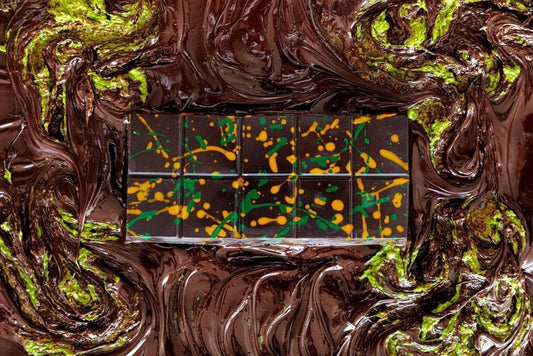
Can't Get Knafeh of It is available in both the original milk chocolate version and a dark chocolate variation. The question of which is better is genuinely a matter of personal preference — but here's how to think about it:
The milk chocolate version is more indulgent, creamier, and more immediately crowd-pleasing. The sweetness of the milk chocolate plays harmoniously with the pistachio, and the overall profile is rich and warm. This is the version most people encounter first, and the one that tends to be recommended for sharing or gifting to people who aren't sure of their chocolate preferences.
The dark chocolate version creates a more complex, more adult flavour profile. The bitterness of the dark chocolate acts as a counterpoint to the sweet pistachio cream, and the tahini becomes more prominent. If you appreciate the way a good dark chocolate bar balances sweetness and bitterness, the dark version of Can't Get Knafeh of It will likely become your preference. It's a more sophisticated eat.
Many regular Fix customers keep both on hand — the milk for everyday indulgence, the dark for when they want something more nuanced.
How to Eat It (Seriously, It Makes a Difference)
There are better and worse ways to experience Can't Get Knafeh of It, and it's worth knowing:
Temperature Matters
Store the bar in a cool, dry place — not the fridge if you can avoid it. Cold chocolate loses its snap and the filling becomes stiff. Room temperature (ideally 18–22°C / 64–72°F) gives you the clean snap, the proper stretch, and the full flavour profile.
Break It, Don't Bite It
The bar is designed to be broken. Snap it in half along the scoring and pull the two pieces apart — this is when you get the visual pull that made the bar famous, and it also means the first bite is an edge rather than a flat cross-section, which gives you a better ratio of chocolate shell to filling.
Don't Rush It
Let the chocolate melt slightly on your palate before you start chewing. This is when the Belgian couverture does its best work — the cocoa butter releases, the aroma opens up, and then the filling hits. If you chew immediately, you'll enjoy it but you'll miss the full experience.
Share It (or Don't)
The large bars are substantial — sharing one between two or three people works well as a dessert experience, particularly if you're introducing someone to it for the first time. But we also have absolutely no judgement about solo consumption. None whatsoever.
Why It Can't Be Replicated at Home
We published a recipe book so people can try making the filling at home, and we encourage it — there's something wonderful about understanding how a dish is made. But the reality is that replicating the exact Can't Get Knafeh of It experience at home is genuinely difficult:
Tempering Belgian couverture chocolate correctly requires precise temperature control and experience. Under-tempered chocolate won't snap cleanly and will bloom (develop grey streaks) as it sets. Toasting kataifi to exactly the right level — crisp without being bitter, golden without being burnt — requires practice. And sourcing real pistachio cream of the concentration and quality used in Fix bars is not something most home cooks can easily do.
The bars exist because making them well is hard. The recipe book is for the curious and the ambitious. The actual bars are for when you want the real thing.
Order Yours
Can't Get Knafeh of It is available in packs of 6 large bars, as part of our mixed Hero Boxes, and in bulk packs for wholesale and gifting. Every bar ships directly from our Dubai kitchen, worldwide.
Order Can't Get Knafeh of It here
Order the Dark Chocolate version here
Try the full Fix Hero Box — one of every flavour
You've seen the video. Now taste it.